

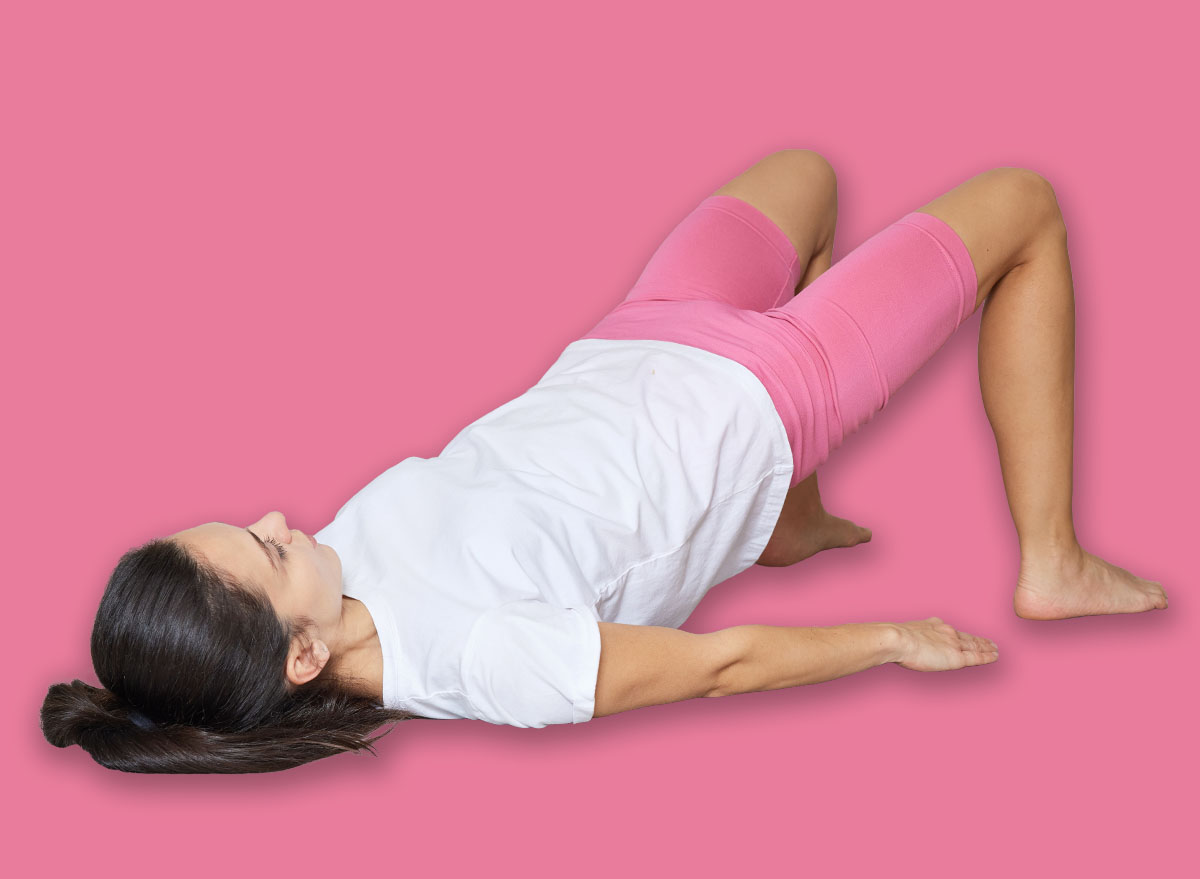
A CSCS trainer reveals what your bridge hold time says about your hips after 60.
The bridge is one of those exercises that looks simple until you hold it with intent. Lift your hips, lock in your position, and the body gives you feedback fast. Your glutes need to stay engaged, your pelvis needs to stay steady, and your core has to keep everything organized. After 60, that connection between the hips and midsection becomes a huge part of how well you move and handle daily activities.
The glutes play a bigger role in core strength than many people realize. They help control the pelvis, support the lower back, and give your trunk a stronger base to work from. When your hips are strong, movements like walking, climbing stairs, standing from a chair, and carrying items feel more controlled. Strong glutes also add resilience because they help your body distribute force better through the hips instead of dumping extra stress into the low back or knees.
From a coaching standpoint, hip bridges show up in my programming all the time, especially as isometric holds during warm-ups. They’re simple, accessible, and incredibly useful for getting the glutes switched on before bigger movements. I also like them because they give you a quick read on how well someone can hold tension. If the hips stay level and the glutes stay active, you can usually tell the body is ready to move with more control.
Muscular endurance matters just as much as strength here. Daily movement asks your muscles to keep working for longer stretches, whether you’re walking through a store, standing in the kitchen, climbing stairs, or spending the day on your feet. Testing endurance every so often gives you a snapshot of how well your body maintains tension over time. The bridge hold make it easy to measure. Up next, we’ll break down why this exercise matters, how to perform it correctly, what your hold time says about your strength, and the best ways to build stronger hips and a more reliable core.
Why the Bridge Builds Core Strength After 60
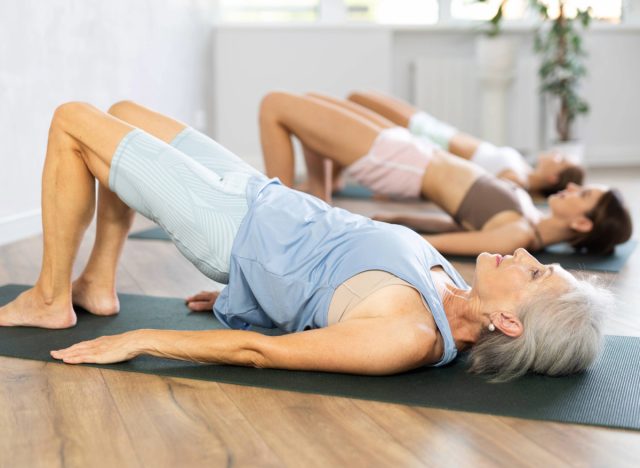
The bridge trains the backside of your core, which doesn’t always get the attention it deserves. Your glutes, hamstrings, hips, and lower back all help keep your pelvis and spine positioned. When those muscles work together, your body creates a stronger foundation for nearly every movement you perform.
The glutes have a major job during the bridge. They extend the hips and help keep the pelvis level. That matters because pelvic control affects how your lower back feels, how your hips move, and how steady your body stays when you’re walking, lifting, or getting up and down from the floor. A strong bridge hold reinforces the connection without adding much joint stress.
Holding the bridge also builds endurance in the muscles that support your posture and daily movement. Your hips have to stay lifted, your ribs have to stay controlled, and your core has to support the position while you breathe. As the seconds build, you’re training your body to maintain tension instead of relying on a quick burst of strength. That’s why this test can tell you so much about how your core and hips are performing after 60.
How to Perform a Proper Bridge Hold
A strong bridge starts with position. You want the movement to come from your hips, with your glutes doing the majority of the work. The goal is to hold a steady line from your shoulders through your knees while keeping your lower back calm and your hips level. Once the position is set, the test becomes all about maintaining clean tension.
How to Do It:
- Lie on your back with your knees bent and your feet flat on the floor about hip-width apart.
- Place your arms at your sides with your palms facing down.
- Brace your core by tightening your midsection before lifting your hips.
- Press through your heels and lift your hips until your shoulders, hips, and knees form a straight line.
- Squeeze your glutes while keeping your ribs down and your pelvis level.
- Hold the position while breathing steadily and maintaining the same hip height.
A quick note on the movement standard. The hold counts when your hips stay lifted, your glutes stay engaged, and your body keeps a straight line from shoulders to knees. If your hips start to drop or you feel the work move mostly into your lower back, reset and shorten the hold so the movement stays clean.
Best Variations: Single-Leg Bridge, Marching Bridge, Elevated Feet Bridge, Banded Bridge Hold, Hip Thrust Hold.
Bridge Hold Test After 60: What Your Time Means
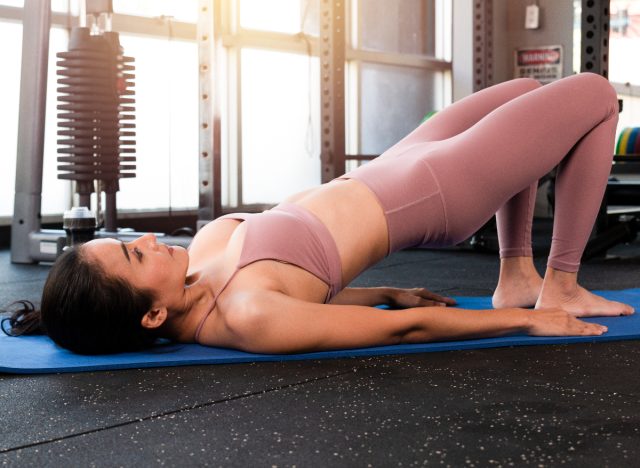
Your hold time gives you a simple look at how well your glutes and core maintain tension. Keep the position consistent from start to finish. The number matters most when your hips stay level, your breathing stays controlled, and your body holds the same shape throughout the effort.
- Under 30 seconds: You’re building the foundation. Focus on feeling your glutes engage, keeping your hips level, and holding a clean position for shorter sets.
- 30 to 60 seconds: This is a solid base. Your glutes and core can support the position with good control, and you’re developing the endurance needed for longer daily activity.
- 60 to 90 seconds: You’re in strong territory. Your hips stay lifted, your posture holds, and your glutes can maintain tension as the hold becomes more demanding.
- 90+ seconds: This is top-tier. Your glutes, hips, and core work together with impressive endurance. Holding this position with steady form shows excellent control and strength for life after 60.
How to Build Stronger Glutes and Core Endurance
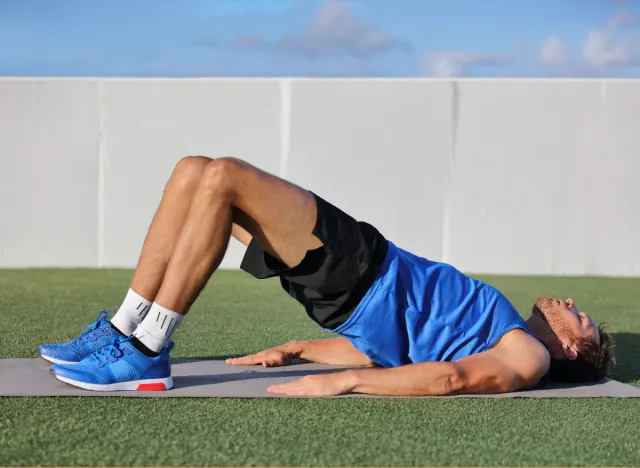
Building a better bridge hold comes down to improving the quality of tension you can maintain. The goal is steady hips, active glutes, and a core that supports the position without extra movement through the lower back. This type of strength carries well into daily life because it teaches your body to stay organized for longer efforts. Stronger glutes also improve how the hips share work with the low back and knees, which supports more confident movement. A few consistent sessions each week can make a noticeable difference in how your bridge feels and how long you can hold it.
- Practice bridge holds regularly: Start with two to three sets of clean holds a few times per week. Keep each set controlled instead of chasing a long hold right away.
- Set your position before lifting: Brace your core, plant your feet, and create tension through your hips before your pelvis leaves the floor.
- Drive through your heels: This helps you feel your glutes and hamstrings instead of shifting the work into your lower back.
- Keep your ribs down: A strong rib position helps your pelvis stay organized and keeps the bridge from turning into a back extension.
- Use shorter holds with better control: Sets of 20 to 40 seconds with strong form build the base for longer holds.
- Add single-leg work over time: Single-leg bridges and marching bridges challenge each hip individually and help clean up side-to-side differences.
- Train the surrounding muscles: Step-ups, split squats, hip thrusts, and dead bugs all help build stronger hips and improve core control.
- Retest every few weeks: A simple retest helps you track progress and gives you a clear target without overcomplicating your training.
The bridge hold offers more than just a glute exercise. It shows how well your hips and core can stay connected under tension. If you can hold a clean bridge past 90 seconds after 60, your core strength is in a top-tier range, and your body has a strong foundation for the movements you rely on every day.
References
- Inacio, Mario et al. “Gluteal muscle composition differentiates fallers from non-fallers in community dwelling older adults.” BMC geriatrics vol. 14 37. 25 Mar. 2014, doi:10.1186/1471-2318-14-37
- Oranchuk, Dustin J et al. “Isometric training and long-term adaptations: Effects of muscle length, intensity, and intent: A systematic review.” Scandinavian journal of medicine & science in sports vol. 29,4 (2019): 484-503. doi:10.1111/sms.13375
Jarrod Nobbe, MA, CSCS
