

Like so many things in life, from resting heart rate to VO2 Max, a “normal” period is really what’s normal for you.
That said, most women’s cycles last 21 to 35 days, counting from day one of one cycle to day one of the next cycle, and their periods last five to seven days on average, says Alyssa Dweck, MD, an ob-gyn and author of The Complete A to Z for Your V. “I recommend seeing your gyno if your flow is persistently or newly varied from usual,” she adds.
FYI, “cycle length” is defined as the number of days from the start of one period to the start of the next and “duration of flow” as the number of days of actual bleeding, says Caitlin McCarthy, MD, an ob-gyn with Axia Women’s Health. “Both can vary from month to month and are typically nothing to worry about unless it persists over time,” she reiterates.
Alyssa Dweck, MD, is an ob-gyn and author of The Complete A to Z for Your V.
Caitlin McCarthy, MD, is an ob-gyn with Axia Women’s Health.
Lakeisha Richardson, MD, is an ob-gyn based in Greenville, Mississippi.
Mary Jane Minkin, MD, is a clinical professor of obstetrics and gynecology and reproductive sciences at Yale Medical School.
Jennifer Wider, MD, is a women’s health expert.
While Dr. Dweck notes that shorter periods can be normal (if your period lasts two to three days, and it’s always lasted two to three days, no biggie), it’s important to pay attention to your cycle, and note any changes. After all, the length of your period is largely determined by hormonal factors, says Lakeisha Richardson, MD, an ob-gyn based in Greenville, Mississippi. That means that everything from medications to underlying health conditions can throw off your cycle. Some of those causes are totally benign, but others are best ruled-out (or caught) early. We’ll get into those soon, but first, there are a few other factors to consider when it comes to irregular periods.
For one, changes in your cycle length can sometimes be a cause for concern, says Dr. McCarthy. “Periods that are too frequent may be a sign of a structural abnormality [of the female reproductive system] or hormonal imbalance, and periods that are too infrequent can be related to an undiagnosed pregnancy, hormonal imbalances that affect ovulation, or nutritional concerns.”
And a lack of period at all for more than three months when not on hormonal medications, prolonged bleeding, erratic bleeding, or heavy bleeding soaking more than two pads per hour for two consecutive hours are all red flags and should be discussed with your provider, says Dr. McCarthy. Light bleeding is rarely something to worry about, but if menstrual bleeding is heavy enough to cause distress or interfere with daily life, it is too much, she adds.
Ahead, doctors share the 10 most common reasons that your period might go from six days to, say, three suddenly.
You’ve switched birth control.
If your period is suddenly breaking pattern, consider if you’ve started or changed birth control methods. “The pill might lessen the length of flow,” says Dr. Dweck. Mary Jane Minkin, MD, a clinical professor of obstetrics and gynecology and reproductive sciences at Yale Medical School, agrees. “Most birth control pills and rings, like the Annovera vaginal ring, lead to lighter flow,” she says. “The combined hormonal contraceptives contain a good amount of progestins—synthetic progesterone—which limit the build-up of a lot of tissue lining the uterus,” she explains. As a result, there’s less of a flow when it’s go time. Progestin-only IUDs “allow a very limited buildup,” Dr. Minkin says, and many women have a lighter flow or even no period when they have one of those implanted.
Also, there could be slight hormonal differences in generic versions that could affect your cycle length, so make sure to check the packaging.
You’re on a certain type of medication.
Beyond the birth control pill, certain medicines could also affect your period, thanks to the chemicals in them. “NSAIDs [like Advil, Naprosyn, ibuprofen, etc.], antidepressants, thyroid medications, and steroids might shorten flow,” Dr. Dweck says.
The way each of these medications lighten your flow varies slightly. With NSAIDs, “the idea is that the NSAID reduces the number of inflammation compounds called prostaglandins, which in turn can lessen the amount of bleeding because prostaglandins affect the blood vessels in the inner lining of the uterus,” explains women’s health expert Jennifer Wider, MD.
Not sure if the meds you’ve taken are messing with your flow? “Ruling out other causes of change in flow and taking a good medical history might lead to diagnosing medication as the cause of menstrual change,” Dr. Dweck says.
You have polycystic ovarian syndrome (PCOS).
PCOS is a condition where women overproduce amounts of male hormones, which can suppress ovulation. “Women with PCOS will have a long history of irregular cycles,” explains Dr. Richardson. “They may also have months when they don’t have a menstrual cycle at all because of their imbalanced hormone levels.”
If you’re suffering from PCOS, you’ll likely also experience cysts on your ovaries, hirsutism (or excessive hairiness), acne, obesity, and infertility, she says. “PCOS is not a medical emergency, but seeing your ob-gyn as soon as possible to prescribe medication can help minimize the symptoms.”
You’re suffering from premature ovarian failure.
“Premature ovarian failure or primary ovarian insufficiency occurs when women have loss of normal ovarian function prior to 40 years old,” explains Dr. Richardson. If your ovaries aren’t working correctly, they won’t produce the right amounts of estrogen or release eggs when they’re supposed to, which could lead to shortened and irregular cycles, she says.
Premature ovary failure typically shows up around age 27, but occurs in one in 1,000 women between the ages of 15 and 29 and one in 100 women between the ages of 30 and 39, according to RESOLVE: The National Infertility Association. “The most common symptom of premature ovarian failure is infertility and amenorrhea [loss of periods],” says Dr. Richardson, “and it’s diagnosed by ultrasound and blood test—the hormone levels would be consistent with menopause.”
Translation: If you think you may have premature ovarian failure and want to get pregnant in the future, talk to your doc about getting tested as well as your fertility options.
You have uterine scarring.
Scarring in the uterus can lead to shorter periods. This is known as Asherman Syndrome, a rare condition that most often occurs in women who have had multiple dilation and curettage (D&C;) procedures, says Dr. Richardson. D&C;’s are often used to empty the uterus following miscarriage, as an abortion method, and to treat certain gynecological conditions.
“Women who have Asherman Syndrome have shorter cycles or amenorrhea because only the areas of the uterus that are not scarred are capable of bleeding. The more scarring that is involved, the less bleeding will occur.”
Other symptoms (aside from a short period) can vary based on the degree of scarring, but you may also develop pelvic pain during your period which is caused by the obstruction of the menstrual flow due to scarring, explains Dr. McCarthy. Additionally, uterine scarring can be associated with infertility or recurrent pregnancy loss, she adds.
This condition would be diagnosed by hysteroscopy, says Dr. Richardson, and the adhesions (or scars) would have to be removed surgically in order for your flow to return to normal and to improve your ability to conceive, if desired.
You’re breastfeeding.
“Most women who are breastfeeding exclusively will not have a cycle while they are breastfeeding,” says Dr. Richardson. “Breastfeeding could delay ovulation for as long as 18 months, because the body is suppressing ovulation hormones by producing prolactin, alpha-lactalbumin, and lactose synthesis.” A normal cycle will return only when you stop or decrease the amount of breastfeeding, but even then, it could be shorter than normal due to the fluctuating hormones.
You have an overactive thyroid.
Your thyroid can actually affect your period: “The thyroid gland is regulated in the pituitary-hypothalamus axis of the brain, as are the hormones that regulate ovulation and menstruation,” says Dr. Dweck. “When one aspect of the axis is disturbed, so might be other aspects.”
In other words, the hormones that play a major role in regulating periods are produced in the same region of the brain as thyroid regulating hormones, says Dr. McCarthy. “If too many thyroid hormones are produced, they provide feedback to the hypothalamus to slow down production, which also inhibits period regulating hormones.” As a result, women with hyperthyroidism may have infrequent periods or amenorrhea (a lack of periods), she adds.
Other indications of an overactive thyroid issue can include appetite and weight changes, difficulty with temperature regulation, hair changes, feelings of anxiety, and heart palpitations, according to Dr. Dweck. If you think you might have a thyroid disorder, talk to your doc about getting tested.
Watch a doctor explain what you can do to help a thyroid disorder:
You have implantation bleeding.
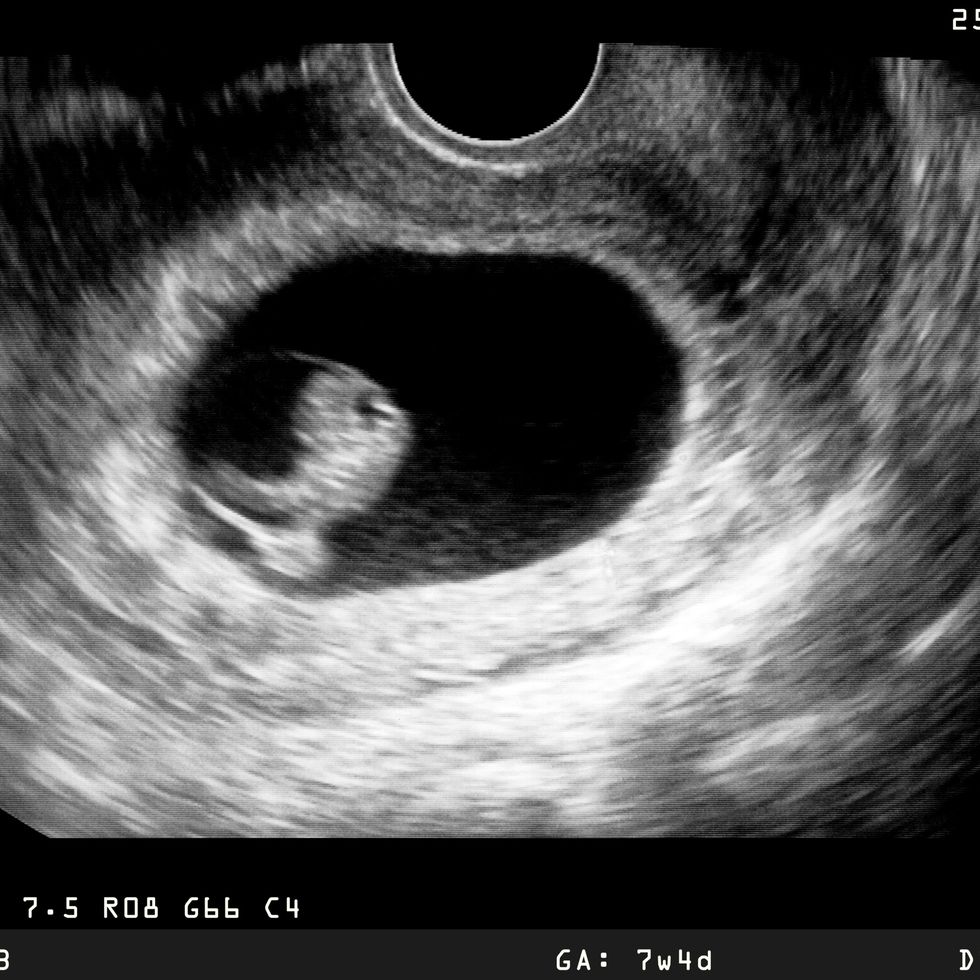
Implantation is an early part of the pregnancy process when an embryo (i.e. fertilized egg) burrows into your uterine lining. It’s possible to bleed a little when that happens. And, if the timing lines up with your period, it’s understandable that you might think you’re having a period when you’re actually not.
“Implantation can be associated with some light bleeding—and to some women they might think it’s a very light period,” Dr. Minkin says.
“It can be difficult to tell the difference between implantation bleeding and a short period for some women because implantation can occur roughly six to 12 days after conception, which is often when a woman would expect her period,” Dr. Wider says. “The symptoms can look the same.” If there’s a chance you might be pregnant and you’re not sure what’s going on down there, a pregnancy test can help rule pregnancy in or out, she says.
You’re really stressed out.
Stress can screw with just about everything in your life, so it’s hardly shocking that it can mess with your cycle, too. “High levels of stress can cause an increase in the production of [stress hormone] cortisol which in turn can cause a disruption in the way our bodies function normally,” Dr. Wider says.
Under normal (read: non-frazzled) times, your brain’s hypothalamus produces chemicals that trigger your pituitary gland to signal your ovaries to release estrogen and progesterone, she explains. “With an increase in cortisol from stress, that axis can get messed up and the menstrual cycle can become irregular,” Dr. Wider says.
“The less estrogen, the less stimulation of the lining of the uterus, so less bleeding,” Dr. Minkin adds.
When it comes to stress management and getting your period back on track, it’s important to find what works for *you*, whether that’s exercise, massage, acupuncture, or journaling, says Dr. McCarthy. “Don’t be afraid to speak up because stress is a part of life, and we all need help through it, so find a friend, family member, or therapist to help with [individual] coping techniques.”
You’re in perimenopause.
“As women age, their cycle may become shorter—especially as they get closer to menopause,” says Dr. Richardson. Perimenopause, the time before menopause, when your body starts transitioning hormonally, typically starts in a woman’s 40s, but can start as early as the thirties. And “it can last anywhere from four to six years,” says Richardson. “During that time, women may have shorter cycles or may not have a cycle at all.” This is all perfectly normal, and there’s no need to seek medical attention during this time, she says. But if you’re concerned, especially about your fertility, a visit to your doc certainly can’t hurt.
If you’re in perimenopause, you may also experience hot flashes, night sweats, sleep disturbances, mood swings, irritability, fatigue, weight gain, and decreased libido, says Dr. McCarthy.

Ashley Mateo is a writer, editor, and UESCA- and RRCA-certified running coach who has contributed to Runner’s World, Bicycling, Women’s Health, Health, Shape, Self, and more. She’ll go anywhere in the world once—even if it’s just for a good story. Also into: good pizza, good beer, and good photos.
Andi Breitowich is a Chicago-based writer and graduate student at Northwestern Medill. She’s a mass consumer of social media and cares about women’s rights, holistic wellness, and non-stigmatizing reproductive care. As a former collegiate pole vaulter, she has a love for all things fitness and is currently obsessed with Peloton Tread workouts and hot yoga.
