

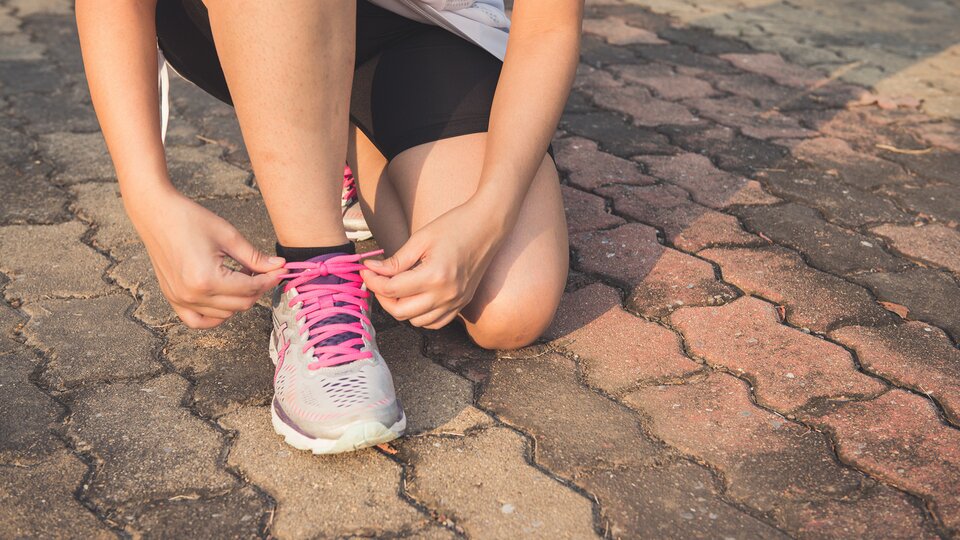
With so many options on the market, it can be overwhelming to decide which shoe is the best fit for you. Here is a breakdown of the main factors to consider when selecting the optimal running shoe.
What is Your Goal?
The first step is to determine your running goals. Are you training for a triathlon, marathon, obstacle race, your first 5k, sprinting on a track, or just trying to get around the block a few times? Look for a shoe based on:
- The running surface
- A comfortable fit for your specific foot type and running style
- Construction trade-offs between support versus flexibility, cushioning versus weight, training versus performance.
What is the Running Surface?
There are three main types of running surfaces: road, trail or track.
1. Road Running
Concrete or asphalt roads are generally flat and hard surfaces that require a shoe with more cushioning, support, and durability. You should select a shoe with adequate shock absorption to withstand the high impact of pavement. You will need to find the right balance of flexibility and stability. If you are running on the uneven roads of New York City, you may want more foot and ankle support.
2. Trail Running
Trailing usually consists of uneven terrain containing dirt, rocks, leaves, grass, or other obstacles. A trail running shoe should have more traction, greater durability, and increased stability.
Trails generally have less impact than roads, so you can lessen the amount of cushion in order to gain more foot and ankle support. The possibility of rough, shifting surfaces will require more grip on the bottom of the shoe. You may also want to add a protective toe cap to reduce the risk of toe injuries.
3. Track Running
Running tracks are specifically constructed with several layers of a durable, uniform, and shock-absorbing surface designed specifically for running. The top layer is typically made of rubber or polyurethane, which provides an impact-absorbing, fatigue-reducing, slip-resistant surface. A track running shoe should be lightweight with a responsive midsole, and have a minimalist design to help your natural range of motion. Since the track will absorb some of the impact, you can select a lighter shoe by reducing the amount of cushion.
What is the best fit for my foot type?
Fit
The fit of a running shoe is also critical to ensuring an enjoyable and injury-free run. Make sure to try on shoes with the same socks you plan to wear during your runs, and leave a thumb’s width between your longest toe and the end of the shoe. Additionally, pay attention to any areas of pressure or discomfort, and make sure the shoe feels secure around your midfoot and heel.
Foot Type
The first step in choosing a running shoe is to determine your foot type. There are three main types of feet: neutral, overpronation, and supination. Neutral feet have a natural arch and typically require a cushioned shoe. Overpronation occurs when the foot rolls inward too much during the stride, and these runners need a stability shoe with additional support. If you are an overpronator, then look for a shoe labeled as “stability” or “motion control” as those are designed for you. Supination occurs when the foot rolls outward too much, and runners with this foot type typically require a shoe with more cushioning.
Foot Shape
Different running shoes are designed for different foot shapes. For example, some shoes are designed for runners with a high arch, while others are designed for runners with a flat foot. Let’s give you a little more information on what to look for based on your shape.
If you have a high arch, you may want to choose a shoe that provides more cushioning and shock absorption. Look for shoes with a curved or semi-curved shape, as they will provide more support for your foot’s natural curvature. You may also want to consider shoes with a lower heel-to-toe drop, which will help to distribute weight more evenly across your foot.
If you have flat feet, you may want to choose a shoe with more stability and support. Look for shoes with a straight shape, as they will provide more support for your foot’s natural alignment. You may also want to consider shoes with a higher heel-to-toe drop, which can help to reduce stress on your Achilles tendon.
If you have a neutral arch, you may have more flexibility in the type of shoe you choose. Look for shoes that provide a good balance of cushioning and support, and choose a shoe that feels comfortable and supportive for your foot.
Heel Drop
Heel-to-toe drop is a measurement that is closely related to cushioning height. Ranging from 0mm to more than 12mm, heel-to-toe drop is the difference between the height at the heel and the height at the forefoot:
-
Barefoot shoes have a 0mm drop.
-
Minimalist shoes typically have a drop of 0 to 4mm.
-
Moderate and maximalist shoes offer a wide range of heel-to-toe drops.
To decide what heel drop will work best for you, consider these tips:
- Match the drop of your current running shoes. You’ll avoid messing with your body’s biomechanics. And be aware that, even if you’re buying the same shoe model, you need to double-check the heel drop. Every once in a while, a shoe brand will alter the heel-to-toe drop when it updates a shoe’s design.
- If you don’t have running shoes, look at your other shoes. First look at your other athletic shoes. If you don’t have any athletic shoes, then look at your casual shoes. Most shoes will have a moderate heel-to-toe drop, which simply suggests you avoid trail runners that are at or near the 0mm and the 12mm ends of the spec range. If you wear flats or flip-flops all the time, then low-drop shoes might be fine.
- A low heel drop encourages a midfoot or forefoot strike. The result is a more stable landing platform, along with better balance and muscle engagement. This beneficial biomechanical shift is a big appeal of barefoot and minimalist shoes. Not everyone benefits from nor can transition to a low-drop shoe, though.
- If you are considering changing to barefoot or minimalist shoes, take it slow. Plan on a few months of transition time and some discomfort as you make the physical adjustment. To learn more, read barefoot/minimalist running basics.
- Note that you can also find shoes with moderate and maximum cushioning that have a low heel drop. Switching from a well-cushioned high-heel-drop shoe to a well-cushioned low-heel-drop shoe is not for everyone. It entails some discomfort and takes a little transition time.
What is Your Running Style?
Toes pointed out
If you have a toe forward running style, where your toes point outward as you run, it is important to choose a shoe that accommodates this movement and provides appropriate support. Here are some general guidelines to help you choose the right running shoe for your toe forward running style:
-
Wide Toe Box: Look for shoes with a wider toe box to accommodate the outward pointing of your toes. This will help to prevent rubbing and blisters on the sides of your feet. Some shoe brands offer shoes specifically designed for a wide toe box, so it may be helpful to try on different options to find the best fit.
-
Neutral or Stability Shoes: Consider choosing a shoe that provides a good balance of cushioning and stability. A neutral shoe will allow your feet to move more naturally, while a stability shoe will provide more support to help prevent excessive inward rolling of the foot. Again, it is important to try on different options to see which type of shoe feels most comfortable and supportive for your individual foot and running style.
-
Flexibility: Look for a shoe that allows for flexibility in the forefoot. This will accommodate the outward pointing of your toes and allow for a more natural movement pattern. Shoes with a more flexible sole or forefoot are ideal for toe forward runners.
Heel Striker
If you have a heel strike running style, where your heel hits the ground first when you run, it is important to choose a shoe that provides appropriate cushioning and support for your heel and foot. Here are some general guidelines to help you choose the right running shoe for your heel strike running style:
-
Cushioning: Look for shoes that provide ample cushioning in the heel area. This will help to absorb shock and reduce the impact of your foot striking the ground. Shoes with thicker midsoles or a softer material in the heel area may be more comfortable for heel strikers.
-
Stability: Consider choosing a shoe with a moderate amount of stability. This will help to prevent excessive inward rolling of the foot, which can occur with a heel strike running style. Look for shoes with a medial post or a firmer material on the inside of the shoe to provide this support.
-
Heel-to-Toe Drop: Consider a shoe with a higher heel-to-toe drop. This is the difference in height between the heel and toe of the shoe. A higher drop will help to shift your weight forward and encourage a midfoot or forefoot strike, which can be more efficient for running. However, it is important to find a shoe with a drop that feels comfortable and natural for your individual foot and running style.
Midfoot or forefoot Runner
If you have a midfoot running style, where your foot strikes the ground with the midfoot or forefoot first, it is important to choose a running shoe that provides appropriate support and flexibility for this type of running. Here are some general guidelines to help you choose the right running shoe for your midfoot running style:
-
Minimalist or Barefoot Shoes: Minimalist or barefoot shoes are designed to provide minimal support and allow your feet to move more naturally. These types of shoes often have a lower heel-to-toe drop and a thinner sole, which can help to encourage a midfoot or forefoot strike. However, it is important to gradually transition to these types of shoes to avoid injury, as they require a different running technique and may put more stress on the muscles and tendons in your feet and lower legs.
-
Flexibility: Look for shoes that allow for flexibility in the forefoot. This will allow your foot to move naturally and facilitate a midfoot or forefoot strike. Shoes with a more flexible sole or forefoot are ideal for midfoot runners.
-
Lightweight: Consider choosing a lightweight shoe that won’t weigh you down and will allow for a more natural and efficient running gait. Lightweight shoes are often designed with a more minimalist or flexible design and can be a good option for midfoot runners.
What are Some Trade-offs between Shoes?
When it comes to selecting a running shoe, two key factors to consider are weight and cushioning. Both of these factors can have a significant impact on your running performance and comfort, and the optimal balance between the two will vary depending on your individual needs and preferences.
Weight
The weight of a running shoe is an important consideration for several reasons. First, lighter shoes typically provide a more natural feel and allow for a faster pace, as they require less effort to lift and move. Additionally, lighter shoes can help reduce fatigue and lessen the impact on your joints and muscles. However, it’s important to note that not all runners will benefit from the lightest possible shoe. For example, runners with a history of injury may require a shoe with more support and cushioning, even if it’s slightly heavier.
Cushioning
Cushioning refers to the amount of padding in the shoe, which can help absorb impact and reduce the strain on your feet and legs. More cushioning is generally preferred for longer runs or for runners with a history of injury. However, it’s important to find a balance between cushioning and weight. Shoes with too much cushioning can be heavy and reduce your agility, while shoes with too little cushioning can lead to discomfort and injury.
Comparing Weight and Cushioning
When it comes to comparing weight and cushioning, it’s important to consider both factors in relation to each other. For example, a shoe with a lot of cushioning may be heavier, but it may also provide a more comfortable ride. Similarly, a shoe that’s very lightweight may have less cushioning, but it may allow for a faster pace and less fatigue.
Ultimately, the best shoe for you will depend on your individual needs and preferences. Some runners may prioritize weight over cushioning, while others may prioritize cushioning over weight. It’s important to try on multiple options and consider the terrain and distance you’ll be running before making a final decision. Additionally, working with a knowledgeable salesperson or consulting with a healthcare professional can help ensure that you select the best shoe for your individual needs.
Flexibility v Support
Flexible shoes are designed to allow for more natural foot movement and flexibility. They are often more lightweight and have a lower heel-to-toe drop, which allows the foot to move more naturally from heel strike to toe-off. These shoes often have a more minimal design and less cushioning. They can be a good choice for runners who have a more efficient running gait and don’t require a lot of support or stability.
Stable shoes, on the other hand, are designed to provide more support and stability to the foot. They often have a higher heel-to-toe drop and more cushioning than flexible shoes. The upper and midsole of the shoe are also often designed to provide more support and reduce pronation (inward rolling of the foot). They can be a good choice for runners who need more support due to overpronation or who have flat feet.
The choice between a flexible or stable shoe ultimately depends on the individual’s running gait and foot type. Runners who have a more neutral running gait and don’t require a lot of support may prefer a flexible shoe, while those who overpronate or need more support may prefer a stable shoe.
It’s important to note that both flexible and stable shoes have their advantages and disadvantages, and there is no one-size-fits-all solution. It’s important to try on different types of shoes and determine which ones feel the most comfortable and supportive for your individual needs.
Training v Performance
When selecting a running shoe, it’s important to consider whether you need a training shoe or a performance shoe. Both types of shoes have specific features that are designed to meet the needs of different types of runners.
Training shoes are designed for daily use and are suitable for runners who are primarily focused on building endurance and increasing mileage. These shoes typically have more cushioning and support than performance shoes, which helps to reduce impact on your joints and muscles over long distances. Training shoes also tend to have a more durable construction, which allows them to withstand the wear and tear of daily use.
Performance shoes, on the other hand, are designed for speed and are suitable for runners who are focused on improving their time or performance. These shoes are typically lighter and more responsive than training shoes, which allows for a faster pace and more efficient movement. Performance shoes may also have less cushioning and support than training shoes, as they are designed for shorter distances and faster speeds.
The choice between a training shoe and a performance shoe ultimately comes down to your individual running goals and preferences. If you’re a beginner runner or focused on building endurance, a training shoe may be the best option. On the other hand, if you’re an experienced runner who is focused on improving your speed or performance, a performance shoe may be a better fit.
As you can see, there are a lot of factors when it comes to finding the right running shoe. The next time you’re shopping for the perfect shoes, make sure you keep all of this in mind, read reviews, and try on.
