

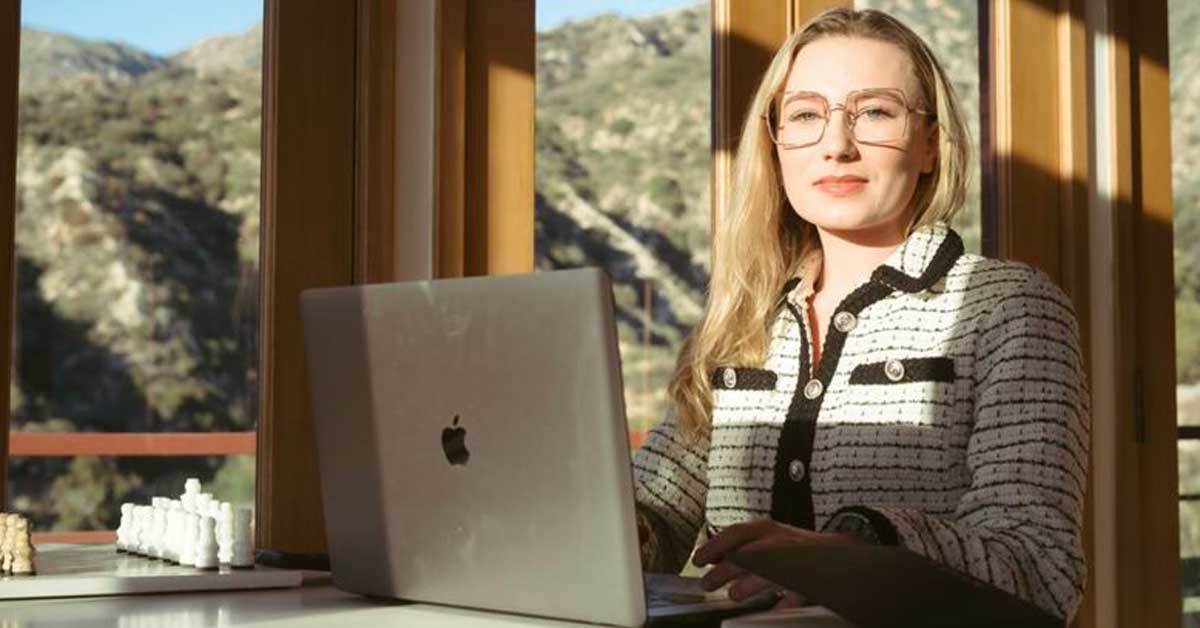
At 27, Keely Cat-Wells has been a Forbes 30 Under 30 honoree, an advisory board member on Lady Gaga’s Born This Way Foundation and has visited the White House as a participant in the first Mental Health Youth Action Forum. Last year her talent agency, C Talent, was acquired by Whalar in a deal that’s making history as “one of the largest investments ever made in Disabled talent within the creator industry,” according to her profile on RollingStone Culture Council.
But don’t call her inspirational.
A cruel history of portraying people with disabilities
Hollywood—and the entertainment industry at large—has a long-standing relationship with both casting disabled actors and portraying characters with disabilities, spanning more than a century. But it’s not a proud one.
They were the circus freaks, the sideshow oddities. These types of shows were a normal part of American culture around the 19th and 20th centuries. Taking advantage of people with disabilities for profit as a means of entertainment for the masses was considered perfectly acceptable, and set the precedent.
But through the lens of rehistoricizing these heartbreaking exploitations of people with disabilities, we see more clearly now. The little people cast in The Wizard of Oz were paid less than Toto the dog ($50 and $125, respectively in 1938), and never saw their names in the credits. The bearded women who were carnival mainstays may have had medical conditions such as hypertrichosis or hirsutism, which may be caused by polycystic ovary syndrome. And the contortionists grinning as they dislocated limbs or stretched their skin for laughs may have had a hypermobility condition like Ehlers-Danlos syndrome.
Contemporary productions aren’t necessarily more generous when a disabled character is on screen. Think of Forrest Gump or Professor X in X-Men. These were powerful roles, but they were awarded to able-bodied actors simply acting out the on-screen disability.
The issue is that representation matters—a lot. And that’s where Cat-Wells comes in.
Disabled people are more than tropes
As the founder and president of C Talent at Whalar, as well as being an entrepreneur and activist with a disability herself, Cat-Wells knows firsthand of the systemic discrimination the industry she loves so much still struggles with.
C Talent is an “inclusive disabled-led talent management and access consulting company,” according to their website. The management side represents disabled creators, and the consulting side works with brands creating accessible and inclusive spaces, environments and narratives, with both sides often working in tandem.
Cat-Wells named it C Talent because, as stated on their website, “disabled people usually do not have access to option A or option B, so we decided to create our own option: C Talent.”
The days of munchkins and sideshows might be long gone, but Cat-Wells explains that the entertainment industry continues to stereotype people with disabilities, most often as one of three reductive tropes. “We see this all the time in film, TV, commercials and print advertising that disabled people are either villains, victims or inspirations,” Cat-Wells says. “Villains, because the world thinks disabled people are so angry about being disabled and about our medical traumas that we have to lash out at the world. Victims, because we’re to be pitied or we’re the charity cases that only serve to make non-disabled people feel better about their own lives. As for being an inspiration, unfortunately, that word has been so overused against disabled people for so long that even when it’s meant well, in the most respectful way possible: we hate it.”
The implication is that while it sounds like a compliment, the connotation implies otherwise. Someone might say, “You’re so accomplished. You’re an inspiration.” But the subtext is, “You’re so accomplished, for someone with a disability. You’re so inspiring, for a disabled person.” As long as these tropes exist, people with disabilities are not seen as whole. Which is why representation is so important and why Cat-Wells began C Talent in the first place.
Numbers don’t lie
An estimated 16% of the world’s population “experience a significant disability,” according to the World Health Organization. Yet only 2.8% of “series regular characters” were disabled in 2021-2022, according to the “Where We Are on TV” report. And of that, Cat-Wells says 95% of those roles go to able-bodied actors. Not only is it misrepresentation, but it’s misguided. The Center for Scholars & Storytellers says, “Hollywood is leaving approximately $125 billion annually on the table by not having authentic and accurate disability representation.”
Cat-Wells’ origin story
But it wasn’t profits that motivated Cat-Wells into action. The spirit of C Talent first came to her when she was a teenager and bedridden in the hospital, with dashed dreams of becoming a professional dancer. At the age of 8, Cat-Wells was diagnosed with dyslexia and struggled with traditional academia. But her talent for the stage was clear and she gravitated towards dance.
Eventually, she enrolled in a performing arts college, but almost immediately began to feel unwell, with extreme pain, nausea, weight loss and weakness. That began years of testing, doctors’ appointments and surgeries, all the while feeling worse and worse. “My dance career was over before it ever really started,” Cat-Wells recalls.
“This was a very, very difficult time because all the doctors thought I was making it up, that I was manifesting my illness. At that time, I was [uncontrollably] vomiting up to 30 times a day. They thought it was either due to the stress of being at a new college or the pressure of maintaining a specific body weight. One doctor even said that I was crazy and tried to put me into a psych ward.”
By the time Cat-Wells finally got a diagnosis, she was so ill that doctors had to completely remove her colon. This resulted in her having an ileostomy put in—an external bag she has to wear for the rest of her life that replaces the function of the colon by collecting waste that’s diverted through a hole in the abdomen.
“I got sick at 17 and wasn’t discharged until 21. By the time I left for LA, I was diagnosed with PTSD as well,” she says.
Hollywood calling: founding C Talent
LA was the fresh start she needed physically and emotionally. She even took an acting course (thanks to an Instagram ad), which got her hooked on the craft and LA. Her two-week holiday turned into a month-long stay where she threw herself into LA’s disabled acting community. She returned a year later, visa in hand and ready to start auditioning. And she had success early on.
But the joy from landing her first role was fleeting—it was rescinded after they learned about her ileostomy bag. She was hardly the first actor in Hollywood to suffer the cruelty of ableism, but she would do her best to shed light on this and change the industry from the inside out.
One of the best pieces of advice Cat-Wells ever got was to not dwell on her own misfortunes, to focus outwards. So when she was still in hospital in London, she spent her time helping classmates at the dance academy find gigs. And now in LA with firsthand experience of how ruthlessly inequitable Hollywood could be, Cat-Wells decided to do the same but go bigger. She started C Talent to help other disabled talent find work.
Today, they represent about 100 deaf and disabled talent, placing them in thousands of roles, “with a combined reach of over 50 million,” according to their website.
They’ve secured brand deals such as Diamond Garrett and Savage X Fenty, consulted on disability-related storylines for Sesame Street (“Meeting Cookie Monster may have even topped meeting President Joe Biden”) and supported the movie Champions by working with stars of the film, Woody Harrelson, Kaitlin Olson and Cheech Marin and director Bobby Farrelly to help them feel comfortable and confident when talking about disability within their media interviews.
C Talent is making progress in Hollywood
In one of C Talent’s more recent projects, their consultants worked with Netflix and Sony Pictures on an adaptation of Lady Chatterley’s Lover, based on D.H. Lawrence’s novel. Cast in the role of the wheelchair-user Sir Clifford Chatterley was Matthew Duckett, the first disabled actor to play this role.
This piece of groundbreaking inclusive casting was far from performative. C Talent consultants were on set and advocated for Duckett’s on-set needs during and after production. They worked with the director to ensure portrayals of disability were accurate and worked with movement directors to choreograph Duckett’s physicality as he manoeuvred in an antique wheelchair. Intimacy coordinator Ita O’Brien (Normal People, Sex Education, I May Destroy You) also advised on scenes when co-star Emma Corrin (The Crown) was required to lift Duckett out of his chair, balancing nuances of intimacy, logistics and safety.
There’s a social model of disability that suggests people are disabled by barriers in society, not by their impairments or differences. If society were truly equitable, everybody would have the same access to all opportunities. The casting of Duckett and the measures to remove barriers for him proves that casting disabled actors is not only possible but profitable.
But there is still work to do
And yet, UCLA’s ninth annual Hollywood Diversity Report (2022), where they examine the progress made by their industry in becoming more inclusive, doesn’t even count disabled actors and tradespeople. They remain outside of the census and outside the conversation.
When Whalar acquired C Talent, Cat-Wells understood the greater significance that went beyond securing funding and multiplying contacts. “Whalar essentially made the business case that it’s worth investing in disabled talent. We don’t always have to be your social impact arm or the charity piece. Disabled people can make money and they’re damn good at it. And it’s time there are more disabled people on our screens and behind the cameras and becoming decision makers. We are claiming and controlling our own narrative.”
So, don’t call Cat-Wells inspirational. But she’s definitely a champion.
Photo by Nalani Hernandez-Melo
