

Recipe notes and tips
What is shrimp saganaki?
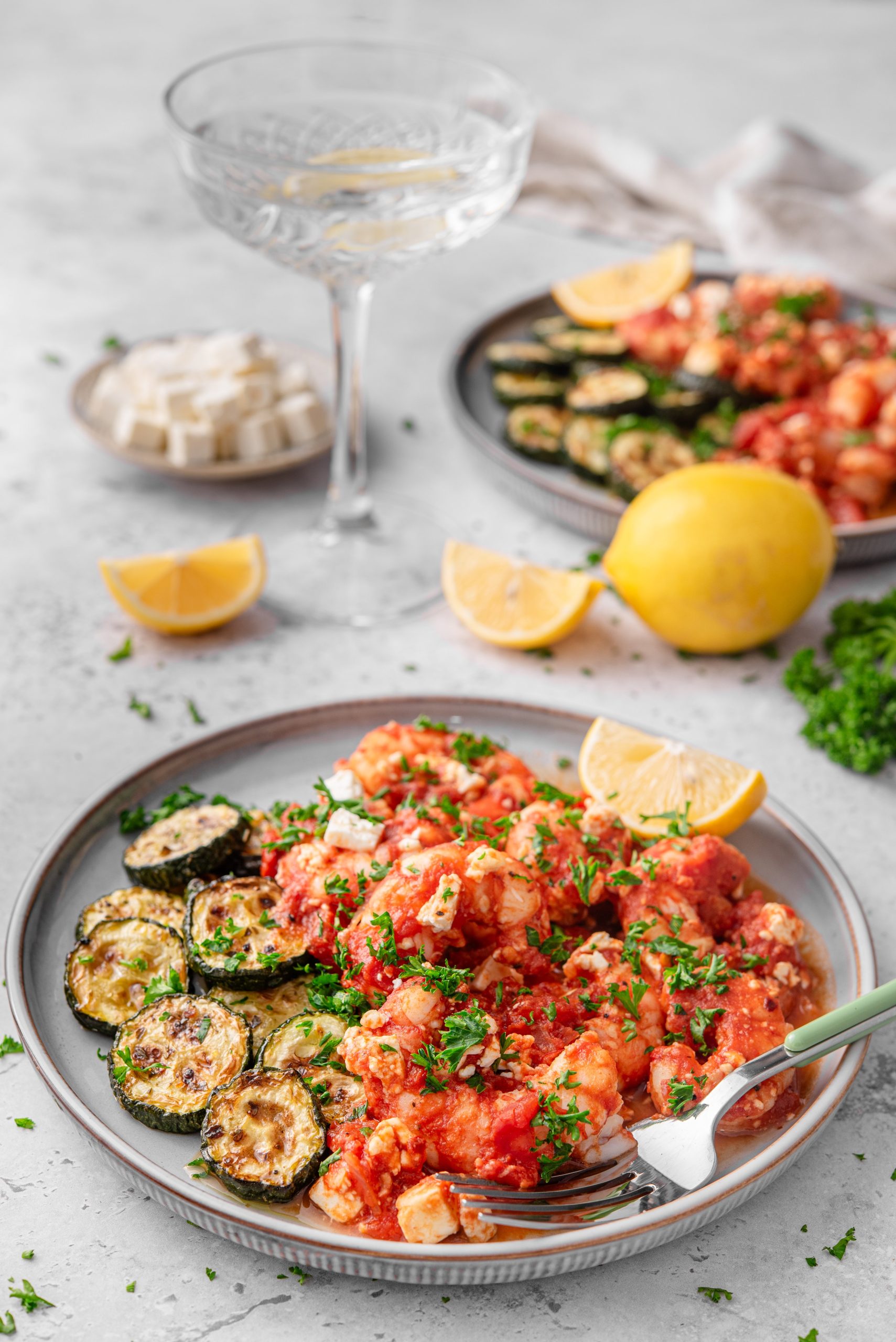
Shrimp saganaki is a traditional Greek dish featuring shrimp cooked in a flavorful tomato sauce with garlic, herbs, and feta cheese.
The name saganaki refers to the small frying pan traditionally used to prepare and serve dishes like this one.
This version is served with roasted zucchini for a delicious low carb meal that’s naturally high in protein.
What kind of shrimp should I use?
Large raw shrimp work best because they stay juicy and are less likely to overcook.
Choose peeled and deveined shrimp to make preparation easier. Fresh or frozen shrimp both work well, but frozen shrimp should be completely thawed and patted dry before cooking.
Whenever possible, choose shrimp certified by MSC (wild-caught) or ASC (farmed) to support more responsible seafood production.
How do I keep the shrimp tender and juicy?
The key is to avoid overcooking them. Shrimp cook very quickly, usually in just a few minutes, depending on their size.
Make sure the tomato sauce has thickened before adding the shrimp. This allows them to cook gently without spending too much time in the pan.
The shrimp are ready when opaque and cooked through, reaching an internal temperature of 145°F (63°C).
Can I use frozen shrimp?
Absolutely! Thaw frozen shrimp overnight in the refrigerator, or place them in a sealed bag in cold water until thawed.
Drain well and pat dry before adding them to the sauce. Excess moisture can dilute the tomato sauce and prevent it from thickening properly.
What kind of feta cheese is best?
Traditional Greek feta made from sheep’s milk, or a combination of sheep’s and goat’s milk, has a wonderfully tangy, salty flavor that works beautifully with the tomato sauce.
Feta sold in blocks and packed in brine generally has a creamier texture than pre-crumbled varieties.
Keep in mind that feta softens when heated but doesn’t melt into a smooth sauce like mozzarella.
Can I make shrimp saganaki spicier?
Yes! Increase the red pepper flakes or add a little finely chopped fresh chili along with the garlic.
For a milder version, reduce or omit the red pepper flakes entirely.
Can I use other herbs?
Absolutely! Oregano is a classic Mediterranean herb that complements the tomatoes and feta beautifully.
Fresh basil or a mixture of Italian herbs also works well. If using fresh basil, add it just before serving to preserve its flavor.
How do I prevent roasted zucchini from becoming soggy?
Arrange the zucchini slices in a single layer with space between them so they roast rather than steam.
Use two baking sheets if necessary, and avoid adding too much oil. Roasting at a high temperature helps the zucchini develop lightly browned edges while remaining tender inside.
What can I serve with shrimp saganaki?
Roasted zucchini is a delicious low carb accompaniment that pairs perfectly with the rich tomato sauce.
You can also serve shrimp saganaki with zucchini noodles (zoodles), cauliflower rice, or a simple green salad.
Can I prepare this ahead?
You can prepare the tomato sauce up to two days ahead and store it in an airtight container in the refrigerator.
When ready to serve, reheat the sauce gently, then add the shrimp and cook as directed. Finish with the feta, lemon juice, and parsley.
For the best texture, roast the zucchini shortly before serving.
Storage and leftovers
Store leftovers in an airtight container in the refrigerator for up to 2 days.
Reheat gently over low heat until warmed through, taking care not to overcook the shrimp, which can become rubbery.
Shrimp saganaki is best enjoyed fresh and isn’t ideal for freezing once the shrimp have been cooked.
