


We’re talking to top Functional Medicine doc, former TCM Guest Editor, and the author of the new Young Forever, Dr. Mark Hyman about all things longevity.
There’s no more buzzy topic in wellness currently, and that’s because we’re progressing so quickly in our knowledge thanks to a myriad of new studies and technologies. In this two-part series with Dr. Hyman, you’ll learn the ten hallmarks of aging. There’s a lot to digest here, so watch for part two with the remaining five points next week!
After studying the human body for over three decades, I can tell you that our biology is simply amazing. There is such beautiful complexity, interdependence, and coordination when it comes to the biochemical systems that sustain life.
Things go wrong, however, when we start to deviate from living in harmony with nature or in balance with ourselves and our environment. When this happens, it leads to things like disease, discomfort, and lower quality of life.
In other words, disease and accelerated aging are not mistakes. They are our body’s best attempt to deal with a bad set of circumstances. Health and longevity are our natural states, but only if we understand how our bodies are designed to work best. When we act and live in ways contrary to this, we experience the hallmarks of aging.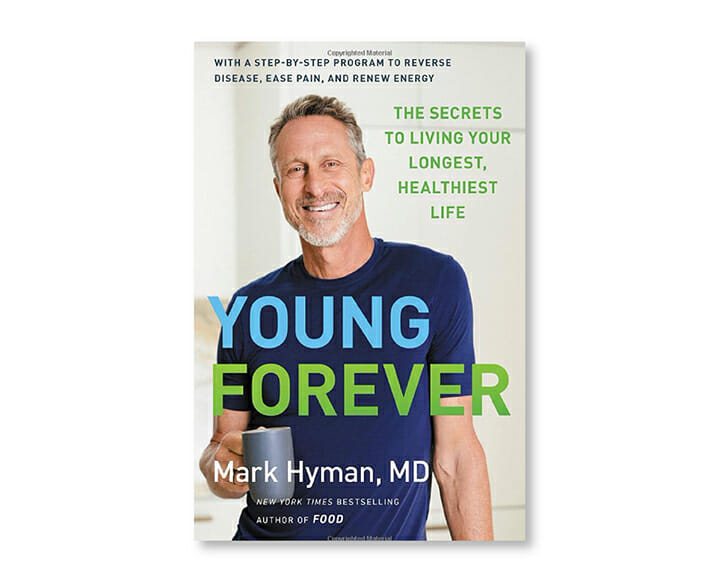
The Hallmarks of Aging – Part One
There are ten distinct hallmarks of aging—the underlying common pathways or mechanisms of aging. But each hallmark is influenced by the others and affected by various imbalances—too much or too little of certain inputs that can negatively impact the expression and progression of the hallmark.
Understanding those interactions and weblike connections is the key to solving the puzzle of aging. What drives these hallmarks, these biochemical and genetic dysfunctions that manifest as disease and accelerated aging? And more importantly, what can we do to create balance and slow or even reverse the progression of the hallmarks of aging? I want to introduce you to the concept of the hallmarks of aging if you are new to the idea and teach you how you can reverse their effects on your body and mind.
Because there are so many hallmarks of aging, I’m going to break up the information into two parts. In this week’s installment, I’ll focus on the first five hallmarks of aging—what they are and how to combat them—and I’ll tackle the remaining five next week. So let’s dig in!
01 | Disrupted Hormone and Nutrient Signaling
Years ago, I went to a longevity conference that brought together leading researchers in aging. I met Lenny Guarente there, the MIT scientist who demonstrated dramatic life extension in mice, even in the absence of calorie restriction. On the way to a talk, I asked him about the causes of aging. He simply said, “Sugar!”
Our bodies have exquisite mechanisms for sampling the environment and for sensing the levels of nutrients—amino acids, sugars, and fatty acids. From moment to moment they modify a myriad of chemical reactions that trigger either autophagy—the process of cellular recycling and cleanup—or protein synthesis—making new proteins and parts. But how do our bodies know what to do?
We have four key nutrient-sensing systems that work together, with overlapping redundancies designed to beautifully protect us from disease and abnormal aging: insulin and insulin signaling, mTOR, AMPK, and sirtuins. Most of the dietary and lifestyle strategies that prevent disease, promote health, and extend life work through these nutrient-sensing systems.
One of the keys to optimizing these systems is to give your body a break from the constant influx of calories on a regular basis through fasting—thus activating autophagy. In addition, it’s important to ensure a high-quality nutrient intake that is low in sugar and starch, high in good fats and phytochemical-rich vegetables and fruit, and high in quality protein; this activates protein synthesis. Regular exercise also activates autophagy.
02 | DNA Damage and Mutations
Damage to our DNA is another hallmark of aging. Each day our DNA gets up to 100,000 little hits. The accumulation of these insults accelerates aging. Thankfully, we have built-in repair systems that seek out damaged DNA and fix it. But even if 99 percent of damage is reversed, the remaining 1 percent accumulates over our lifetime.
Our cells also divide, and that means re-creating the DNA blueprint in each cell. Over your lifetime, your DNA produces 10 quadrillion copies of itself through cell division. Sometimes there are glitches in the copy machine, and our DNA blueprint is reproduced with these glitches.
What can be done about this? First, you can avoid DNA-damaging insults. This means reducing or eliminating the inputs that beat up on your DNA. These include processed foods, environmental toxins, and UV radiation. Second, you can activate your DNA repair systems. I cover this in greater detail in my new book, Young Forever, which you can preorder here.
03 | Telomere Shortening
Our telomeres, the little caps at the end of our chromosomes, shorten as we age. Eventually, they can’t hold the tightly protected DNA double helix to prevent it from unraveling. Each time cells replicate, the caps are removed so the DNA can be read, but the telomere shortens a little bit until the cell stops dividing or commits programmed cell death (also known as apoptosis). This is a normal consequence of cell division. The longer our telomeres, the more years of healthy DNA replication we have. The shorter they are, the shorter our life. Also, sometimes the cells don’t die but turn into zombie cells (see Hallmark 6 in next week’s newsletter), spewing out inflammatory compounds that accelerate aging.
The good news is that we have tremendous influence over our telomeres. The usual lifestyle transgressions shorten them—our toxic, processed diet, sugar, environmental toxins, sedentary lifestyle, and psychological stress. Shorter telomeres are linked to all the problems of aging and increase the risk of not just gray hair, but heart disease, cancer, immune dysfunction, and more. A whole-foods, phytonutrient-rich diet, exercise, meditation, sleep, love, and even certain multivitamins all lengthen the telomere.
04 | Damaged Proteins
DNA codes for proteins. In turn, these proteins regulate everything in your body. Your organs, tissues, and cells are all made from proteins, as are your cellular messenger molecules like hormones, peptides, immune molecules, and neurotransmitters. Proteins also form your information superhighway, facilitating trillions of chemical signals and reactions each second.
Many messenger proteins that contain the instructions for life are short-lived. And they can be damaged by all the same insults that damage DNA. When those proteins are damaged, they don’t work.
Thankfully autophagy also works to take care of damaged proteins. It’s a brilliant system, yet most of us live in ways that thwart that system. We are constantly consuming calories. This endless stream of food (starch, sugar, and protein) activates mTOR, which shuts down autophagy. As a result, we never give our bodies the much-needed break from the flood of energy needed to do the cleanup and repair work.
Periods of fasting give our body a chance to clean up the damaged proteins we create from the way we live. Sugar and starch also drive accelerated inflammation, create hormonal chaos, and age our stem cells. If you want to live a long and healthy life, sugar and starch should be either eliminated or used very occasionally.
05 | Epigenetic Damage
It’s helpful to conceptualize epigenetics using the example of a piano. The piano player plays the keys of our DNA, producing a melody we call “health” or a cacophony called “disease.” Think of the epigenome as a very sensitive microphone picking up healing or harmful signals from your environment.
Similarly, your DNA, through the epigenome, is listening carefully to all the messages conveyed throughout your whole life. Too much bad stuff damages the epigenome and makes you age faster, while the good stuff translates into instructions for your genetic code.
The wonder of this discovery is that though our DNA is fixed, the epigenome—how the music of your life is played—is not; it is highly influenced by things under our control. The longevity tools and strategies in Young Forever work in part by exerting a positive influence on the epigenome.
I’ll be sharing more about the remaining five hallmarks of aging next week. All of this information is spelled out in much greater detail in my new book, Young Forever.
