

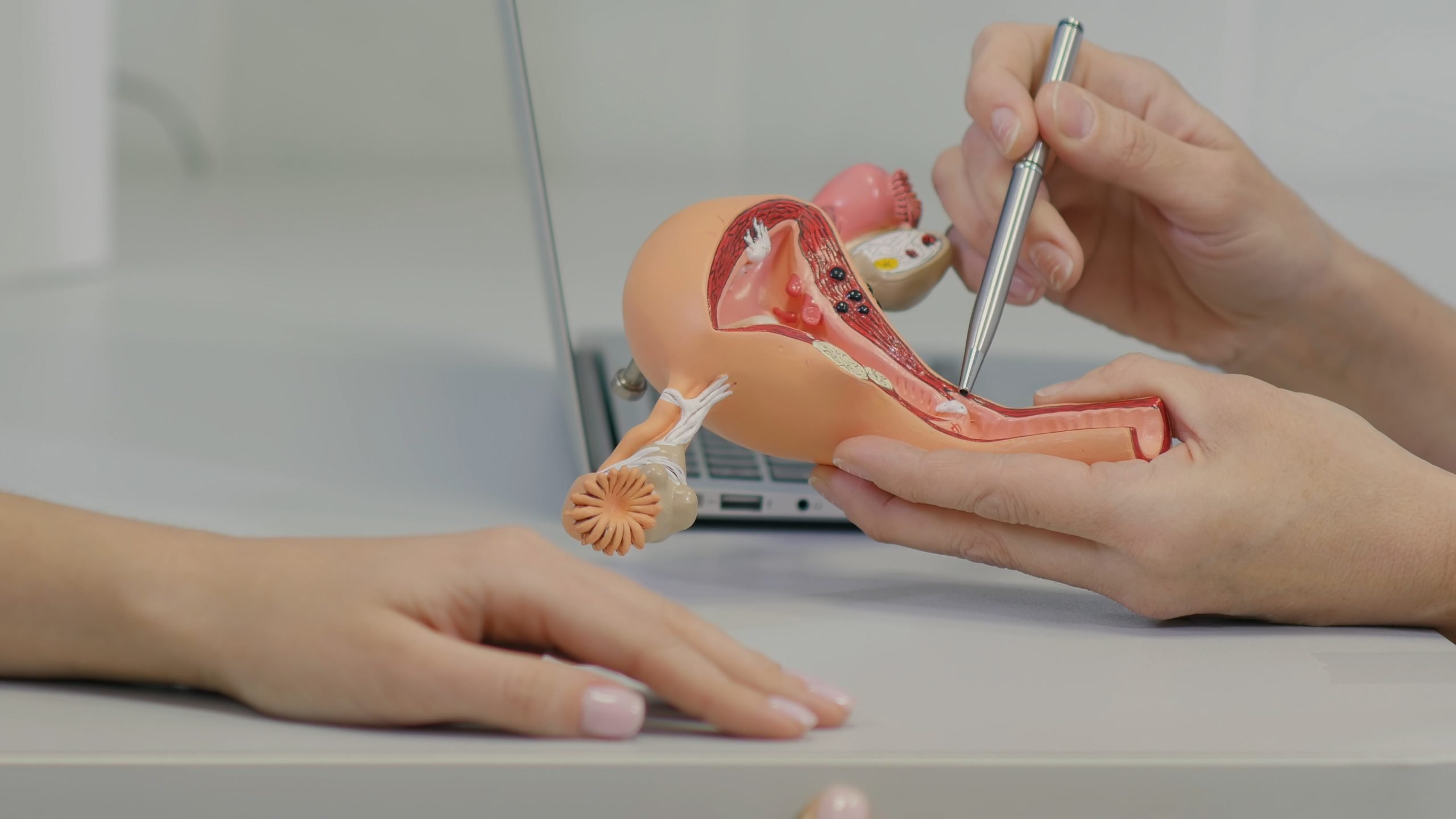
 I always assumed I’d be an exceptional patient. As a professor of medicine who researches patient experiences, I figured I’d know what to expect, how to communicate, how to regulate my emotions, how to follow directions. I imagined myself harnessing my intellect, keeping a cool head, and nailing every part of the care plan. The. Best. Patient. Ever.
And then the words “uterine prolapse” and “surgery” landed in my world—and all of that confidence unraveled in one long, messy thread.
If you’ve just been told you need surgery—or you’re frantically Googling, like I did, trying to figure out what any of this truly means—this is my story of preparing for prolapse surgery. I can’t give medical advice, but I can share the raw, unfiltered version of what it felt like to face this procedure and how I got myself ready.
Discovering the Prolapse
My journey started with something as small as a sneeze. After two big, healthy babies—two vaginal births—sneezing had long been a risky activity. Once perimenopause arrived, “risky” became “okay seriously … what is actually happening down there?” I also noticed a bump that wasn’t there before. So I did what any good patient does: trotted off to my gynecologist.
After exams and tests came the verdict: not just uterine prolapse, but cysts that likely contributed to my stress incontinence. Translation: my uterus was, in fact, falling out. Which, by the way, I did not know was possible. My care was transitioned to a urogynecologist—kind, clear, and truly lovely—who walked me through options. We could try a pessary, which I would insert, remove, clean, remember to take out before sex (so much remembering). Or we could do surgery—remove the cysts and fix the prolapse while we were already in there.
Here’s the thing: once she said the word “surgery,” my brain shut off. She kept speaking—twenty more minutes of clean, careful explanation—but inside my head it turned into Charlie Brown’s teacher’s voice. Wah-wah. My feelings drowned everything else out. Cut into my uterus? Sew it to a wall so it stops falling off its barstool? (Yes, we’ll get to my drunk-uterus-at-the-bar metaphor.) What the actual … F.
I had never spent this much time thinking about my uterus. In my mind, she was like a regular at a neighborhood bar. Babies born, job done—now she just sits in a quiet corner, Chardonnay in hand, catching up on the gossip of my other organs.
Except… apparently she’d been b u s y . Growing “drinking buddies” in the walls (hello, cysts) and then, one day, sliding right off her barstool and toward the door. Not chill. Not cute. Definitely not what I signed up for.
Why So Little Information Exists
I did what we warn patients not to do: I paged Dr. Google. I found clinical descriptions, diagrams, timelines. What I didn’t find were stories—real, lived experiences that could answer the questions actually keeping me up at 2 a.m.: How much would it hurt? Would I be able to walk my 50-pound Sheepadoodle who turns into a pogo stick the second the leash is on? Would I ever have another orgasm? Would I need help every time I sneezed, laughed, or coughed?
The internet told me “6–8 weeks of recovery.” Six to eight weeks of… what, exactly?
And I knew why the answers were so thin. This is a women’s health issue.
Women’s bodies, especially the parts below the belt, get shrouded in euphemism and silence. Compare the paucity of prolapse stories to the ocean of erectile dysfunction resources and you’ll see what I mean.
That’s one reason I’m writing this: if you’re here because you’re searching, I want you to have something real.
Pelvic Floor Physiotherapy: The Awkward but Essential Prep
My surgeon recommended pelvic floor physiotherapy before surgery to help me build strength where it matters and calm what was too tense. I pictured gentle exercises, some breath work, a few tips. What I did not anticipate was how… hands-on… it would be.
Pelvic floor PT involves internal exams—with gloved hands—from multiple angles. If a PT treats a shoulder, they have to look at and feel the shoulder. The pelvic floor is no different.
The first time, I was surprised and embarrassed. My physiotherapist was excellent—she listened, explained, and moved at my pace—but it was still intimate and, frankly, disconcerting. There were also moments that included a rectal exam because those muscles undergird everything in that region. None of this was done casually; it was done with full, explicit consent. And it helped.
I learned that not everything needed “more Kegels.” In fact, too many Kegels can make some muscles overactive and tight. I had areas that needed strengthening and areas that needed softening. She coached me on breathing mechanics, on the difference between soluble and insoluble fiber, on stool softeners and laxatives, on how to position my body on a footstool so bowel movements wouldn’t require pushing. She even gave me a grocery list and a tiny lecture on peri bottles.
It wasn’t glamorous. But the embarrassment was fleeting and the benefits were lasting. If you’re headed for surgery, pelvic floor PT is the friend you didn’t know you needed.
Navigating the System
Here’s a thing I’ve learned from years of studying healthcare systems: your experience is shaped as much by administrators and nurses as it is by physicians. These are the pink-collar workers—mostly women—who keep the machine running while getting too little credit and too little pay. The OR schedule, the imaging slots, the follow-up paperwork: they move because an army of Alices moves them.
So I make it a point to be unfailingly kind to administrative staff and nurses. They hold the keys. But kindness alone doesn’t always open doors.
My surgeon told me that her scheduler—let’s call her Alice—would be in touch to book the procedure. Weeks passed. I left three polite messages. Silence. I emailed my surgeon, who nudged the office. Alice called that day; we booked a date. Later, the hospital phoned to go over details and assured me someone would send everything in writing. A week passed. Nothing. I called Alice twice. More silence. I emailed my surgeon again; like magic, an email from Alice arrived—a form letter that wasn’t quite what I needed.
Days before surgery, a message popped up with a follow-up appointment… at a clinic thirty minutes farther away than my surgeon’s office. I didn’t recognize the nurse’s name. Was this even for me? I asked my surgeon. Yes, the nurse was part of her team and worked in the closer office a few days a week. To change it? “Just reach out to Alice.”
Cue deep sigh.
Two more voicemails. Seven days. Nothing. Finally, I called the main desk instead of Alice’s line. Someone answered. Ten minutes later, my appointment was moved to the closer office. No drama. No delay. No Alice.
I don’t fault her. I imagine she’s overworked, underpaid, and inundated by desperate, sometimes rude people. But here’s the uncomfortable truth: when the system jams, you need a workaround. Loop in your clinician. Call a different number. Ask the front desk. Be kind, persistent, and strategic.
This is your health—advocate for it… hard.
The Week Before: Fear, Control, and the “Healing Nest”
Intellectually, I knew I needed this surgery. Emotionally, I was wrecked. Inviting strangers with knives and sutures into my most intimate spaces is not something my nervous system accepted with a shrug. So I did the only thing that made sense: I controlled what I could control.
I made a “healing nest.” Candles. Pillows. A wedge that would let me sit up in bed without pressure. A tray table that slid over the mattress so my iPad could rest on something other than my lap. Extension cords for chargers. A cooler with ice and drinks. A printed medication schedule taped to the nightstand with alarms set for the overnight doses. It was part practicality, part ritual—turning dread into preparation, fear into care.
Surgery Day: Backstage, the Gown, and the Lights
Nothing truly prepares you for the backstage of surgery day. Pre-op felt like the hallway before a ballet recital when I was a kid: a line of us, each in our assigned spot, being checked and re-checked at regular intervals. Have you eaten? Any allergies? What procedure are you having today?
I heard a patient in the next bay snap, “Don’t you people talk to each other?” But there’s a reason for the repetition—it’s a safety net. Each person who introduces themselves—the nurse, the anesthesia team, the student, the resident, the surgeon—needs to confirm the same crucial details. It’s not disorganization; it’s redundancy by design.
About the gown: it’s medical origami. Paper that somehow turns into clothing with Velcro, ties, and a hidden air-powered warming system that—once you understand it—feels like a tiny miracle. Could I put it on properly by myself? Absolutely not. Did I ask for help? Absolutely yes. Ten out of ten, would recommend.
Then the OR. Over-bright lights. Beeping machines. A table in the center that is not interested in your comfort; it’s built for access and precision. My arms were placed out to the sides and secured. I am not particularly religious, but the image evoked something I didn’t expect.
I reminded myself: this is standard, this is safe, this is what the team needs to do their best work. Breathe in. Breathe out. Trust the people who do this every day.
Closing Thoughts Before Surgery
Preparing for uterine prolapse surgery is about more than just fasting the night before or filling prescriptions. It’s about navigating an often-clumsy healthcare system, facing embarrassment in physiotherapy, advocating for yourself when staff don’t respond, and finding ways to take care of both your body and your emotions.
Part two of my story – the recovery – will be available here starting on October 14, 2025!
If you’re reading this because you’re facing the same path—know this: you are not alone. It’s scary, yes. But it’s also survivable. And preparation, both physical and emotional, can make a world of difference. —Lara, Guest Writer
