

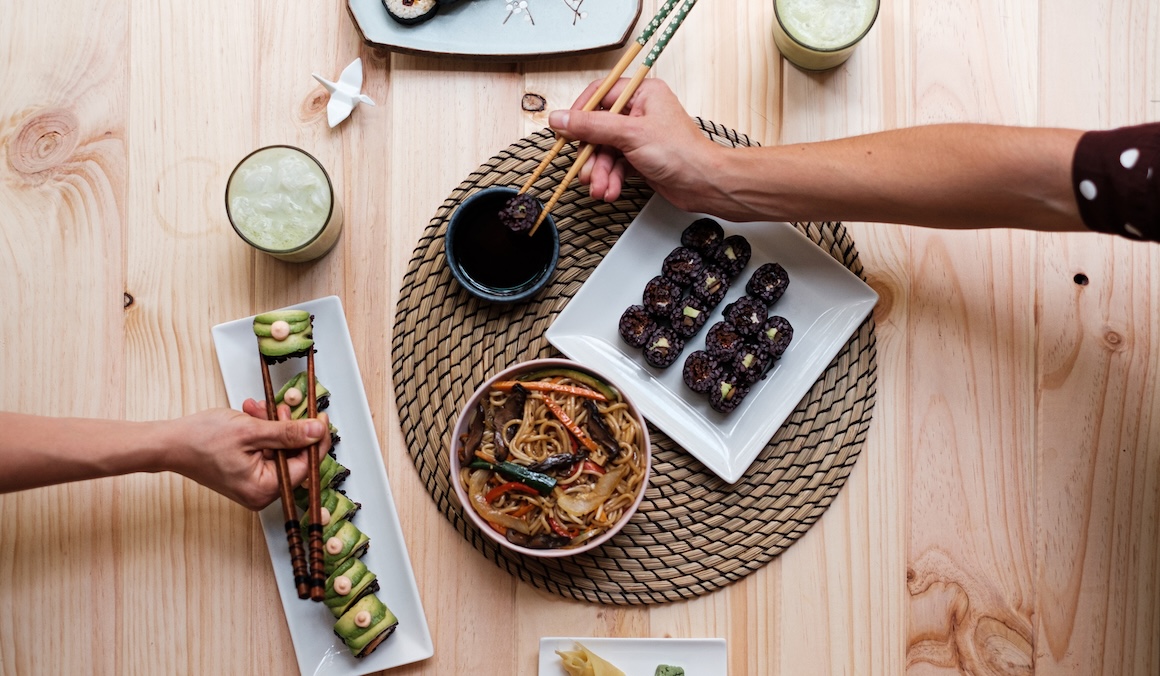
Soy sauce is an umami-rich staple in many kitchens—or at the very least, an essential condiment to heighten the gustatory pleasure of eating sushi, stir-frys, and countless Asian-inspired dishes. Tamari, another soy-based sauce central to Japanese cuisine, might not get as much fanfare as its more ubiquitous counterpart. However, it’s well worth checking out if you want to take your taste buds for a richer (and potentially healthier) joyride.
Ahead, we unpack the ins and outs of tamari vs. soy sauce. Discover their key similarities and differences, and share whether one is a more nutritious option than the other.
What is tamari?
Tamari is a popular type of Japanese soy sauce. “While it is thought that soy sauce originated in China, tamari is traditionally thought to come from Japan,” says Danielle VenHuizen, RDN. “The Japanese discovered that the liquid produced on the surface of fermenting miso offered a pleasant flavor somewhat similar to soy sauce.” Miso (i.e., fermented soybean paste) is said to be Japan’s oldest fermented food, and the first recorded mention of Japanese soy sauce dates from the eighth century AD.
“Umami flavors are very important in traditional Japanese cooking, and tamari is a big part of that,” VenHuizen says. Fun fact: The word umami translates to ‘pleasant savory taste’ in Japanese.
What is soy sauce?
“Soy sauce is made from a mixture of soybeans and wheat, which undergoes fermentation with added brine and mold,” explains Jessie Wong, RDN.
Soy sauce—of which there are many different kinds—is one of the most significant staples in Asian cuisine. While it originally hails from China, it’s present across many East and Southeast Asian dishes. Chinese varieties aside, you’ll also find different types of soy sauce in everything from Korean condiments to Filipino sauces. In addition, shoyu is the name for Japanese-style soy sauce that’s more similar in composition to traditional soy sauce.
Tamari vs. soy sauce
While tamari and soy sauce have a lot in common, they’re not necessarily interchangeable. “Tamari and soy sauce are both soy-based condiments, but they differ in composition, texture, and fermentation,” Wong says. Here are some of the key aspects differentiating the two:
Origin
Tamari hails from Japan, while soy sauce has its origins in China.
Ingredients
“Soy sauce is made from the fermentation of both soybeans and wheat, while tamari is produced from fermenting miso,” VenHuizen says. Tamari is typically wheat-free and has a higher concentration of soy in the form of miso.
Color, flavor, and consistency
Tamari and soy sauce are pretty similar in color, says VenHuizen, though tamari appears a tad darker. According to Wong, the process of making tamari lends it a richer, more robust umami flavor as well as a thicker consistency. The ingredients and process used to make soy sauce, on the other hand, “result in a saltier, thinner sauce with a slightly sweet flavor,” she says.
Sodium content
Both tamari and soy sauce are significant sources of sodium, which most adults should cap at 2,300 mg per day, per the FDA. That said, tamari has a slight edge over soy sauce in this arena, though the exact amount of sodium will vary by brand and specific products. “Tamari generally contains slightly less sodium than regular soy sauce. This makes it a better option for those managing their sodium intake, which is crucial for heart health and blood pressure management,” Wong says.
Note: Many soy sauce and tamari brands offer low-sodium alternatives for their standard SKUs, allowing you to enjoy their rich flavors within healthier bounds.
Is tamari healthier than soy sauce?
In short, tamari is generally a healthier alternative to soy sauce—but not just because it tends to pack slightly less sodium. “Tamari offers an array of health-boosting antioxidants and, surprisingly, an appreciable amount of protein at two grams per tablespoon,” VenHuizen explains. She adds that tamari also offers small amounts of B vitamins, zinc, copper, manganese, and potassium.
Since tamari most often contains little to no wheat, it’s also a safer option for individuals with celiac disease or gluten sensitivities. “Most dark Asian sauces contain wheat, so tamari stands out as an ideal choice,” says VenHuizen. While traditional soy sauce contains wheat, gluten-free options exist. Of course, be sure to double-check labels if you’re dealing with either of these conditions.
Note: Since tamari and soy sauce are both fermented food products, people with sensitivities to histamines may be better off using both sparingly. In addition, those with a soy allergy should abstain from eating both.
When (and how) to use tamari vs. soy sauce
If you’re compelled to use tamari as a soy sauce substitute for health reasons or otherwise, Wong says a 1:1 ratio will suffice in most recipes. Yet sometimes it may be more ideal to use tamari vs. soy sauce (and vice versa).
Wong notes that tamari particularly shines in cooked dishes for which you’re seeking a thicker consistency and deeper umami taste: think soups, stews, stir-frys, and braises. You also can’t go wrong by using tamari as a raw seasoning, whether as a sauce for vegetables, fish, or bite-sized appetizers or mains. “It’s often used as a dipping sauce for sashimi or dumplings, but also mixed with other sauces for dressings,” VenHuizen adds. To get really creative (while simultaneously satisfying your sweet tooth), you can even whip up your own tamari caramel sauce to drizzle onto ice cream sundaes, French toast, popcorn, and sweet potato fries.
On the other hand, soy sauce is particularly suitable for marinating. “Its thinner texture and slightly sharper taste can be ideal for marinades, especially for meats, as it penetrates quickly,” Wong shares.
The bottom line
Tamari and soy sauce have a lot in common—chief among them their umami-rich flavor profiles and zest they bring to countless Asian dishes. In the face-off between the two, tamari may be a healthier substitute for soy sauce, especially for those who need to avoid wheat and/or curb their sodium intake (albeit opting for tamari vs. soy sauce will only make a small dent on the latter front). So your best bet is to opt for a low-sodium version of either tasty condiment.
FAQs
Does tamari have MSG?
“Naturally brewed tamari does not contain added monosodium glutamate (MSG),” says Wong. However, there’s a chance MSG may exist as a byproduct of the fermentation process. She underscores the importance of checking labels to make sure you opt for a variety that aligns with your dietary preferences and is suitable for your health concerns.
Is too much tamari bad for you?
Though tamari offers a smattering of beneficial compounds, there can be too much of a good thing. It’s still a significant source of sodium—per VenHuizen, as much as 500 to 1,010 mg per tablespoon—so be sure to factor this amount into your daily diet so as not to consume it in excess.
Does tamari need to be refrigerated?
Since tamari lacks preservatives, Wong recommends refrigerating it after opening to maintain its flavor and quality. She adds that soy sauce can often be stored at room temperature, though you may be better off keeping it cool if it’s naturally brewed, low in preservatives, or simply prefer it chilled.
The best tamari and soy sauces to buy
There are many different types of tamari and soy sauces available on the market. They vary in flavor and consistency. Here are some brands to consider.

Quantity: 10 fluid ounces
Serving Size: 1 Tbsp
Calories: 10
Carbs: <1 gram
Protein: 2 grams
Sodium: 980 milligrams
Potassium: 130 milligrams

Quantity: 10 fluid ounces
Serving Size: 1 Tbsp
Calories: 10
Carbs: 1 gram
Protein: 1 gram
Sodium: 590 milligrams
Potassium: 50 milligrams
Well+Good articles reference scientific, reliable, recent, robust studies to back up the information we share. You can trust us along your wellness journey.
-
Saeed, Farhan et al. “Miso: A traditional nutritious & health-endorsing fermented product.” Food science & nutrition vol. 10,12 4103-4111. 15 Sep. 2022, doi:10.1002/fsn3.3029 -
Chin, K W et al. “The histamine content of oriental foods.” Food and chemical toxicology : an international journal published for the British Industrial Biological Research Association vol. 27,5 (1989): 283-7. doi:10.1016/0278-6915(89)90129-4
Our editors independently select these products. Making a purchase through our links may earn Well+Good a commission.
