

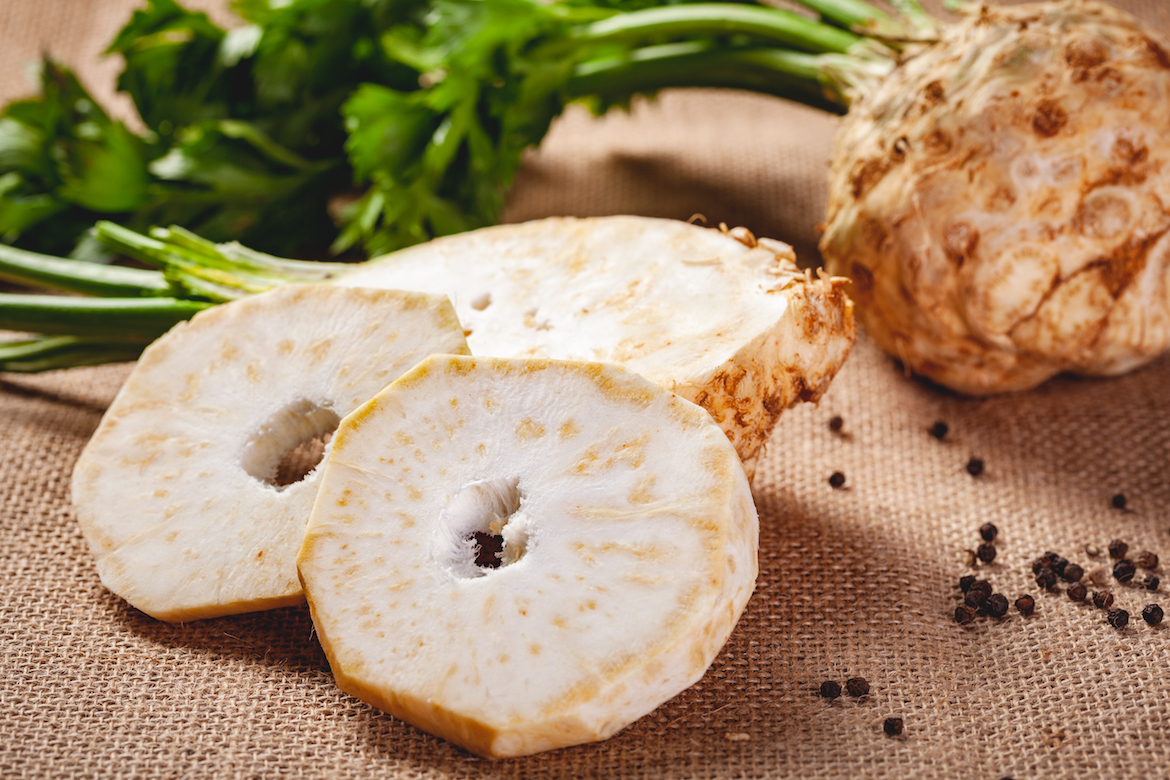
This generally lesser-known root veggie is not only delicious but full of nutrients that support our best health. This may just be why celeriac has such a deeply rooted (no pun intended) history as both a food staple and medicinal plant. Learn all about what exactly celeriac is, how it can benefit our health, and ways you can start experimenting with it in the kitchen, here!
What is celeriac?
“Celeriac, also known as celery root, is closely related to celery but is not the root of the celery in which you’re probably familiar,” explains Bianca Tamburello, RDN at FRESH Communications. Celeriac is a separate species of root vegetable that is also a relative of parsnips, carrots, and parsley. “It can be referred to as celery root, knob celery, or turnip-rooted celery as well,” she shares.
Celeriac is also known by its scientific name, Apium graveolens L. var. rapaceum, and has a signature bulbous look about it, reminiscent of an irregularly-shaped turnip. This light beige, softball-sized root is covered in little rootlets, giving it a bumpy texture. Inside you’ll find a white interior that looks just like a potato. And while there are leafy, celery-like stalks springing from it above ground, these are not the celery you’re used to dipping in hummus or turning into juice. Most people discard these stalks, but they’re actually perfect for homemade veggie stock.
The bulb itself can be enjoyed either raw, offering a super satisfying crunchy texture, or cooked to bring out its subtle nutty sweetness, similar to other root veggies. Its taste is very similar to that of celery leaves, parsley, and turnips, but with an injection of earthiness. Like many other root veggies, the harvest season for celeriac is typically September through April, though you can often find it in many grocery stores year-round. “Look for celeriac near the other root veggies in the produce aisle,” says Tamburello.
In terms of history, while this grapefruit-sized root was first cultivated in Europe, celeriac has been used for thousands of years across the globe. In fact, it was used in Roman, Egyptian, and Greek cultures for both medicinal and religious purposes. In the ancient Indian wellness practice of Ayurvedic medicine, it’s often used as a detoxifier and diuretic to help lower blood pressure, as it is in traditional Chinese medicine for similar purposes.
6 impressive health benefits of celeriac
But what does the evidence actually tell us about the health benefits associated with celeriac? Thanks to its impressive nutrition profile, there are quite a few – here are the highlights:
1. Celeriac supports immune health
In this root veggie, you’ll find notable amounts of immune-boosting vitamins C and E, as well as a whole host of plant compounds including phthalides, terpenes, polyphenols, and pigments chlorophyll and carotenoids. All of these micronutrients qualify as antioxidants, which help to reduce inflammation throughout the body and target free radicals. Free radicals are unstable molecules that are the culprits for minor inconveniences like wrinkles all the way to chronic diseases like cancer and neurodegenerative disorders.
2. Celeriac boosts heart health
The vitamin C found in celeriac is not only beneficial for our immune system, but it also encourages optimal heart health, alongside the potassium, fiber, and vitamin K this root contains. Vitamin C, also known as ascorbic acid, has been linked with reduced risk for hypertension, or high blood pressure—a key component to heart disease. Meanwhile, vitamin K plays a vital role in blood clotting, another important element of heart health. The soluble fiber in this veggie also binds to cholesterol in the small intestine, helping to rid the body of it instead of allowing it to be absorbed and potentially contributing to plaque build-up in our arteries. And finally, potassium is an electrolyte that supports heart rhythm as well as keeps blood pressure levels in check.
3. Celeriac champions gut health
The fiber found in celeriac benefits gut health, too. The mix of soluble and insoluble fiber it offers treats and prevents both constipation and diarrhea while also helping to avoid the bloating and cramping associated with low fiber intake (a very common problem in the U.S.). Plus, the soluble fiber it contains acts as a prebiotic, or food for our healthy bacteria found in the gut microbiome, helping it to thrive. The gut microbiome supports healthy digestion, as well as overall wellness throughout the body, so this benefit is not to be taken lightly.
4. Celeriac helps maintain strong bones
Thanks to the calcium, phosphorus, and manganese in celeriac, this uncommon root vegetable also aids in bone health! All three of these minerals play an integral part in the formation and maintenance of bone health and density. These benefits help to prevent bone diseases like osteoporosis and osteopenia.
5. Celeriac aids in metabolic health
Celeriac can be a beneficial addition for those with metabolic disorders or who want to prevent them as well. This is partly due to the fiber it contains, as this type of carbohydrate slows digestion, helping to dull the blood-sugar response. So, after enjoying this veggie, you’ll experience less intense spikes and crashes in blood sugars—and also energy levels. However, this benefit may be most significant for those with metabolic concerns like type 2 diabetes as it makes their blood sugar management a lot easier. Also, unlike many of celeriac’s other root veggie relatives, it is comparatively low in total carbohydrates, doubling its blood sugar management benefits.
6. Celeriac is rich in B vitamins
Finally, our beloved celeriac also offers a whole host of B vitamins, especially vitamin B6. “Celeriac’s B vitamins support regular body functions and the immune system, brain, and nervous system,” says Tamburello. Vitamin B6, also known as pyridoxine, offers all of these benefits as well as helping to treat and prevent anemia.
While all this information about celeriac sounds alluring, how exactly should you go about using it in the kitchen?
When choosing celeriac at the market, opt for a medium-sized bulb (somewhere between three and four inches across) over an especially large one, as they are usually the best tasting. It’s also a good idea to avoid options that are overly discolored, cracked, or hollow. You can test for hollowness by giving it a little knock and the bulb should feel firm and heavy.
Once you have it home, celeriac is best stored in the veggie drawer of your fridge where it should stay fresh for the greater part of a month, if not two. Alternatively, you could also store it in a cool dry place, similar to potatoes but your shelf life could be a few weeks shorter, depending on humidity levels.
To prepare this bulbous root veggie, make sure to give it a good scrub with cool water to remove any lingering dirt. Then, use either a paring knife or vegetable peeler to remove the tough outer skin. Now you’re ready to chop or slice the flesh for a whole host of recipes! Be sure to prep it right before you plan to use it or it will discolor—unless you soak it in a water bath with a few drops of either lemon or vinegar.
From here, if you are opting for raw preparations, celeriac adds an interesting flavor to salads or slaws; however, be sure to thinly slice it or grate it for easy eating, as it is seriously crunchy though “not stringy like celery,” says Tamburello. Otherwise, the cooked options for this veggie are nearly endless, pairing perfectly in soups, stews, savory pies, sauces, casseroles, and even riffs off of latkes.
“Similar to other root vegetables, celeriac is often roasted, boiled, and pureed into soups, or boiled and mashed like potatoes,” Tamburello also offers. You can even spiralize them for a low-carb pasta alternative. However, maybe the most famous dish featuring celeriac is the French celeri remoulade, a bright salad featuring fresh celeriac in a tangy mayonnaise-based dressing.
There are so many reasons to love celeriac, from its taste to its impressive health benefits. Experimenting in the kitchen is always a worthy cause in our book, so give celeriac a try this fall harvest season!
