

Recipe notes and tips
What are Scotch eggs?
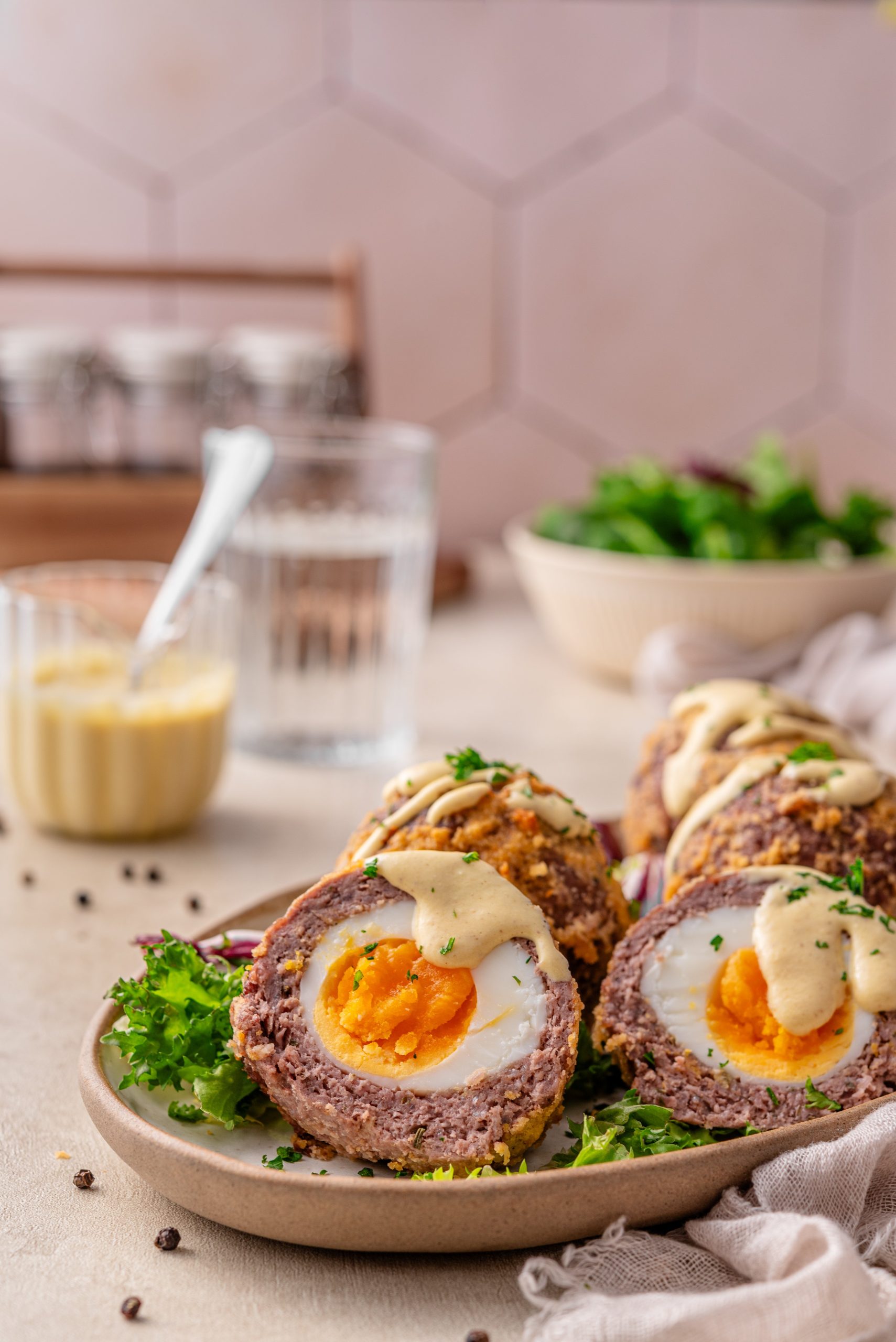
Scotch eggs are a traditional British dish made by wrapping boiled eggs in seasoned sausage meat, coating them in breadcrumbs, and frying or baking until crisp.
Despite the name, they’re generally associated with British cuisine rather than specifically Scottish cooking.
Our keto version uses seasoned ground beef instead of sausage meat and replaces the traditional breadcrumb coating with almond flour and Parmesan. Cooking them in the air fryer gives the outside a delicious finish without deep-frying.
Why use soft-boiled eggs?
The eggs continue cooking while surrounded by the beef in the air fryer, so starting with soft-boiled eggs helps prevent the yolks from becoming overly firm.
Boiling the eggs for approximately 6 minutes gives them a soft center before the second cooking stage.
The final yolk consistency will depend on the size and starting temperature of the eggs, as well as your air fryer. For a softer center, avoid overcooking the Scotch eggs.
How do I peel soft-boiled eggs without breaking them?
Soft-boiled eggs are delicate, so handle them carefully.
Transfer them immediately to an ice bath after boiling. This stops the cooking process and helps make the shells easier to remove.
Gently tap the shells all over, then peel carefully, preferably under a little running water.
Pat the eggs completely dry before wrapping them in the beef mixture so the meat adheres properly.
How do I keep the beef coating from falling apart?
Make sure the ground beef is evenly flattened before wrapping it around the eggs.
Use parchment paper to help shape the meat without sticking, and gently press the edges together to create a complete seal.
Avoid leaving gaps or air pockets, which can cause the coating to separate during cooking.
Handle the assembled Scotch eggs carefully when transferring them to the air fryer.
Can I use pork instead of beef?
Absolutely! Ground pork is a traditional choice for Scotch eggs and works beautifully in this recipe.
Choose ground pork with enough fat to keep the coating juicy and tender.
You can also use a combination of ground beef and pork for a slightly different flavor.
If using prepared sausage meat, check the ingredients for added sugar, breadcrumbs, or starches.
Can I make these Scotch eggs without almond flour?
Yes! Finely crushed pork rinds make an excellent nut-free, low carb alternative to almond flour.
They create a savory coating that pairs particularly well with the seasoned beef and Parmesan.
You can also replace the almond flour with additional finely grated Parmesan, although the coating will be denser and have a more pronounced cheese flavor.
Can I make Scotch eggs in the oven?
Absolutely! Preheat the oven to 400°F (200°C).
Arrange the prepared Scotch eggs on a parchment-lined baking sheet, leaving space between them.
Bake for approximately 18 minutes, turning carefully halfway through, until the coating is browned and the beef is cooked through. Cooking times may vary depending on the size of the Scotch eggs.
How do I know when the Scotch eggs are cooked?
The beef coating should be fully cooked, with no raw meat remaining.
For food safety, ground beef should reach an internal temperature of 160°F (71°C). Check the temperature of the meat layer with an instant-read thermometer, taking care not to insert the probe into the egg.
Because the meat surrounds an egg, the final yolk consistency may vary depending on how long the Scotch eggs need to cook.
Can I use a different mustard?
Yes! Dijon mustard gives the sauce its smooth texture and pleasantly sharp flavor.
Whole-grain mustard is another delicious option if you prefer a little texture.
For a milder sauce, start with less mustard and adjust to taste. Always check the label for added sugar if you’re following a strict keto diet.
Can I make a quicker mustard sauce?
Absolutely! For a lighter, tangier alternative to the warm cream sauce, simply mix ½ cup sour cream with 1–2 tsp Dijon mustard, ¼ tsp garlic powder, and a pinch of salt and black pepper.
Taste and adjust the mustard to your liking. This quick, no-cook sauce is delicious with both warm and cold Scotch eggs and takes just a minute to prepare.
How do I prevent the mustard sauce from becoming too thick?
The combination of heavy cream and butter naturally thickens as the sauce cools.
If it becomes too thick, gently reheat it over low heat and whisk in a splash of water or unsweetened almond milk until smooth and pourable.
Avoid boiling the sauce vigorously, as gentle heat helps maintain its creamy consistency.
What else can I serve with keto Scotch eggs?
Scotch eggs are rich and satisfying, so fresh vegetables make an excellent accompaniment.
Try serving them with cucumber salad, steamed asparagus, sautéed green beans, or roasted broccoli.
They’re also delicious with a little extra Dijon mustard or a simple homemade mayonnaise.
Can I prepare Scotch eggs ahead of time?
Yes! You can boil, cool, and peel the eggs in advance. Store them in an airtight container in the refrigerator until ready to assemble.
You can also prepare the seasoned beef mixture and Parmesan coating ahead of time.
For the best texture, assemble and cook the Scotch eggs shortly before serving.
Are Scotch eggs good for meal prep?
Definitely! Scotch eggs are convenient for packed lunches and meal prep because they’re easy to portion and can be enjoyed warm or cold.
Keep the mustard sauce and salad separate until serving.
If you plan to eat them cold, refrigerate the cooked Scotch eggs promptly and keep them chilled until ready to eat.
Storage and leftovers
Store cooked Scotch eggs in an airtight container in the refrigerator for up to 3–4 days.
Reheat thoroughly in the oven or air fryer if serving warm. Keep in mind that reheating will cook the yolks further, so they may no longer have soft centers.
Store the mustard sauce separately and reheat gently over low heat, adding a splash of water if needed.
The dressed salad is best enjoyed fresh.
