


Monitoring glucose levels is having a big moment in the wellness world. While taking regular readings of blood sugar was once something only done by people with diabetes, the practice has spread to those seeking potential health benefits from continuously tracking their blood sugar.
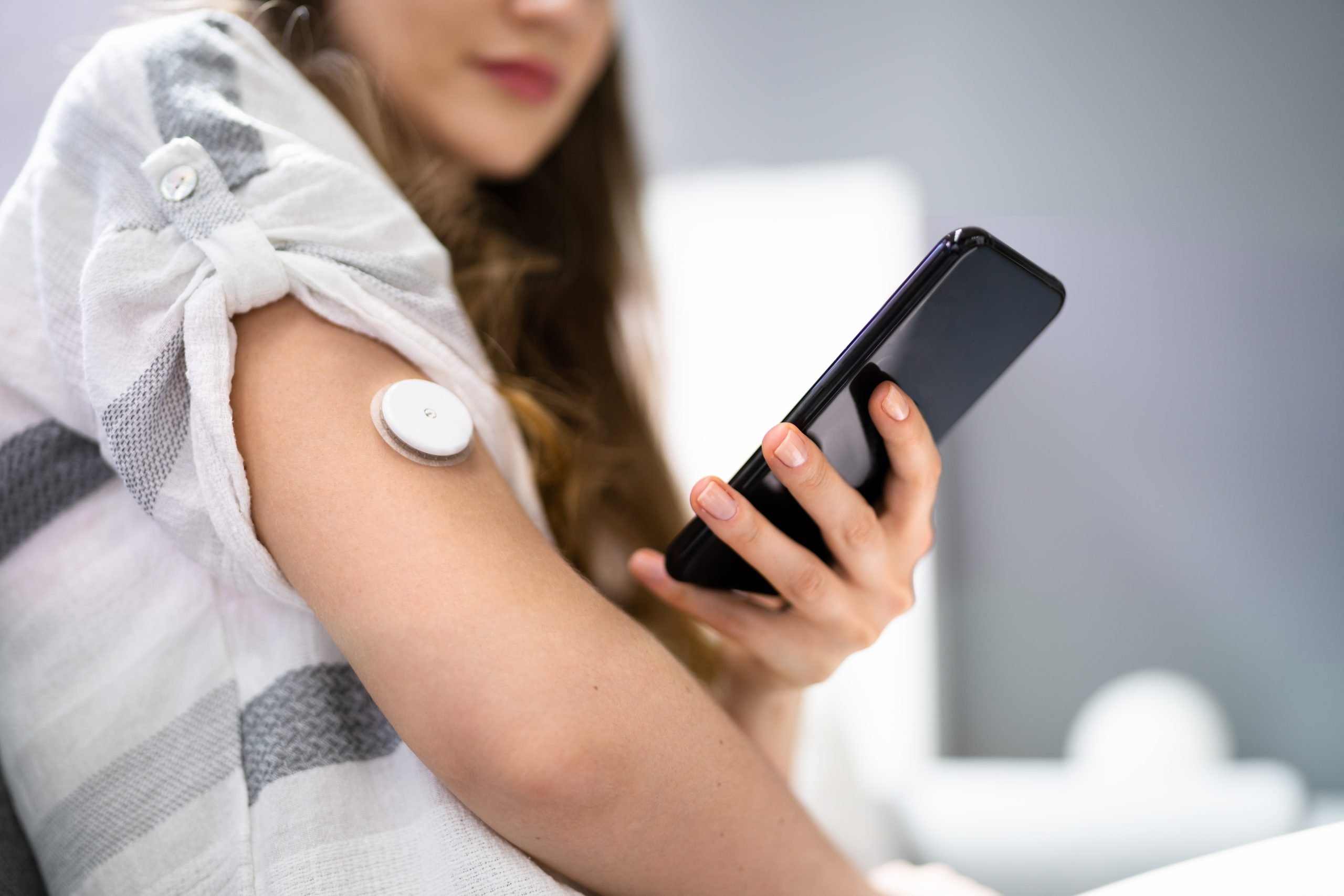
And instead of doing daily finger pricks to measure glucose in the blood, there’s now a simpler and less invasive way to take similar measurements. You’ve likely already seen someone wearing one without realizing what it was. It looks like a small plastic circle sitting on the skin—usually on the arm—sometimes covered by a piece of sticky fabric or a circular patch.
Meet the continuous glucose monitor.
What is a continuous glucose monitor, anyway?
What Is a Continuous Glucose Monitor?
A continuous glucose monitor (CGM) is a piece of wearable technology that measures blood sugar levels as they fluctuate throughout the day. These ongoing readings are taken through a tiny sensor inserted just beneath the skin, usually placed on the arm or the belly. A sticky patch helps hold the sensor in place.
A CGM has three parts:
-
the sensor
-
the transmitter
-
the software program
The sensor measures the glucose in the interstitial fluid—the fluid between your cells—which correlates with but is not identical to the glucose in your blood. Because the measurement isn’t taken directly from the bloodstream, it’s considered an estimate and is less precise than a finger-prick reading.
Many sensors are disposable and need to be replaced every couple of weeks.
The transmitter sends the data collected by the sensor to the software program, often via a smartphone app or insulin pump. The software tracks the glucose readings, storing and charting the data it receives.
Because readings are taken every five minutes, you get a general picture of how your glucose responds to what you eat and drink, how you move, your medications, and your stress levels. Over time, the continuous readings may reveal patterns that could guide lifestyle or health-related choices.
What Glucose Monitoring Apps Tell You
Depending on the type of app used to chart glucose readings, you can get all sorts of information. Many (but not all) allow you to log meals, snacks, physical activity, and sleep.
While the basic function is to track glucose fluctuations and set a target range, some apps take things further. They may:
-
Suggest which foods or behaviors cause spikes
-
Offer recommendations for adjusting meals or exercise
-
Provide insights aimed at keeping glucose in a perceived “ideal” range
-
Offer in-app “certified glucose experts” or one-on-one dietitian consultations
-
Include programs for weight loss or diabetes prevention
-
Push personalized coaching, meal guides, or lifestyle challenges
In fact, many companies that promote CGMs or offer their own glucose-tracking apps focus heavily on weight loss as the primary selling point.
What was once a tool for managing diabetes has quickly become another method of hyperfixating on weight loss in the name of “health.”
Why Are Non-Diabetics Using CGMs?
Proponents of CGMs suggest that this technology can help people live healthier lifestyles. With access to continuous glucose levels, someone might adjust their eating habits, attempt to prevent diabetes, or—as some anecdotal claims suggest—even put diabetes into remission.
Understanding how your glucose responds to movement may also encourage more consistent physical activity.
For athletes, CGMs may offer insights into fueling and training for “peak performance,” though research is limited on whether this provides more value than working with a knowledgeable coach or trainer.
And of course, biohackers love CGMs because they offer yet another metric to track, optimize, and manipulate in pursuit of “optimal health.”
The Darker Side of Continuous Glucose Monitors
While CGMs may benefit some people without diabetes, it’s important to recognize the downsides.
It’s easy to get sucked into the idea of optimizing your health, and CGMs encourage exactly that. When you’re constantly tracking various data points in service of enhancing physical health, it can become obsessive. Instead of listening to your body and making choices based on how you feel, you start making decisions based on the data.
This hyperfocus can lead to disordered eating habits, such as restricting calories or eliminating entire food groups to keep your glucose in a perceived target range.
There’s also the issue of companies upselling supplements based on CGM data—often with questionable ethics.
Experts worry that, for non-diabetics, CGMs may actually pathologize normal body responses—making people stress over changes in blood sugar when that’s exactly what healthy bodies are supposed to do.
The truth is that most people don’t need to track glucose fluctuations to maintain good health, especially since there’s no good evidence that everyday blood sugar spikes cause diabetes. Blood glucose naturally rises and falls throughout the day; it’s supposed to fluctuate and even spike after eating higher-carb meals. That’s normal, expected physiology—not a red flag.
And regardless of what influencers might claim, interpreting glucose data is something a trained medical professional is far more qualified to do than an uncredentialed wellness personality.
So Where Does That Leave Us?
CGMs are excellent tools for people with diabetes who want to reduce the number of finger-prick tests they perform—but they’re not a full replacement. Direct blood readings are still more reliable than interstitial measurements.
Additionally, because glucose fluctuates naturally, it’s easy to misinterpret normal readings as something concerning if you’re not trained to understand the data.
If you’re not diabetic, you probably don’t need to monitor your glucose closely.
You can take your health cues from simply noticing how your body feels.
-
If you’re tired: you may need more sleep or less stress.
-
If you’re grouchy in the afternoon: maybe you need food.
-
If you’re low-energy: it might be hydration, hormones, or your workload.
You don’t need an app linked to an expensive CGM to tell you these things—especially when the devices and their associated membership fees can be costly and are rarely covered by insurance.
If you’re unsure or not feeling great, it’s always wise to consult an actual expert—a registered dietitian or medical professional—who can help you make informed dietary or lifestyle changes. —Naomi
