

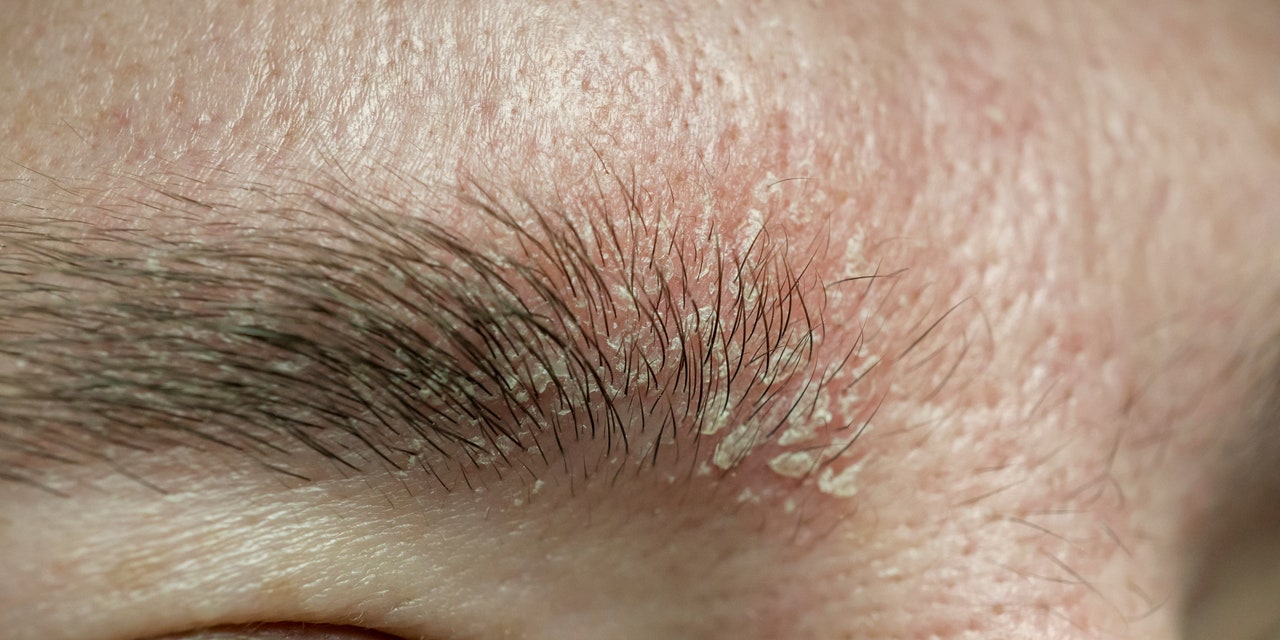
Finding a few flaky specs on your head isn’t anything out of the ordinary. But in your brow hairs? That might catch you off guard. Before you panic, eyebrow dandruff usually isn’t anything to worry about, Hope Mitchell, MD, board-certified dermatologist and founder of Mitchell Dermatology in Perrysburg, Ohio, tells SELF.
That said, it’s not exactly a one-size-fits-all diagnosis, either. Rather, those little white or yellowish crumbs could be signs of a few different issues that deserve your attention, like dry skin craving moisture, for example, or an underlying condition leading to irritation or inflammation. Below, we asked dermatologists to break down all the possible causes of eyebrow dandruff—and more importantly, how to clear it up ASAP.
So, what’s causing my eyebrow dandruff?
1. Seborrheic dermatitis
Colloquially, people often use “dandruff” as a catch-all term for any and all flakes. But according to Amy Freeman, MD, board-certified dermatologist at Schweiger Dermatology Group in Millburn, New Jersey, true “dandruff” technically refers to a mild form of seborrheic dermatitis, an inflammatory skin disorder that affects hair-bearing areas packed with oil glands—most commonly, your scalp. But it can also be the reason you’re shedding on your face, too.
No matter where it shows up, Dr. Freeman tells SELF the underlying cause of seborrheic dermatitis is the same: An overgrowth of Malassezia yeast that feeds on oils. That explains why you’re more likely to notice distinctively greasy, scaly, sometimes itchy patches in isolated spots full of sebaceous glands, like your brows, underarms, and even your beard.
Now, there are a few clues that can help you figure out if seborrheic dermatitis (and not another culprit on this list) is to blame. For one, actual dandruff flakes are typically oily and localized instead of dry and widespread, Dr. Freeman points out. And in more severe cases, “you may also experience additional telltale symptoms like redness (in lighter skin tones) and inflammation,” she adds. Also, because the yeast thrives in moist, sebum-rich environments, piling on extra creams and lotions would probably make an SD flare-up even worse.
2. Regular ol’ dryness
Technically, those frosty bits in your brows might not be dandruff (a.k.a. seborrheic dermatitis) at all. Instead, they could just be peeling, chapped, dry skin. And yes, there’s a subtle difference: Although both involve shedding, dryness occurs when there’s a lack of moisture and usually can be soothed with hydrating products. Dandruff, on the other hand, is caused by excess oil—which Dr. Mitchell notes can be triggered by factors like hormonal fluctuations, seasonal shifts, and even dryness (since your body might overcompensate by producing more sebum).
