

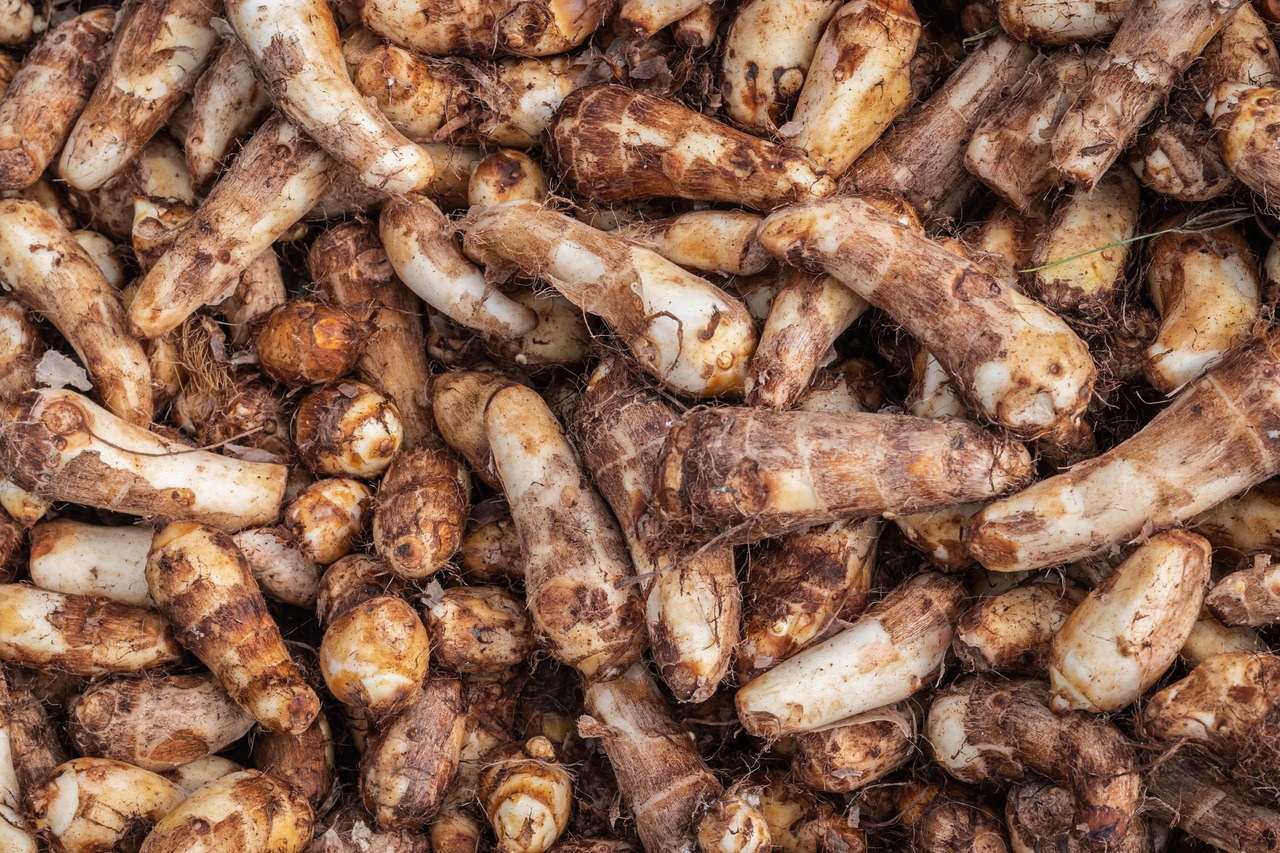
Taro Root or Arbi is a starchy tuber that belongs to the Araceae family. It is native to Southeast Asia and India but is now cultivated and consumed in various parts of the world. The taro root plant grows in tropical and subtropical regions and is characterized by large, heart-shaped leaves. The tuberous root itself is round or oblong in shape, with a rough, brown outer skin. The flesh of the Arbi root can range in color from white to pale pink or purple, depending on the variety.
Being a tuber, it is considered a staple food in many cultures. Its versatile nature and ability to absorb flavors, making it a popular ingredient in a wide range of dishes over centuries. This article will explore Taro root and its benefits in detail.
Nutritional Profile of Taro Root
Along with it being a household staple and it being used in various culinary traditions worldwide, its importance and popularity is enhanced by its nutritional value. This includes dietary fiber and essential minerals, adding to its significance. Taro root is also gluten-free and thus further enhances its popularity among those with dietary restrictions.
100 grams of Taro Root/Arbi constitutes of:
Calories: 112 cal
Protein: 1.50 g
Fats: 0.20 g
Carbohydrates: 26.46 g
Fibre: 4.1 g
Calcium: 43 mg
Magnesium: 33 mg
Potassium: 591 mg
Sodium: 11 mg
Taro root is a good source of complex carbohydrates, providing sustained energy. Taro root is rich in dietary fiber, which aids in digestion and promotes a healthy digestive system. It contains significant amounts of potassium, a mineral important for regulating blood pressure and supporting heart health.
This tuber also offers traces of various micronutrients like vitamin C, an antioxidant that boosts the immune system and supports collagen production. Additionally, it contains minerals like magnesium and vitamin E, which contribute to overall health and well-being. Its nutritional composition makes taro root a valuable addition to a balanced diet.
7 Health Benefits of Taro Root
1. Maintaining Digestive Health
Taro root is rich in dietary fibre, which plays a crucial role in promoting healthy digestion. 100 grams of taro root contains 4.1 g of dietary fibre. It also helps alleviate constipation by adding bulk to the stool and promoting regularity. Furthermore, according to studies taro root contains resistant starch, which acts as a prebiotic. Prebiotics serve as food for beneficial gut bacteria, promoting their growth and activity.
2. Boosts Energy
Taro root is a good source of complex carbohydrates, which are the primary source of energy for the body. Complex carbohydrates are broken down slowly, providing a steady release of glucose into the bloodstream. This gradual release helps maintain stable blood sugar levels and provides sustained energy throughout the day. It is also packed with essential vitamins and minerals that play a role in energy production.
3. Having Abundance of Nutritional Value
According to studies, this starchy tuber is a good source of essential nutrients, including potassium, magnesium, vitamin C, and vitamin E. While potassium rich foods helps regulate blood pressure, magnesium supports bone health and muscle function. It also has an adequate amount of Vitamin C, which acts as an antioxidant, boosting the immune system, and vitamin E contributes to skin health and cell function.
4. Helps in Weight Management
Taro root is relatively low in calories and also a good source of dietary fiber, which can add bulk to the diet, promoting a feeling of fullness and satiety. This can help control appetite and prevent overeating. The fibre content of taro roots supports stable blood sugar levels and can help control hunger, thus contributing to weight management.
5. Protects Kidneys
Taro root is high in water and fiber content, and is a good source of potassium, an essential mineral that plays a role in kidney function.
6. Anti-Inflammatory In Nature
Due to the presence of antioxidants, such as vitamins C and E, the tuber helps neutralize harmful free radicals in the body. Studies claim that it contains various phytochemicals, such as polyphenols and flavonoids, which have anti-inflammatory properties. These compounds can help modulate the inflammatory response in the body and reduce the production of pro-inflammatory molecules.
7. Regulates Blood Sugar
Taro root has a relatively low glycemic index (GI), which means it causes a slower and more gradual rise in blood sugar levels compared to high-GI foods. This can help prevent sharp spikes and drops in blood sugar, promoting better blood sugar control for individuals with diabetes. It is a good source of dietary fiber, which can be beneficial for people with diabetes.
Summary
Taro root offers various health benefits. It promotes digestive health with its high fiber content and acts as a prebiotic. Taro root’s complex carbohydrates provide sustained energy, while its abundance of nutrients supports overall health. It aids in weight management, protects kidneys, has anti-inflammatory properties, and helps regulate blood sugar levels. Taro root’s low glycemic index and fiber content make it suitable for individuals with diabetes.
Why Can Taro Root be a Substitute to Other Starchy Vegetables?
- Lower Glycemic Index– Taro root has a lower glycemic index compared to some other starchy vegetables like potatoes and yams. This means it causes a slower and more gradual rise in blood sugar levels. Choosing taro root as a substitute can be particularly beneficial for individuals looking to manage their blood sugar levels, including those with diabetes or those aiming for balanced blood sugar control.
- Excellent Nutritional Profile– It is a highly nutritious vegetable that offers a range of vitamins, minerals, and dietary fiber. It contains various micronutrients like potassium, magnesium, among other nutrients. By choosing taro root as an alternative to other starchy vegetables, you can diversify your nutrient intake and benefit from its specific nutritional composition.
- Lower Risk of Allergies- Some individuals may have dietary preferences or allergies that limit their consumption of specific starchy vegetables like potatoes or corn. Taro root provides an alternative option that can be enjoyed by those with specific dietary needs or restrictions.
Summary
Taro root can be substituted for other starchy vegetables for various reasons. Taro root has a lower glycemic index, making it suitable for blood sugar management. It has an excellent nutritional profile, providing vitamins, minerals, and fiber. Taro root is a viable alternative for those with allergies or dietary restrictions related to other starchy vegetables like potatoes or corn.
Why You Should Add Taro Roots to Your Balanced Diet?
As a nutritious vegetable, taro root is low in fat and calories while being rich in dietary fiber, vitamins, and minerals. Its high fiber content aids in digestion, supports regular bowel movements, and contributes to a feeling of fullness. Arbi is also a good source of potassium, and magnesium, which are vital for maintaining optimal health. Incorporating this vegetable to your meals as part of a balanced diet can provide you with tons of essential nutrients. It can also help by promoting satiety, support weight management, and contribute to overall well-being.
Recipes With Taro Roots
Baked Taro Chips
Ingredients –
- Taro root – 1
- Salt to taste
- Oil spray
Procedure –
- Preheat the oven to 450°F.
- Fill a large mixing bowl with water, mix in salt and set aside.
- Peel washed taro and thinly slice them.
- Add to salt water and soak them for 1-2 hours.
- Remove taro chips from water, place on a tray to dry and pat dry with paper towels.
- Spread chips over a greased baking sheet and spray oil.
- Bake for 15 minutes flipping halfway through or until golden brown and the chip edges begin to curl up.
- Serve as is or store in an airtight container.
Taro Paneer Curry
Ingredients –
- Boiled Taro root – 1, chopped into cubes
- Low Fat Paneer – 0.5 cup, chopped into cubes
- Onion – 0.25 cup, chopped
- Tomato – 0.25 cup, chopped
- Ginger garlic paste – 1 tbsp
- Turmeric powder – 0.5 tsp
- Chili powder – 1 tsp
- Cumin Coriander powder – 1 tsp
- Garam masala – 1 tsp
- Salt to taste
- Water – 0.5 cup
- Oil – 1 tbsp
Procedure –
- Heat oil in a pan, add ginger garlic paste and fry for 20 seconds.
- Add onions and saute until it turns light brown.
- Add tomato, spice powders and saute for 4-5 minutes.
- Mix in taro, paneer and cook for 2-3 minutes.
- Stir in water, salt and bring it to a boil.
- Simmer until desired consistency and serve hot with roti or rice.
Precautions Before Consuming Taro Roots
When consuming taro root, it is important to follow certain safety guidelines to ensure its safe consumption. Here are some guidelines to consider:
1. Thorough Cooking
Taro root should be cooked thoroughly before consumption to destroy any harmful bacteria and to break down the naturally occurring calcium oxalate crystals. Raw or undercooked taro root can cause irritation in the mouth and throat.
2. Moderation is Key
Yes, taro root is an exceptional tuber that contains a plethora of nutritional elements. However, it should be consumed in moderation. Excessive consumption may lead to gastrointestinal discomfort or digestive issues due to its high fiber content.
HealthifyMe Suggestion
Taro root is very versatile. You can boil, roast, stir-fry, or bake it to prepare it for a variety of recipes. Make taro root baked or air fried fries, add boiled and grated taro to pancakes, use taro root flour instead of refined flour for baking, add to your vegetable or chicken curry, etc.
Conclusion
Taro Root is a highly versatile ingredient with immense culinary potential. Its mild flavor and starchy texture make it adaptable to both savory and sweet dishes, lending depth and complexity to recipes.
Moreover, taro root offers notable nutritional value, including dietary fiber, vitamins, and minerals, promoting a well-rounded and balanced diet. By encouraging further exploration and appreciation of tuber in various culinary traditions, we can uncover new flavors, create innovative dishes, and preserve the cultural heritage associated with this remarkable ingredient. Let us embrace the versatility and nutritional benefits of Arbi in our culinary adventures.
Disclaimer: The purpose of this article is just to disperse knowledge and raise awareness. It does not intend to replace medical advice from professionals. For further information please contact our certified nutritionists Here
Frequently Asked Questions (FAQs)
1. Is taro a yam?
No, taro is not a yam. Although they may look similar, taro and yam are different root vegetables. Taro belongs to the Araceae family, while yam belongs to the Dioscoreaceae family.
2. Is taro a potato?
Taro is not a potato either. Taro and potatoes are distinct plants with different characteristics. Taro belongs to the Araceae family, while potatoes belong to the Solanaceae family.
3. How healthy is taro?
Taro is considered a healthy food choice. It is a good source of dietary fiber, and minerals (including potassium and magnesium). Taro also contains antioxidants and has low-fat content, making it beneficial for digestion and overall well-being.
4. Is taro full of sugar?
No, taro is not typically high in sugar. It is a starchy root vegetable and contains carbohydrates, but it does not have an excessive amount of natural sugars. However, it is always recommended to consume taro in moderation as part of a balanced diet.
5. What are the disadvantages of taro root?
While taro is generally considered a nutritious food, there are a few considerations to keep in mind. Taro contains oxalates, which can interfere with calcium absorption and may be problematic for individuals with kidney issues or a history of kidney stones. Additionally, taro should be cooked thoroughly before consumption, as raw taro contains calcium oxalate crystals that can cause skin irritation and throat discomfort. Proper preparation and cooking methods help mitigate these potential disadvantages.
Research Sources
- Assessing the Prebiotic Potential of Taro (Colocasia esculenta) with Probiotic Lactobacillus Species in an in Vitro Human Digestion System (P20-022-19)
https://www.ncbi.nlm.nih.gov/pmc/articles/PMC6574052/ - Nutritional potential, Health and Food Security Benefits of Taro Colocasia esculenta (L.): A Review
https://www.researchgate.net/publication/318562639_Nutritional_potential_Health_and_Food_Security_Benefits_of_Taro_Colocasia_esculenta_L_A_Review - Exploring the anti-inflammatory potential of Colocasia esculenta root extract in in–vitro and in-vivo models of inflammation
https://www.sciencedirect.com/science/article/abs/pii/S0378874122010601
What are GLP-1 peptides?
They are small sequences of amino acids that are secreted from
cells in the small
intestine and the brain. They work as physiological regulators of appetite and food
intake – basically they transmit the message that the stomach is full to the brain.
