

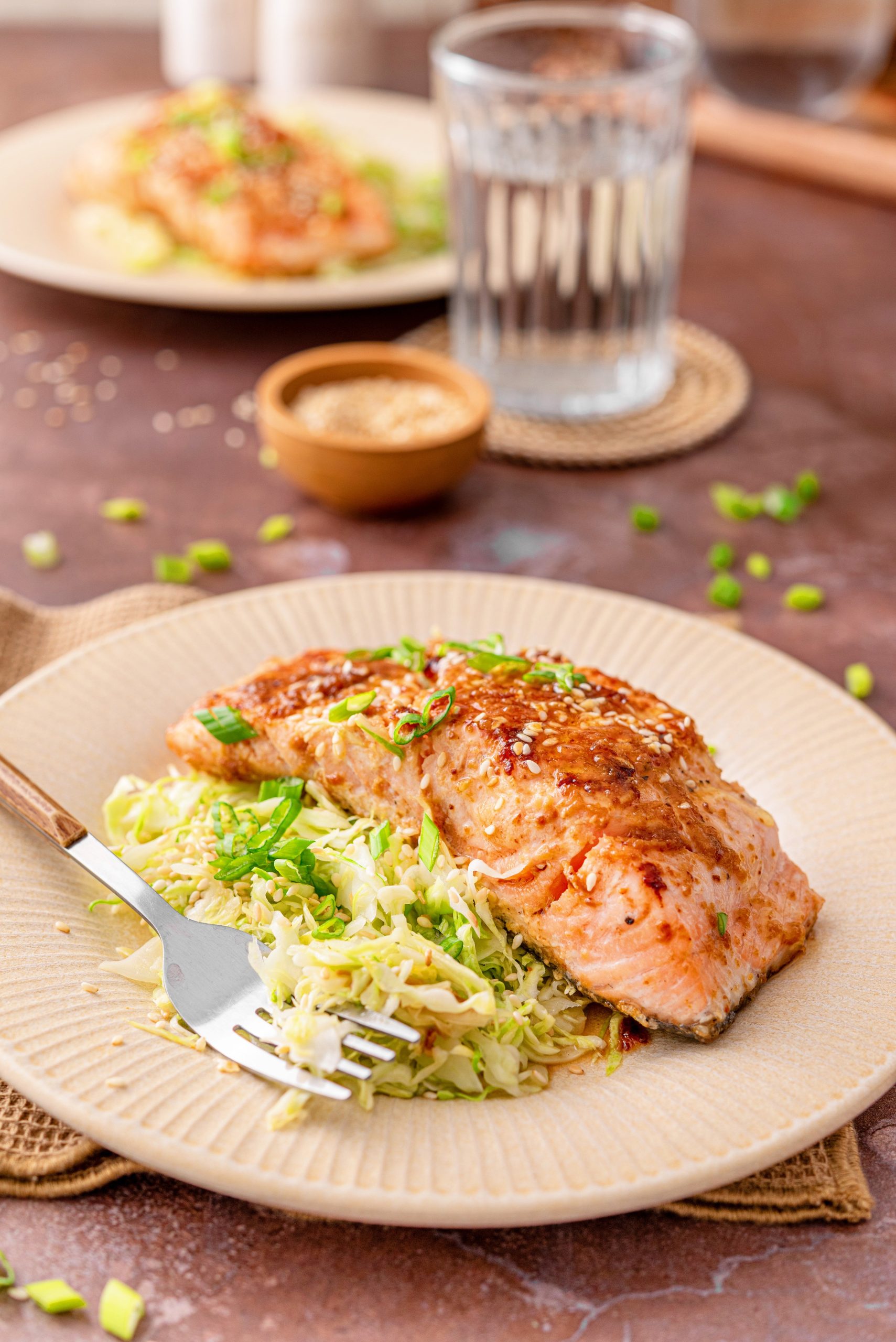
Recipe notes and tips
What is miso butter?
Miso butter is a flavorful combination of butter and miso paste, a traditional Japanese fermented soybean seasoning.
The butter adds richness and a smooth, creamy texture, while the miso contributes a deep, savory umami flavor.
In this recipe, fresh ginger and garlic add warmth and aroma, creating a delicious sauce that complements the salmon without overpowering it.
What kind of miso paste should I use?
White or yellow miso is a great choice for this recipe because it has a relatively mild, slightly sweet flavor that works beautifully with salmon.
Red miso has a stronger, saltier, and more fermented flavor, making it a good option if you prefer a more intense umami taste.
Miso varies considerably between brands, so start with the recommended amount and adjust according to your preferences.
If you’re avoiding gluten, make sure to choose a certified gluten-free miso paste. Some varieties contain barley or wheat, while others are made with rice or soybeans. Always check the ingredient list, as not all miso pastes are gluten-free.
Choose a miso paste without added sugar if you’re following a keto diet.
Is miso keto-friendly?
Miso can fit into a keto or low carb diet when used in moderate amounts.
Although it’s made from fermented soybeans and may contain rice or barley, the relatively small amount used per serving adds plenty of flavor without contributing a large amount of carbohydrates.
Carbohydrate content varies between brands, so check the nutrition label if you’re tracking your intake.
How do I get crispy salmon skin?
The secret to crispy salmon skin is to start with dry fish and a properly heated skillet.
Pat the salmon thoroughly dry before cooking, and place it skin-side down in the hot pan.
Avoid moving the fillets during the first few minutes so the skin has time to crisp.
A nonstick skillet or a well-seasoned cast-iron pan works well.
For the best texture, serve the salmon immediately after cooking.
How do I prevent the miso butter from burning?
Miso paste and garlic can burn when exposed to high heat, which may give the sauce a bitter flavor.
Cook the salmon skin-side down first, then reduce the heat before adding the miso butter.
Spoon the melted butter over the salmon as it finishes cooking, keeping the heat gentle.
If the skillet becomes too hot, briefly remove it from the heat before adding the butter.
Can I use skinless salmon fillets?
Absolutely! Skinless salmon works just as well, although you won’t get the crispy skin.
Cooking times may vary slightly depending on the thickness of the fillets.
You can also use other firm fish, such as cod or halibut, but adjust the cooking time to avoid overcooking.
Can I use frozen salmon?
Yes! Frozen salmon works well, but it should be fully thawed before cooking.
Thaw the fillets overnight in the refrigerator, then pat them thoroughly dry to remove excess moisture.
This helps the salmon brown properly and prevents excess water from collecting in the skillet.
Can I bake the salmon instead?
Yes! Baking is a convenient alternative, especially if you’re preparing several portions at once.
Preheat the oven to 400°F (200°C), or 355°F (180°C) for a convection oven.
Arrange the salmon fillets skin-side down on a parchment-lined baking sheet or in a baking dish. Spread the miso butter evenly over the fillets.
Bake for approximately 10–14 minutes, depending on thickness, until the salmon is cooked through. For fully cooked salmon, the internal temperature should reach 145°F (63°C).
Spoon any melted miso butter over the salmon before serving.
Keep in mind that the skin won’t become as crisp as it does when pan-fried.
Can I use a different type of cabbage?
Yes! Both green cabbage and Napa cabbage work beautifully.
Green cabbage has a firmer texture and slightly sweeter flavor, while Napa cabbage is more delicate and softens quickly.
You can also use pointed cabbage or savoy cabbage.
Adjust the cooking time depending on the variety and how tender you prefer the cabbage.
How do I keep the cabbage crunchy?
Cook the cabbage quickly over medium heat, stirring frequently.
It only needs a few minutes to soften slightly while retaining some bite.
Avoid covering the skillet, as trapped steam can make the cabbage too soft.
If using Napa cabbage, you may need an even shorter cooking time because its leaves are more delicate.
Can I add more vegetables?
Absolutely! Mushrooms, bok choy, zucchini, and thinly sliced bell peppers are all delicious additions.
You can sauté them alongside the cabbage, adjusting the cooking time as needed.
For extra freshness, try adding a little lime zest or a squeeze of lime juice just before serving.
Can I prepare the miso butter ahead of time?
Yes! The miso butter can be prepared up to 3–4 days in advance and stored in an airtight container in the refrigerator.
Let it soften slightly before cooking so it’s easier to distribute over the salmon.
You can also freeze the miso butter in small portions for future meals.
What else can I serve with miso butter salmon?
The sesame cabbage makes this a complete low carb meal, but you can easily add another side.
Cauliflower rice, sautéed mushrooms, steamed broccoli, or a fresh cucumber salad all complement the rich miso butter.
A squeeze of fresh lime or lemon can also add a refreshing contrast to the savory flavors.
Storage and leftovers
Store leftover salmon and cabbage in separate airtight containers in the refrigerator for up to 2–3 days.
Reheat the salmon gently in a skillet over low heat or in the oven until thoroughly heated, taking care not to dry it out.
The cabbage can be reheated quickly in a skillet, although it will become softer after storage.
Leftover salmon is also delicious served cold over a fresh salad.
