

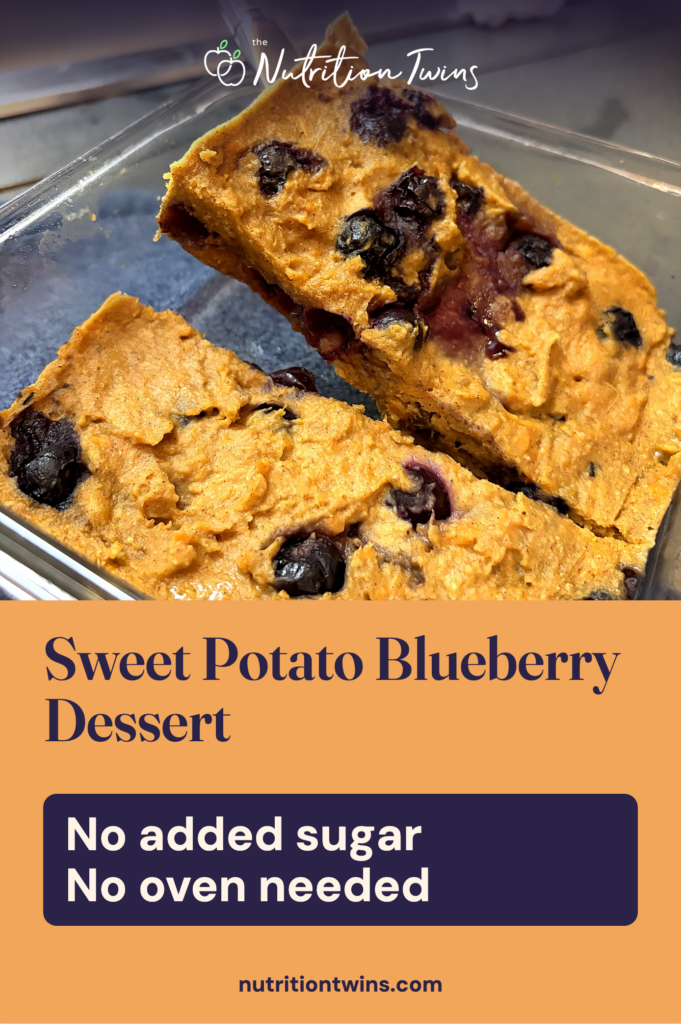
Looking for a sweet treat that feels a little more nourishing? This microwave sweet potato dessert is a fun one to try! Made with sweet potato, egg, oat flour, cinnamon, and blueberries, it has no added sugar and doesn’t require turning on your oven.
As registered dietitian nutritionists, personal trainers, and metabolic health experts with over 20 years of experience, we know that sustainable weight loss and health results don’t come from feeling deprived or hungry. That’s why we create delicious, satisfying recipes that nourish your body without packing in tons of calories or added sugar. We believe enjoying what you eat is key to staying on track and maintaining results long-term—and that’s exactly what inspired this little treat!
We’d been seeing versions of sweet potato desserts popping up on Instagram, and we were curious to try our own. After a little experimenting in the kitchen, we came up with this blueberry version. We especially loved the idea of cooking and chilling the sweet potato ahead of time, which encourages the formation of resistant starch—a type of starch that makes its way to the large intestine, where beneficial gut bacteria use it for fuel. This process produces short-chain fatty acids, compounds that support gut health and play a role in metabolic health.
It’s a simple dessert with a little gut-health twist—and a delicious way to enjoy sweet potato in a different form!
How Do You Make a Sweet Potato Dessert Without Added Sugar?
Sweet potatoes are naturally sweet, making them a wonderful base for a simple dessert without needing to add sugar. We paired them with cinnamon and blueberries for flavor, along with an egg and oat flour to help create the texture we wanted.
Why We Love This Gut-Friendly Sweet Potato Dessert
And speaking of texture, we did a little experimenting to get this one right!
Our first attempt was flourless, using sweet potato, egg, cinnamon, and blueberries. While we loved the blueberry flavor, the mixture was much too moist and soft for the consistency we were hoping for. We tried adjusting the amount of sweet potato and then added oat flour to give it more structure.
After a few tweaks, we landed on this version. The finished dessert is firm and moist, with a satisfying texture. It’s not meant to be a fluffy cake or an oven-baked dessert—it’s its own simple, naturally sweet microwave treat!
Can Cooling Sweet Potatoes Increase Resistant Starch?
Here’s where the recipe gets especially interesting!
When you cook a sweet potato and then cool it in the refrigerator, some of its starch can undergo a process called retrogradation. This can lead to the formation of resistant starch.
Unlike most other starches, resistant starch isn’t fully broken down and absorbed in the small intestine. Instead, it travels to the large intestine, where gut bacteria can ferment it. This fermentation produces short-chain fatty acids (SCFAs), including butyrate, acetate, and propionate.
These compounds are important because they do more than support the gut. They also play roles in metabolic health.
The amount of resistant starch that forms can vary depending on the sweet potato, cooking method, cooling time, and reheating. We haven’t measured the resistant starch in this particular recipe, so we can’t say exactly how much it contains. But cooking and chilling the sweet potato ahead of time is a simple way to potentially encourage its formation.
Our tip: Prepare the sweet potato the day before you make the dessert. After cooking and cooling it, peel and mash it, then refrigerate it overnight.
Why Gut Health and Resistant Starch Matter During Menopause
During the menopause transition, metabolic health becomes an especially important part of the conversation. Changes in body composition, insulin sensitivity, and fat distribution can occur during this stage of life.
If you’re experiencing changes in your weight during this stage of life, you’re not alone. We explain some of the reasons behind these changes in our article on the real causes of perimenopause and menopause weight gain.
That’s one reason we love focusing on the gut microbiome and the foods that nourish it.
In fact, gut health plays an important role in immune function, too. We explain more about this connection in our article on how to boost immunity during perimenopause.
When beneficial gut bacteria ferment resistant starch and certain fibers, they produce short-chain fatty acids, including butyrate, acetate, and propionate. Research has demonstrated that these compounds are involved in metabolic processes, including glucose regulation, insulin sensitivity, inflammation, and energy metabolism.
While resistant starch isn’t a menopause treatment or a weight-loss solution, including foods that provide fermentable fibers can be one way to support gut and metabolic health during midlife.
And that’s a pretty interesting reason to enjoy a sweet potato dessert!
Why We Chose These Ingredients
Each ingredient brings something different to this sweet potato dessert.
Oat flour: We added oat flour to improve the texture and give the dessert more structure. Oats also provide fiber, including beta-glucan, a type of soluble fiber known for its role in supporting healthy cholesterol levels.
Blueberries: These little berries add natural sweetness, color, and polyphenols, including anthocyanins. We love the flavor they bring to the sweet potato and cinnamon combination.
Cinnamon: It adds warmth and sweetness without needing added sugar.
Together, these ingredients make a simple dessert with a little more nutritional value than your typical sweet treat.
How to Make This Microwave Sweet Potato Dessert
This recipe has two microwave steps: first, cooking the sweet potato, and then preparing the finished dessert. You’ll just need to plan ahead so the sweet potato has time to chill overnight.
Ingredients
- 145 grams cooked, peeled sweet potato, mashed and chilled overnight (approximately 1 cup)
- 1 large egg
- ¼ cup Arrowhead Mills oat flour
- ⅓ cup blueberries
- ¾ teaspoon cinnamon
- A tiny pinch of salt
Instructions
- Cook the sweet potato. Pierce a medium sweet potato several times with a fork. Microwave on high for approximately 5–7 minutes, or until tender. Cooking time will vary depending on the size of the potato and your microwave.
- Cool and refrigerate. Allow the sweet potato to cool, then peel and mash it. Measure out 145 grams (approximately 1 cup), cover, and refrigerate overnight (about 12–24 hours).
- Mix the ingredients. The next day, combine the chilled mashed sweet potato, egg, cinnamon, and salt in a bowl.
- Add the oat flour. Stir in the oat flour until combined.
- Fold in the blueberries. Gently mix them into the batter.
- Microwave. Transfer the mixture to a lightly greased, shallow microwave-safe dish and spread it evenly. Microwave until the center is set and the egg is fully cooked, starting at about 3 minutes and then checking in 30-second increments as needed. Cooking time will depend on your microwave and the dish you use.
- Let it rest. Allow the dessert to rest for several minutes before cutting it into 3 equal servings.
Tips for Making This Sweet Potato Dessert
- Plan ahead: Refrigerating the cooked sweet potato overnight is part of the recipe’s gut-health twist.
- Use a shallow dish: Spreading the batter evenly helps it cook more consistently in the microwave.
- Give it time to rest: Letting the dessert rest after microwaving helps the texture settle.
- Expect a firm, moist texture: This is a simple microwave dessert, not a fluffy cake or oven-baked dessert.
A note about texture: Because this dessert is cooked in the microwave rather than baked in an oven, the bottom may be a little more moist than the top. We actually enjoy this texture! For the best result, use a shallow microwave-safe dish, lightly grease it, and allow the dessert to rest for several minutes after cooking.
Sweet Potato Dessert Nutrition Facts
One of the things we love about this recipe is that it gives you a sweet little something without lots of ingredients or added sugar.
Each serving (⅓ of the recipe) provides approximately:
- Calories: 107
- Protein: 4 g
- Fat: 2–2.5 g
- Carbohydrates: 18 g
- Fiber: 3 g
- Total sugars: 3.5–4 g
- Added sugars: 0 g
Wondering if sweet potato dessert is healthy? It can be a nourishing option, depending on the ingredients and how it’s prepared. This version provides fiber from the sweet potato, oat flour, and blueberries, uses simple ingredients, and has no added sugar.
One serving makes a modest carbohydrate portion that can fit into a balanced meal or snack. If you’re using it in place of your meal’s carbohydrate serving, be sure to include your usual protein source, too.
Nutrition values are estimates and may vary depending on ingredient size and brands.
Gut Health Is Part of the Bigger Picture
There’s a reason we get excited about foods that nourish your gut! When gut bacteria ferment certain types of fiber, they produce short-chain fatty acids, which play important roles in gut health and metabolic health. These compounds can influence processes involved in blood sugar regulation, inflammation, and how your body uses energy.
And that’s one reason gut health deserves a place in the bigger conversation about weight management. It’s one of several factors that can influence your progress.
If you’re working toward weight loss but feel like something is getting in the way, we created a free guide to help you uncover some of the less obvious factors that could be affecting your results.
Download our free guide: 11 Sneaky Reasons You’re Not Losing Weight to discover what you might be overlooking!


