

Recipe notes and tips
What is shogayaki?
Shogayaki is a popular Japanese dish made with thinly sliced pork cooked in a savory ginger-based sauce.
The name comes from shoga, meaning ginger, and yaki, referring to grilling or pan-frying.
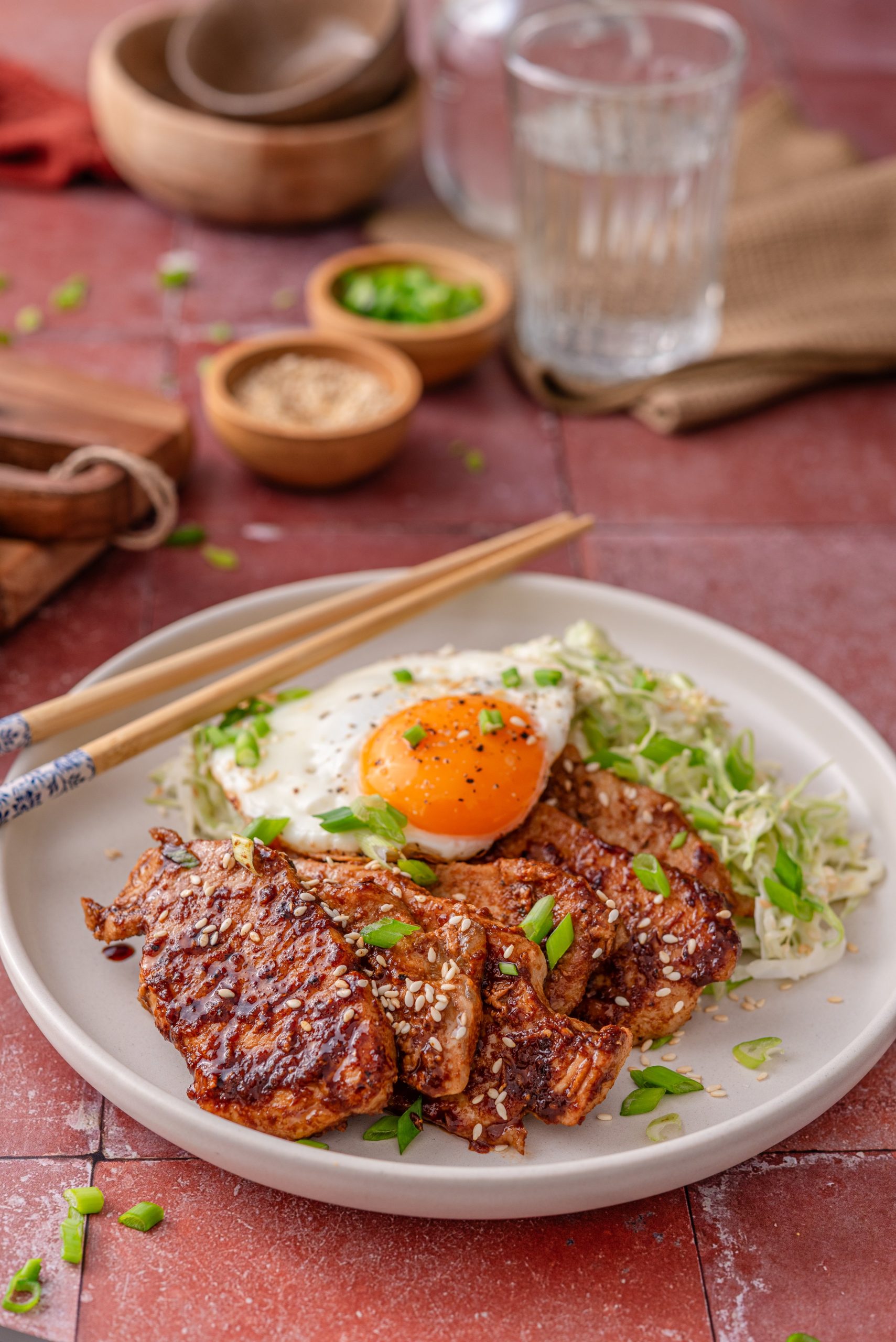
It’s commonly served with finely shredded cabbage and rice. Our keto version skips the rice and adds a fried egg for a satisfying, protein-rich meal.
What cut of pork is best for shogayaki?
Pork loin and pork shoulder are both excellent choices.
Pork loin is leaner and cooks quickly, while pork shoulder has more marbling and produces a slightly richer, juicier result.
For the most tender pork, slice the meat thinly against the grain.
If you have trouble slicing it thinly, place the pork in the freezer for approximately 20–30 minutes to firm it up before cutting.
Can I use a different type of meat?
Absolutely! Thinly sliced chicken thighs or beef can work well with the ginger sauce.
Chicken thighs provide a juicy, flavorful alternative, while beef gives the dish a richer taste.
Adjust the cooking time depending on the type and thickness of the meat, and make sure it’s cooked to a safe internal temperature.
What is tamari, and can I use soy sauce instead?
Tamari is a Japanese soy-based seasoning with a rich, savory umami flavor.
Regular soy sauce can also be used, although it typically contains wheat.
Coconut aminos are another alternative, but they taste sweeter and generally contain more carbohydrates, so check the nutrition label if you’re following a keto diet.
Is shogayaki spicy?
No, traditional shogayaki isn’t particularly spicy.
Fresh ginger gives the sauce a warm, slightly sharp flavor rather than chili heat.
For a spicier variation, add a pinch of chili flakes or a little Japanese shichimi togarashi.
Can I reduce the amount of ginger?
Yes! Ginger is the signature flavor of shogayaki, but you can adjust the amount to your preference.
For a milder ginger flavor, start with 2 tbsp freshly grated ginger instead of ¼ cup.
Fresh ginger gives the best flavor, but ginger paste can also work. Check for added sugar or starches.
How do I keep the pork tender?
The most important things are slicing the meat thinly and avoiding overcooking.
Cook the pork quickly over medium-high heat, working in batches so the skillet doesn’t become overcrowded.
Once the pork is cooked, add the sauce and toss briefly until glazed.
Cooking the meat for too long, especially lean pork loin, can make it dry and chewy.
Why add the ginger sauce at the end?
Adding the sauce toward the end of cooking prevents the garlic and ginger from burning.
It also allows the tamari and vinegar to reduce slightly and create a thin, glossy coating on the pork.
Avoid reducing the sauce for too long, as it can become overly salty.
Can I serve the cabbage without mayonnaise?
Definitely! Traditional Japanese shogayaki is often served with finely shredded raw cabbage.
For a lighter, fresher version, skip the mayonnaise and serve the cabbage plain or with a squeeze of lemon.
You can also serve the mayonnaise on the side instead of mixing it into the cabbage.
Can I use a different type of cabbage?
Yes! Green cabbage is a classic choice because of its firm, crunchy texture.
Pointed cabbage, Napa cabbage, or savoy cabbage also work well.
Slice the cabbage as thinly as possible for the best texture.
Can I prepare this recipe ahead of time?
Yes! You can slice the pork, shred the cabbage, and mix the ginger sauce up to a day in advance.
Store everything separately in airtight containers in the refrigerator.
For the best texture, toss the cabbage with mayonnaise shortly before serving.
The pork cooks quickly, so it’s best prepared fresh when possible.
What else can I serve with shogayaki?
The cabbage and fried egg make this a satisfying low carb meal on its own.
For a more substantial dinner, add cauliflower rice, sautéed mushrooms, steamed broccoli, or cucumber salad.
A sprinkle of toasted sesame seeds or a little extra fresh ginger can also enhance the flavor.
Storage and leftovers
Store leftover cooked pork in an airtight container in the refrigerator for up to 3–4 days.
Reheat gently in a skillet over medium-low heat with a splash of water to prevent the glaze from drying out.
Keep the cabbage separate, as it will lose some of its crunch after being mixed with mayonnaise.
For the best results, prepare the fried eggs fresh when serving.
