


Every other week, there seems to be a new villain in the nutrition world, and canola oil is no stranger to bad press. But real talk, is canola oil bad for you? Canola oil (also known as rapeseed oil) comes from vegetables, more specifically, oil extracted from the canola plant. This popular kitchen staple can be found in many highly processed foods (like candy bars), which is one of the reasons why it’s often associated with poor health outcomes.
Some health communities have also raised concerns over how it’s extracted and produced, and some argue that canola oil’s high omega-6 fat content can lead to extra inflammation.
But claims of its serious health detriments—like causing heart disease, triggering insulin resistance, and escalating inflammation—are largely fueled by research conducted on animals, not humans. In fact, according to the Mayo Clinic, the Harvard T.H. Chan School of Public Health, and the American Heart Association, canola oil is not only safe to use, but has also been categorized as “better for you” due to its low saturated fat content.
To further separate fact from fiction, we spoke to registered dietitians to determine whether canola oil is actually bad for you. Read on, and for more, you’ll want to read Is Olive Oil Good for You? 10 Benefits of Eating It.
Downsides of Using Canola Oil
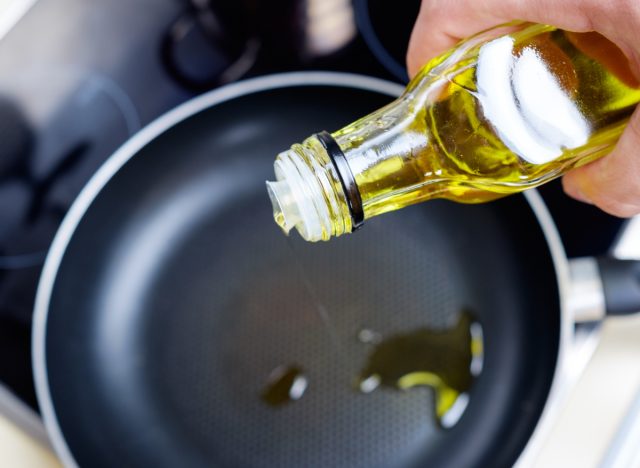
Canola oil isn’t a perfect pantry staple. Like any highly-processed food, it has some downsides worth discussing. Here are 7 reasons why it’s best to consume this fat in moderation. For more, don’t miss our definitive ranking of the best oils to cook with!
It’s highly processed.
Making canola oil is a multi-step process. It involves heating the seeds several times as well as using a chemical solvent called hexane to extract the oil from the plant, according to the Canola Council of Canada, an organization dedicated to educating the public about canola, one of Canada’s leading crops.
Most commercially available canola oil is highly processed and refined, and “this processing can lead to the loss of beneficial compounds and the potential formation of harmful substances,” says Crystal Scott, MS, RD, a registered dietitian with Top Nutrition Coaching.
But that doesn’t mean all canola is off-limits. “Choosing minimally processed, cold-pressed or organic versions of canola oil can help mitigate these concerns,” Scott says.
It’s high in omega-6 fatty acids.
Canola oil is often criticized for having a relatively high omega-6 fatty acid content compared to omega-3 fatty acids. In fact, canola has a 2:1 omega-6 to omega-3 ratio. “Ideally, our omega-6 to omega-3 ratio should be closer to 1:1, but the average American diet is more like 15:1,” says Megan Hilbert, MS, RDN, a registered dietitian with Top Nutrition Coaching.
Some experts argue that an imbalanced omega-6 to omega-3 ratio in the diet may contribute to inflammation and chronic health conditions. But it’s important to note that the overall diet and balance of other fats consumed also play a significant role in determining the impact of the fatty acid ratio, Scott tells us. Still, omega-6s should not be avoided — they provide essential fatty acids that our bodies do not produce, which means we have to get them from a healthy, balanced diet, Scott adds.
You might increase your risk for chronic disease.
To go from plant to bottle, canola oil goes through a complicated series of steps including seed cleaning, conditioning, cooking, pressing, extracting, and desolventizing, to name a new. Holy canol-y, that’s a lot of processing! However, almost all seed oils undergo a similar process, so we can’t point the finger at canola alone.
As you’re likely aware, eating lots of processed foods can be bad news for health. Research shows that diets high in so-called “ultra-processed” foods—those that go through multiple steps of physical, biological, and/or chemical change—can lead to a higher incidence of issues like cancer and heart disease. Canola oil all by itself won’t cause these diseases but may be problematic as part of a big-picture processed diet.
You might be using it to make less-than-healthy foods.
The side effects of cooking with canola might be more about what you’re cooking it with. Because of its high smoke point, canola often serves as the base for deep-fried foods like battered meats, hush puppies, and French fries. Baked goods are another popular medium for canola’s smoothness and mild flavor. Tasty as these dishes are, they’re not always the healthiest choices. If you reach for canola only to bake and fry, you could be unintentionally derailing your health goals.
You won’t rack up many nutrients.
Canola oil adds richness to salad dressings and helps veggies crisp up during cooking, but it doesn’t have much to offer in terms of nutrients. All of its calories (about 120 per tablespoon) come from fat. And whereas some oils, like olive and avocado, boast a variety of micronutrients and antioxidants, canola oil contains appreciable amounts of just two: vitamin E and vitamin K.
On the other hand, there is a silver lining: the body needs a source of fat to absorb vitamins E and K, so canola oil is a built-in vehicle for the very nutrients it contains.
It can turn rancid faster than you think.
As mentioned earlier, to get the oil out of the tiny rapeseed, manufacturers use heat and a solvent called hexane. Despite its chemical-sounding name, hexane itself isn’t dangerous. Instead, the application of heat and hexane can affect canola oil molecules’ stability, causing the oil to quickly turn rancid—and even destroying healthy omega-3 fatty acids.
To get the most shelf life out of your bottle, keep it in a cool, dark place—not near the stovetop! And be watchful for signs that your oil has turned. An “off” odor, color changes, or visible mold are all good reasons to toss it.
The majority of canola oil is made from GMOs.
More than 90% of commercially grown canola comes from genetically modified (GM) crops, according to a PLOS One study. “Some individuals prefer to avoid GM foods due to concerns about environmental impact, potential allergenicity, or the use of herbicides,” Scott says.
If you’re looking to avoid GMOs but still want to include canola in your diet, make sure you’re opting for organic canola oil. The organic seal ensures your food is free of GMOs.
Benefits of Canola Oil
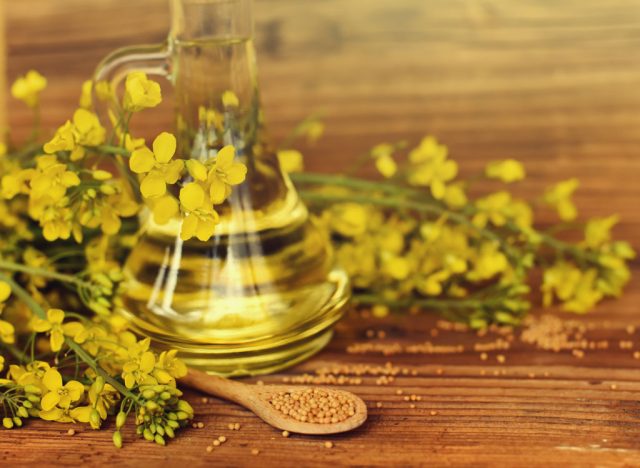
While there are some potential downsides to using canola oil, there are also some benefits it offers. From its heart-healthy profile to its versatility in cooking, canola oil can be a worthwhile inclusion in a balanced diet when used in moderation.
It’s heart-healthy.
There’s ample evidence that canola oil is good for your ticker. A randomized trial in The Lancet observed that using canola oil as the primary fat source contributed to a significantly reduced risk of heart disease. What’s more, cooking with canola oil instead of butter or margarine is linked to a reduced risk of heart disease (as well as other diseases), as it helps lower LDL (bad) cholesterol, per a BMC Medicine study.
We can attribute canola oil’s heart-protecting properties to its nutritional profile. “Canola oil is low in saturated fat (only 7%) and high in monounsaturated fat (63%), which has a positive impact on heart health,” Hilbert says. It’s particularly rich in the monounsaturated fat oleic acid. “Consuming monounsaturated fats as part of a balanced diet may help lower LDL cholesterol (the “bad” cholesterol) and reduce the risk of heart disease,” Scott tells us.
What’s more, canola oil also contains significant amounts of phytosterols that reduce the absorption of cholesterol into the body, Hilbert says.
It contains some omega-3 fatty acids.
While canola oil is higher in omega-6s than omega-3s, we can’t discount the fact that it still contains a good amount of anti-inflammatory omega-3s. Specifically, it contains alpha-linolenic acid (ALA), an omega-3 fatty acid derived from plants. “ALA is important for overall health and can be converted to other omega-3 fats, such as EPA and DHA [which are better absorbed by the body], although the conversion rate is limited in the body,” Scott says.
Good to know: ALA isn’t heat-stable, so you’ll want to avoid cooking with canola oil at high heat if you want to reap its ALA benefits.
So, is canola oil actually bad for you?
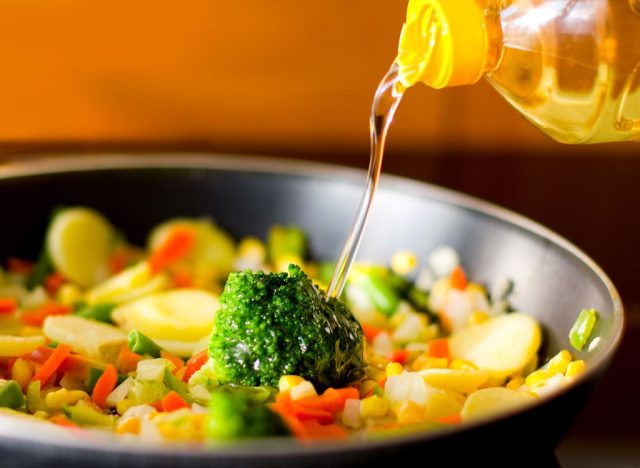
Instead of labeling foods as “good” and “bad,” Scott likes to use the terms “always” and “sometimes” for foods. She considers canola oil a “sometimes” food, adding that people shouldn’t be scared of it.
There’s no hard evidence that says canola oil is directly related to poor health outcomes, and choosing organic, cold-pressed canola is a good option. But if you’re still looking for an alternative oil, go for olive oil. EVOO is heat-stable up to 400 degrees Fahrenheit, is rich in heart-healthy monounsaturated fats, and is high in antioxidants, Hilbert says.

Sign up for our newsletter!
