

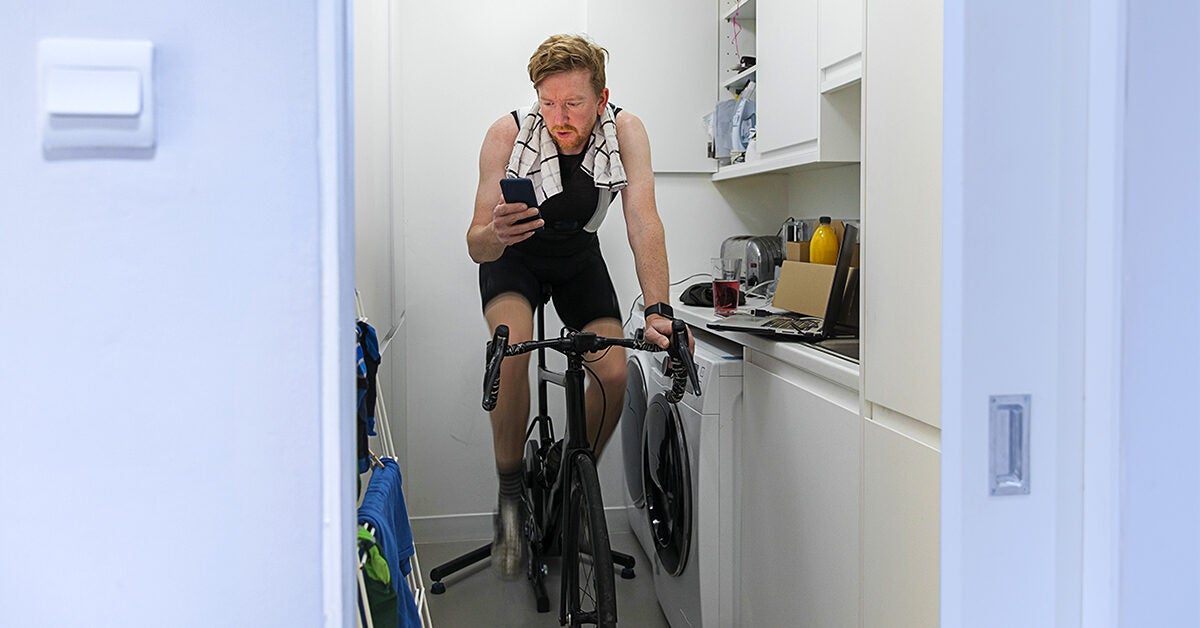
Exercise addiction is a behavioral addiction characterized by a compulsion to exercise, at the expense of your other obligations, relationships, and health needs. There are lots of effective treatments that can help.
Exercise is amazing, right? Mental health, physical health, fat loss, muscle growth, cardiovascular fitness… the list of benefits just goes on and on and on.
But in exercise addiction, the role of exercise shifts from “routine part of a healthy lifestyle” to “toxic taskmaster.” Especially in our fitness- and body-focused culture, exercise addiction can be a deeply insidious problem.
We spoke to two mental health experts who specialize in eating disorders and addiction to learning more about exercise addiction and how to treat it. Here’s their advice.
“Exercise addiction is a behavioral disorder characterized by an unhealthy obsession with physical activity or exercise,” says Angela Ficken, LICSW, therapist and owner of Progress Wellness, LLC.
It often co-occurs with eating disorders or disordered eating patterns.
“A person uses exercise as a means to control or regulate emotion,” says Kerry Heath, LPC-S, NCC, CEDS-S, a Certified Eating Disorders Specialist with Choosing Therapy,
Like other addictions, the level of exercise often needs to be increased to feel the same sense of relief or control.
“As a person incrementally increases the amount of time and frequency that they spend exercising,” she says, “This often leads to even more stress, interpersonal conflict, illness, and injury. The very thing that they were seeking is what they eventually give up: control.”
Exercise addiction can be caused by many different, often overlapping, factors.
“The exact causes of exercise addiction are not fully understood,” Ficken says. “But it is believed to be a complex biological, psychological, and environmental interaction.”
She adds that any of the following can be a risk factor for exercise addiction:
- History of addiction or active addiction
- Diagnosed eating disorder or disordered eating patterns
- Mental illness
- Perfectionism
- Low self-esteem
- Desire for control
Anyone who can relate to the points above could be at risk for exercise addiction. But, adds Heath, more people might be at risk than we’d expect because collectively — as a society — we are so preoccupied with health and fitness.
“It is no wonder that we are seeing so many instances of exercise addiction in therapy offices, especially in conjunction with eating disorders and disordered eating,” says Heath, “given the focus on health, weight loss, and the obesity epidemic in our country.”
She explains that the things that lead to an exercise addiction are similar to factors that lead to other addictions — such as stress, anxiety, anger, and relationship issues.
Exercise addiction can be tricky to identify.
“As professionals, we encourage clients to move and even utilize physical activity as a means of managing stress, anxiety, depression, and many other ailments,” explains Heath. “The issue arises when a person is unable to manage the amount of exercise that they engage in, they refuse to rest, they exercise despite being injured, and experience high levels of distress if they are unable to work out for some reason.”
Here are some of the most common signs and symptoms of exercise addiction, according to Ficken.
Preoccupation with working out
Is your schedule built around exercise? Have you found yourself needing to exercise more and more in order to be satisfied or avoid feelings of guilt?
Anxiety or guilt when unable to exercise
While it may be normal to get a little antsy or feel bad when you miss a workout, with exercise addiction you may have a bigger emotional response. Missing a workout will probably bother you a lot more than it should, and you may feel extreme guilt or anxiety.
Exercising when sick or injured
Refusing to skip a few workouts (or decrease their intensity) when you’re sick or injured is a big sign that your commitment to exercise may be developing into a deeper issue.
Withdrawal symptoms when unable to exercise
If you’re experiencing withdrawal symptoms — like anxiety, anger, or irritability — when you’re unable to exercise, it may be time to seek professional help.
Prioritizing exercise over other responsibilities or relationships
Skipping bills to pay for your gym membership? Calling in sick to get another workout in? Isolating yourself because social activities just don’t work for your exercise routine? These are all potential signs of exercise addiction.
Unhealthy or distorted body image
Like eating disorders, exercise addiction can be related to body dysmorphia — when a person becomes preoccupied about a perceived flaw in their physical appearance.
Using exercise as a way to control your health or weight
It’s totally OK to use exercise as a health or weight loss tool. But according to Heath, it’s risky when “individuals perceive that they must exercise in order to earn or work off calories to avoid weight gain or facilitate a particular body type or fitness level.”
The keyword there is “must.”
Exercise addiction is not an official diagnosis in the Diagnostic and Statistical Manual of Mental Disorders (DSM-5), but providers can still recognize exercise addiction in their clients if it meets the criteria for a behavioral addiction.
Essentially, behavioral addiction is in the DSM-5, but not exercise addiction specifically.
Researchers have also noted that exercise addiction may commonly present with eating disorders, obsessive-compulsive disorders, and body dysmorphic disorder.
Also, it’s important to consider exercise addiction on a case-by-case basis — especially when it comes to competitive and professional athletes. For example, a college athlete may meet several of the criteria for exercise addiction because of their workout schedule alone, but without the emotional or compulsive component, it’s not an exercise addiction.
What does exercise addiction treatment look like? It’s more than just exercising less.
Without addressing the underlying cause of the addiction, it’s unlikely to get resolved.
That’s why therapy or counseling from a licensed mental health professional is key for exercise addiction treatment. Particularly, a subtype of therapy called cognitive-behavioral therapy (CBT) may help to address the underlying causes of behavioral addictions (like exercise addiction). Still, there hasn’t been a ton of research on therapies for exercise addiction specifically.
Depending on the cause and severity of the exercise addiction — for instance, if it’s related to an eating disorder — you may want to pursue more intensive treatment like an inpatient or residential program.
There are a number of ways that you may be able to prevent exercise addiction, like:
Self-awareness
“Are you a person who is prone to over-doing things and who struggles with addiction in other areas of your life?” asks Heath. “If so, be aware of some of the warning signs and have someone who is holding you accountable. Know your why for beginning a fitness program.”
Healthy coping strategies
If you’re using exercise as a means of control or emotional coping, developing other healthy coping strategies may help. Exercise is good for mental health, but only up to a certain point. A therapist or counselor can help you learn other ways to manage stress and feel more in control of your own life.
Therapy or counseling
“If you or someone you love notices that you have begun to be inflexible regarding your work-outs, you are angry or agitated if you have to skip exercise, or you find that you work out even if you are injured, there is a high probability that you have crossed the line,” says Heath. “You may need to talk to a professional counselor specializing in exercise addiction to help you get back on track.”
Exercise addiction is a compulsion to exercise to exert some level of control over your life, health, or body — at the expense of your own best interests. Like other behavioral addictions, over time people with exercise addiction will need to exercise more and more and more to get the same sense of control or relief.
People with exercise addiction will benefit hugely from counseling. To reduce the risk of exercise addiction, it’s important to have self-awareness around your motivations for exercise. It’s also very beneficial to learn healthy coping strategies to deal with life and all its ups and downs.
