

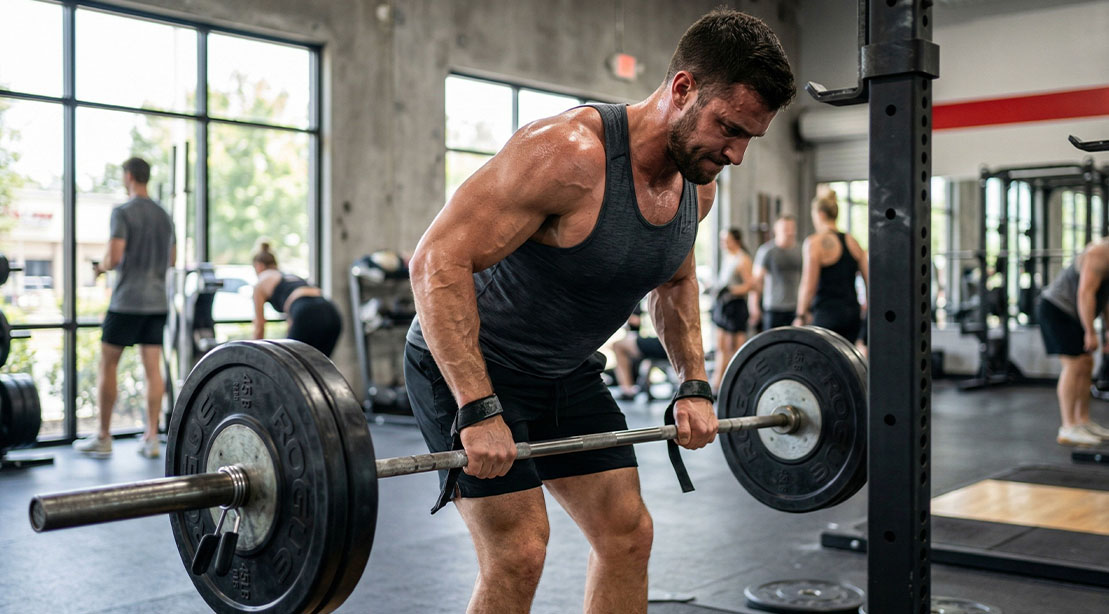
Dropsets have been around forever, and there’s a reason they never really disappeared from serious training programs. They’re simple, they’re brutal when you want them to be, and they give you a clear way to squeeze more work out of a muscle after the heavy lifting is done. Anyone who has stripped plates off a barbell or moved down the dumbbell rack knows exactly how fast a normal set can turn into a much harder challenge than expected.
Most lifters still think of dropsets as a bodybuilding finisher. You hit your main work, chase the pump at the end, and leave the gym feeling like the target muscle got torched. That approach has value, especially when hypertrophy sits at the top of the priority list.
But if that’s the only way you use dropsets, you’re only using part of what the method can offer.
A more tactful approach is to build dropsets around performance first. Work up to a heavy top set, take a calculated drop in weight, then use your back-off sets to build muscle with cleaner, higher-rep work. The heavy work stays at the front of the session, where you’re fresh and focused. After that, the dropsets give you the extra muscle-building volume you need without turning every set into a max-effort battle.
That’s the sweet spot for this method. You get the strength exposure from the top set, then you build size with cleaner reps, better intent, and a load you can actually own. It’s still hard training. It still gives you that strong hypertrophy stimulus. The difference is that every piece of the set has a job, which makes the method much more useful than just stripping weight until your form begins to break down.
For lifters who want to keep pushing numbers while adding muscle, dropsets deserve another look. Used the right way, they can help you train heavy, build more volume into your program, and walk out of the gym feeling like you did real work without burying your recovery for the rest of the week.
How the Strength Drop Method Builds Muscle and Strength Simultaneously
Dropsets work because they extend the amount of quality work a muscle performs after the heaviest set. When you place them after a top set, they serve a bigger purpose than chasing fatigue. The top set gives you high mechanical tension, heavier loading, and the motor unit recruitment needed to support strength. The dropsets add extra training volume, which drives hypertrophy.
That pairing matters because strength and muscle growth overlap, but each responds best to a slightly different emphasis. Heavy sets of 3 to 5 reps help you practice force production, technique, and confidence under heavier loads. Once you reduce the weight, the 8- to 12-rep back-off sets give the target muscles more total reps, more time under tension, and more productive volume within the same movement pattern. The key is keeping the dropsets controlled. You want enough effort to make the set count, but you don’t need to bury yourself to get a response. Leaving 1 to 2 reps in reserve keeps your reps cleaner, protects bar speed, and gives you a better shot at recovering for the next training session. That’s where this method earns its place during a strength phase: heavy work first, muscle-building volume second, and a clear purpose behind every set.
How to Use the Strength Drop Method
The Strength Drop Method works best when the top set anchors the lift. Build up to one challenging set of 3 to 5 reps, using warmup sets that prepare you without draining you. That top set should feel heavy and focused, but you should still own the reps. A good target is around RPE 8, which means you finish with roughly two clean reps left in the tank.
From there, you have two strong options: the straightforward dropset method or a descending ladder version. Both start with heavy strength work, then use calculated load drops to build muscle with cleaner, higher-rep sets.
Option 1: Straightforward Strength Drop
This is the cleanest place to start. After your top set, reduce the load by 10 to 25 percent and perform 1 to 3 back-off sets in the 8 to 12 rep range. Most lifters will land in the 15-20% range for compound lifts, especially on presses, rows, squats, and trap-bar deadlifts.
Top Set: 1 set of 3 to 5 reps
- Load Drop: 10 to 25 percent
- Dropsets: 1 to 3 sets of 8 to 12 reps
- Effort: Stop with 1 to 2 reps in reserve
- Rest: 2 to 3 minutes after the top set, then 90 seconds to 2 minutes between dropsets
For example, if you bench press 245 pounds for a top set of 4, drop to 205 to 215 pounds and perform 2 sets of 8 to 10 reps. If the first drop set moves well and your form stays tight, stay there for the second set. If your reps slow down too much or you miss the target range, take a slightly bigger drop the next time you run the lift.
This version works well when you want a simple, repeatable structure. It also makes progression easy to track because you can watch both numbers improve: the heavy top set and the back-off sets that follow.
Option 2: Descending Ladder Strength Drop
The descending ladder version gives the method more volume and a stronger hypertrophy punch. After you hit your top set, you reduce the load in stages while the reps climb. Instead of dropping once and repeating the same rep target, you move from a heavier back-off set of 8 reps to a lighter set of 10, then finish with an even lighter set of 12.
A simple setup looks like this:
Top Set: 1 set of 3 to 5 reps
- Dropset 1: 8 reps after a 10 to 15 percent load drop
- Dropset 2: 10 reps after another 5 to 10 percent load drop
- Dropset 3: 12 reps after another 5 to 10 percent load drop
- Effort: Keep 1 to 2 reps in reserve on the first two dropsets
- Rest: 90 seconds to 2 minutes between dropsets
For example, a squat descending ladder could look like this:
Top Set: 355 x 3
- Dropset 1: 315 x 8
- Dropset 2: 295 x 10
- Dropset 3: 275 x 12
This version works well when you want the lift to carry more of the day’s total training volume. The first dropset still feels heavy enough to keep the strength connection alive, while the later sets push more local muscular fatigue and time under tension. By the final set, the load has dropped enough to let you chase clean reps without letting your technique fall apart.
The key is to avoid turning the ladder into a race. Take enough rest to keep your reps sharp, especially on big lifts. You’re still using dropset logic, but you’re applying it with more structure than a classic strip set. Each step down in weight should give you just enough room to hit the next rep target with control.
Which Version Should You Use?
Use the straightforward version when you want a clean strength-plus-size setup with minimal moving parts. It fits well into busy training weeks, lower-volume phases, and programs where the main lift already carries plenty of intensity.
Use the descending-ladder version when you want more hypertrophy volume from a single main lift. It’s a strong fit for squat variations, presses, rows, hack squats, leg presses, and machine-based lifts where changing weight feels quick and practical.
Both versions follow the same idea: heavy work first, calculated drops second, and quality volume to finish the lift. The better option comes down to how much volume you want from the main movement and how well you can recover from it.

How Much Weight Should You Drop During Dropsets?
The load drop makes or breaks the method. Drop too little and the back-off sets turn into heavy repeats that miss the rep target. Drop too much, and the work starts feeling more like a pump finisher than a strength-focused hypertrophy set. The goal is to lower the weight just enough to keep the reps clean, hit the right range, and maintain tension through the target muscles.
For most compound lifts, a 10 to 25 percent drop gives you the best starting point. Smaller drops work well on upper-body lifts or days when your top set moves fast. Bigger drops usually make more sense for squats, trap bar deadlifts, leg presses, and other lifts that create more fatigue. The heavier and more demanding the movement, the more room you’ll need to keep the dropsets productive.
A simple breakdown looks like this:
- 10 Percent Drop: Use this when the top set moved well, and you want the dropsets to stay heavier. This works best for bench press, overhead press, weighted chin-ups, rows, and machine presses.
- 15 to 20 Percent Drop: Use this as your default range. Most lifters will land here for most strength-drop work because it provides enough relief from the top set while keeping the load challenging.
- 20 to 25 Percent Drop: Use this after harder top sets, lower-body lifts, or movements where fatigue builds fast. Squats, trap bar deadlifts, Romanian deadlifts, hack squats, and heavy leg presses usually need this larger drop.
- 30 Percent or More: Save this for isolation exercises, machine work, or the final set of a descending ladder. Once the drop gets this large, the set shifts more toward local fatigue, metabolic stress, and pump work. That can still help build muscle, but it should serve the plan rather than take over the session.
The easiest way to adjust is to watch the rep target. If your dropset calls for 8 to 10 reps and you only hit 5 or 6 with solid form, take a bigger drop next time. If you blow past 12 reps with plenty left in the tank, keep more weight on the bar. The right load should make the last few reps challenging while still letting you move as you planned the set, rather than surviving it.
Best Compound Exercises for Strength-Based Dropsets
Strength-based dropsets work best with exercises that let you load heavy, reduce weight quickly, and keep technique sharp as fatigue builds. The goal is to choose movements that give you a strong top set, then allow clean higher-rep work without turning the lift into a setup nightmare. Use the chart below to match the exercise to the right level of caution.
| Best Exercises for Strength-Based Dropsets | |||
|---|---|---|---|
| Exercise Category | Best Choices | Why They Work | Coaching Note |
| Upper- Body Presses | Bench press, incline bench press, overhead press, machine chest press, dumbbell press | Easy to load, easy to track, and strong for pairing heavy work with hypertrophy volume | Use a 10 to 20 percent drop, depending on how fast the top set moves |
| Rows and Pulls | Chest-supported row, barbell row, cable row, machine row, weighted chin-up | Great for adding upper-back volume without adding too many extra exercises | Chest-supported and machine options make the dropsets easier to control |
| Squat Patterns | Back squat, front squat, hack squat, Smith machine squat, leg press | Strong fit for building strength and size through the same lower-body pattern | Use bigger drops and longer rest since fatigue climbs quickly |
| Hinge Patterns | Trap bar deadlift, Romanian deadlift, block pull, hip thrust, back extension | Useful for posterior-chain strength and muscle when the setup stays controlled | Trap bar deadlifts and RDLs usually fit better than conventional deadlifts |
| Machine-Based Lifts | Leg press, hack squat, machine press, machine row, leg curl | Fast weight changes make them ideal for descending ladder dropsets | Great choice when you want more volume with less setup stress |
| Use With Caution | Conventional deadlift, good morning, heavy walking lunge, unsupported bent-over row | Fatigue can disrupt bracing, balance, or position as reps climb | Choose these sparingly, or swap in a more stable variation |
The best exercise choice comes down to control. If you can keep the movement tight when the reps climb, it probably fits. If the lift turns into a bracing contest, balance challenge, or technique scramble, pick a more stable variation and get the training effect without making the set messier than it needs to be.
How to Program Dropsets Without Burning Out Your Recovery
Strength-based dropsets work best when you use them with restraint. The method already gives you heavy loading and added hypertrophy volume in the same lift, so you don’t need to apply it to every exercise in the workout. Start with one main lift per session, run it for a few weeks, and track how your top set and dropsets move together.
A good rule: use the Strength Drop Method on the lift you care about most that day. If Monday is your bench-focused session, apply it to the bench press. If Thursday is built around squats, use it there. After that, let your assistance work support the main lift with normal sets and reps. That keeps the session focused without turning the entire workout into one long fatigue pileup.
For most lifters, one to two strength-drop lifts per week is plenty when the main goal is strength with added size. More advanced lifters may be able to push that to three, but recovery needs to guide the decision. If your top set stalls, your joints feel beat up, or your later sessions start dragging, pull the drop-set volume back before adding more work.
Here’s a simple way to plug it into a training week:
| How to Program Dropsets Without Overdoing It | |||
|---|---|---|---|
| Training Day | Main Lift | Drop Set Option | Best Use |
| Day 1: Upper Strength |
Bench press | Straightforward strength drop | Build pressing strength and chest volume |
| Day 2: Lower Strength |
Back squat | Straightforward strength drop or descending ladder | Add quad and glute volume after heavy work |
| Day 3: Upper Hypertrophy |
Chest-supported row or machine press | Descending ladder | Push muscle-building volume with lower joint stress |
| Day 4: Lower Hypertrophy |
Leg press or RDL | Descending ladder | Build volume without needing another max-effort barbell lift |
Run the method for four to six weeks, then back off for a week or switch to a simpler setup. You can progress it by adding five to 10 pounds to the top set, adding one rep to the dropsets, or improving how cleanly the same load moves. The win doesn’t always need to come from more weight. Better reps, tighter positions, and stronger finishes tell you the method is doing its job.
References
1. Havers, Tim et al. “Acute and Chronic Effects of Drop-Set Training: A Meta-Analysis and Systematic Review.” Sports medicine – open vol. 12,1 38. 1 Apr. 2026, doi:10.1186/s40798-026-01012-1
2. Sødal, Lena Kristiansen et al. “Effects of Dropsets on Skeletal Muscle Hypertrophy: A Systematic Review and Meta-analysis.” Sports medicine – open vol. 9,1 66. 31 Jul. 2023, doi:10.1186/s40798-023-00620-5
3. Refalo, Martin C et al. “Influence of Resistance Training Proximity-to-Failure on Skeletal Muscle Hypertrophy: A Systematic Review with Meta-analysis.” Sports medicine (Auckland, N.Z.) vol. 53,3 (2023): 649-665. doi:10.1007/s40279-022-01784-y
