

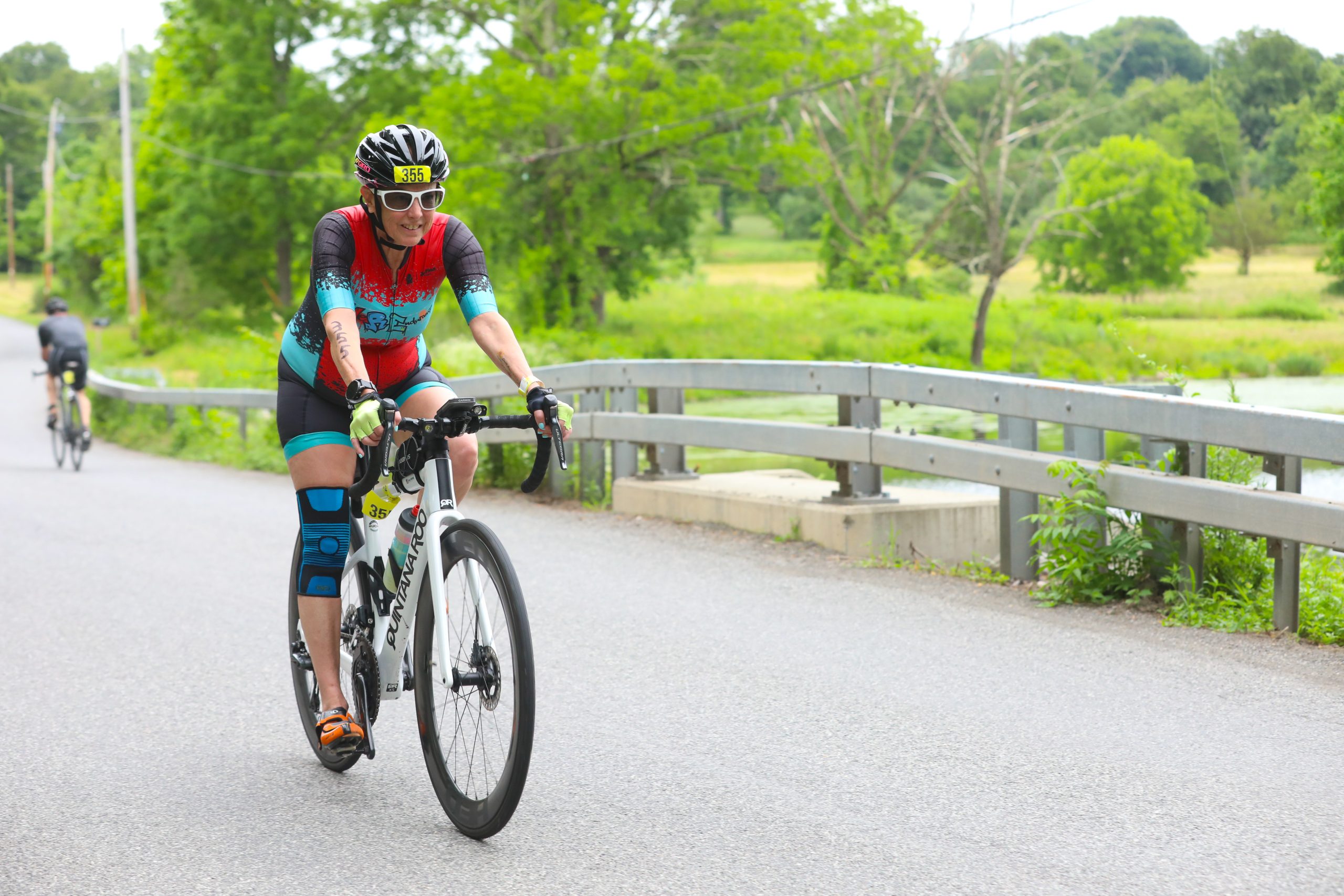

When Hilary JM Topper signed up for her first triathlon at 53, she didn’t expect it to change her life — or spark a second career as a triathlon coach, podcast host, and author of Unlocking the Triathlon: The Beginner’s Guide to Competing in a Triathlon.
In this inspiring Q&A, Hilary talks about what drew her to the sport, how anyone — at any age or ability level — can get started, and why triathlon is one of the most empowering experiences you’ll ever have.
From balancing training with real life to what gear you actually need, her advice proves it’s never too late to start something new — and discover just how strong, capable, and unstoppable you really are.

Alison: You competed in your first triathlon at 53 and went on to become a coach and author. What made you fall in love with the sport, and why do you think triathlon is such a powerful choice for beginners who want a new challenge?
Hilary: Competing in my first triathlon at 53 was a transformative experience. What drew me in was the diversity of the sport—swimming, cycling, and running each offered unique challenges and rewards, keeping the journey exciting and dynamic. But what truly made me fall in love with triathlon was the sense of accomplishment and community. Crossing that first finish line at the Captiva Tri in Sanabel, Florida, was a moment of pure pride. The camaraderie among athletes, regardless of skill level, was also incredibly inspiring.
Triathlon is such a powerful choice for beginners because it’s more than just a physical challenge—it’s a mental and emotional journey. It teaches resilience, time management, and the joy of pushing past perceived limits. Plus, the variety in training keeps it engaging and reduces the risk of burnout or overuse injuries. It’s a sport that welcomes all ages and abilities, proving that it’s never too late to start something new and achieve something extraordinary.
Alison: Training for three sports while balancing work, family, and life can feel intimidating. What advice would you give to busy people who want to take this on without it becoming overwhelming?
Hilary: I start early—every day, I’m out of bed at 4 am and training by 5, often before the sun rises. Once I’m done, I shower and head to work, leaving the rest of the day free for everything else. But I know not everyone has that flexibility. Many people have young children or early work schedules and can only train in the evenings.
In my book, Unlocking the Triathlon: The Beginner’s Guide to Competing in a Triathlon, I dedicate a section to balancing training with life’s demands. One of the people I interviewed, an Ironman and Kona qualifier, has four young children, works full-time, and coaches on the side. When I asked how she manages it all, she said she makes time for training wherever she can and doesn’t stress over undone chores. She also embraces the sacrifices, knowing that when you truly love the sport, you’re willing to let go of some things to make it happen.
Alison: How much time does a beginner realistically need to train for their first sprint triathlon, and what should a sample training week look like?
Hilary: A beginner needs about 30 minutes of training a day to start, gradually building up to around 2 hours a day for a sprint triathlon. The longer training sessions are typically reserved for weekends. I always recommend beginners start with a sprint triathlon, which might include a 400-meter swim, a 10-mile bike ride, and a 5K run—though distances can vary depending on the event.
Here’s an example of a beginner-friendly training week:
- Monday – Off day
- Tuesday – Bike for 1 hour
- Wednesday – Swim up to 600 meters (the book starts with 200 meters and gradually increases endurance each week)
- Thursday – Run 2 miles
- Friday – Swim up to 600 meters
- Saturday – Long bike ride, 1.25 hours
- Sunday – Long run, 2.5 miles
Alison: What are some of the biggest mistakes you see first-time triathletes make in training, and how can they avoid them?
Hilary: One of the biggest mistakes I see first-time triathletes make is doing too much, too soon. It’s easy to get excited and overtrain, which can lead to burnout or injury. To avoid this, beginners should follow a structured training plan that gradually builds endurance and intensity. Rest days are just as important as training days—they allow your body to recover and get stronger.
Another common mistake is neglecting one of the disciplines. Many beginners focus on their strongest sport and avoid their weakest, but triathlon is about balance. Spend extra time improving your weakest area, whether it’s swimming, biking, or running, to build confidence and overall performance.
Nutrition is another area where first timers often struggle. Training is not just about the workouts—it’s also about fueling your body properly. Practice your race-day nutrition during training to find what works for you and avoid surprises on race day.
Lastly, don’t forget to practice transitions. Many beginners overlook this, but smooth transitions can save valuable time and reduce stress during the race. Set up a mini transition area at home or at the park and practice moving from swim to bike and bike to run. (One of my athletes was talking so much to other athletes during transition that he ended up DNF’ing the race. DNF means Did Not Finish.)
Alison: Gear can also feel overwhelming—bikes, wetsuits, tri kits, and more. What do first-time triathletes actually need to get started, and what can they skip in the beginning?
Hilary: You don’t need an expensive bike. Gwen Jorgensen, US Olympic Gold Medalist, shared in Unlocking the Triathlon that she used her mother’s mountain bike for her first race. Another age-group triathlete told me he borrowed a mountain bike with a chewed-up seat that the dog had bitten off. The key is to use whatever bike you have access to—you don’t need a power meter or clip-in pedals either. Flat pedals work just fine.
Before my first triathlon, my coach told me I needed a carbon-fiber road bike, an expensive wetsuit, a power meter, and more. I spent a fortune that first year, but thankfully, I fell in love with the sport, so it was worth it. For someone just starting out, though, I’d say: borrow a bike, buy a used wetsuit, and invest in a basic tri kit. The beauty of triathlon is that you can start with the basics and upgrade as you go. Focus on enjoying the experience and building your skills first—fancy gear can come later.
Alison: There are hundreds of races out there. How can someone choose the right first triathlon that sets them up for a positive experience?
Hilary: In my book, Unlocking the Triathlon, I talk about this a lot. Some of my recommendations include:
- Look for a sprint-distance triathlon or even a super-sprint. These shorter races are beginner-friendly and less intimidating, giving you a chance to ease into the sport without feeling overwhelmed.
- Choose a race close to home. Traveling for your first triathlon can add unnecessary stress, from packing gear to navigating an unfamiliar course. (When I traveled to Florida for my first race, it was ridiculously stressful. If I knew that there were local races like EventPower LI, I would have stuck closer to home.)
- If swimming is your biggest challenge, find a race with a pool swim or a calm, shallow lake. Avoid open-water swims in the ocean or rivers with strong currents for your first race.
- Research the course. A flat bike and run course are ideal for beginners, as hilly or technical routes can be more difficult. Many race websites provide course maps and elevation profiles.
- Consider the size of the event. Smaller races often feel more welcoming and less chaotic, while larger races can be overwhelming for a first timer.
- Give yourself enough time to train. Choose a race that’s at least 12-20 weeks away so you can prepare properly and build confidence.
- Ask around! Local triathlon clubs or online forums can offer great insights into beginner-friendly races in your area.
Alison: For people who may not think of themselves as “athletes,” how can training for a triathlon transform the way they see their bodies and their capabilities?
Hilary: I never saw myself as an athlete either, but training for a triathlon completely changed how I view myself, my body, and my abilities. Triathlons are one of the most inclusive sports out there—they’re open to people of all body types, ages, and backgrounds. Whether you’re 18 or 85, a triathlon welcomes you to the starting line. (I met a woman named Sybil at the last triathlon I did. She was 85 years old and extremely inspiring!)
Training for a triathlon shifts the focus from your appearance to what your body can do. You begin to appreciate your strength, endurance, and resilience in ways you never thought possible. It’s not about being the fastest or fittest—it’s about showing up, putting in the effort, and crossing that finish line. Every small victory, whether it’s swimming a little farther, biking up a hill you once avoided, or running your first mile, boosts confidence and pride.
Triathlon training also teaches you to embrace challenges and push past limits you didn’t think you could overcome. It’s a journey of self-discovery that proves you’re capable of much more than you give yourself credit for. And the best part? The triathlon community is incredibly supportive, cheering you on every step of the way.
For anyone who doesn’t see themselves as an athlete, I’d say this: You don’t have to be an athlete to start, but you’ll feel like one by the time you finish.
Alison: If someone is reading this and just thinking, “I don’t even know where to start,” other than buying your book (which I highly recommend they do), what’s the very first step they should take toward becoming a triathlete?
Hilary: Just jump in and sign up for a race! Committing to an event gives you a clear goal to work toward and makes the journey feel real. It doesn’t have to be a big race—start with a local sprint triathlon or even a super-sprint. Once you’ve signed up, you’ll have a date on the calendar and a reason to start training.
From there, take it one step at a time. Begin with what you already know—if you’re comfortable running, start with short runs. If swimming feels intimidating, find a local pool or swim coach to help you get started. And don’t worry about having all the fancy gear—use what you have and upgrade later if you fall in love with the sport.
The most important thing is to start. You don’t need to be in perfect shape or have all the answers right away. Triathlon is a journey, and every athlete—no matter how experienced—was once a beginner. Signing up is the first leap of faith, and from there, you’ll discover just how capable you are.
Alison: Finally, for someone reading this who’s curious but still on the fence, what’s the one thing you’d say to encourage them to sign up for their first triathlon?
Hilary: You’ll never know what you’re capable of until you try. Signing up for your first triathlon isn’t just about completing a race—it’s about discovering a stronger, more confident version of yourself. It’s about proving to yourself that you can take on a challenge, step outside your comfort zone, and achieve something extraordinary. I always say, if I can do it, you can too!
