


News is everywhere—on our phones, in our inboxes, and across social media. With headlines constantly updating and alerts demanding a response, attention and news have become deeply connected. The challenge isn’t finding information—it’s deciding what deserves focus. Without a clear way to manage attention, it’s easy to get pulled into endless updates, debates, and distractions
But with the Spheres of Attention—Noticing, Awareness, Focus, and Concentration—you can engage with news intentionally instead of reactively.
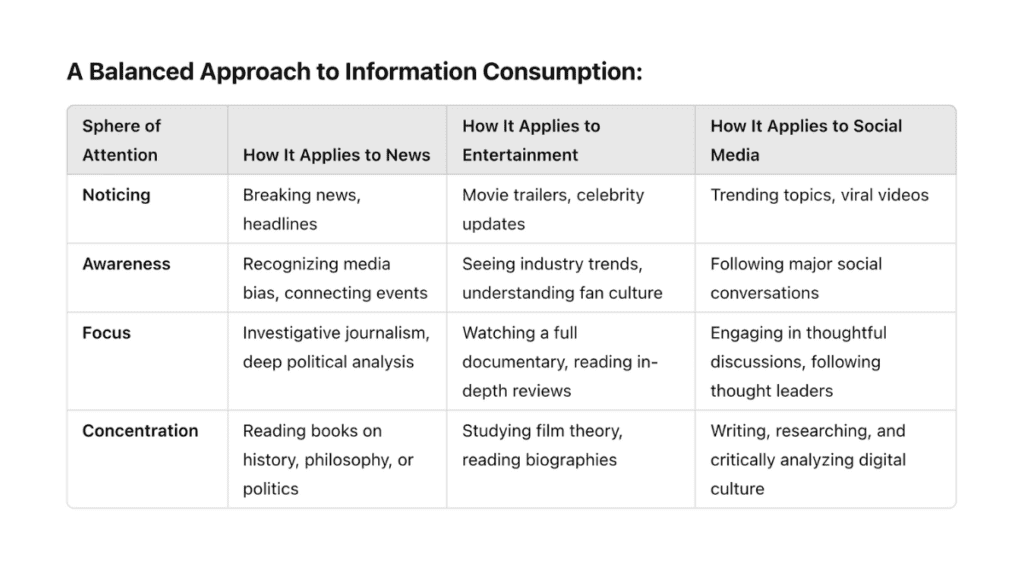
In The Productivity Diet, I introduced the Spheres of Attention—a way to manage focus instead of being pulled in every direction. This approach isn’t just about productivity; it’s about making better choices with what we consume and how we engage. By applying these spheres—Noticing, Awareness, Focus, and Concentration—to news, entertainment, and social media, we can stay informed without feeling overwhelmed.
The Attention War in Modern News Media
Media companies, news outlets, and sports networks aren’t just delivering stories—they’re competing for attention.
- News cycles run 24/7, keeping headlines fresh and reactions constant.
- Entertainment is always on, with new releases and trending moments pushed relentlessly.
- Sports media fills every gap, covering trades, speculation, and behind-the-scenes drama long after the final whistle.
- Social media amplifies it all, turning quick updates into viral discussions and feeding the cycle of engagement.
With so much pulling at our focus, it’s easy to slip into reactive consumption—checking, scrolling, and clicking without intention. That’s where the Spheres of Attention offer a way forward. By recognizing what level of engagement we’re in—Noticing, Awareness, Focus, or Concentration—we can shift from passive intake to deliberate, meaningful attention.
1. Noticing: Filtering the Noise Before It Pulls You In
Most media consumption happens without intention. We scroll, skim, and overhear—constantly bombarded by information without actively choosing to engage. This is Noticing, the outermost layer of attention. It’s where headlines flash, notifications pop up, and breaking news interrupts whatever you were doing.
Media companies, streaming platforms, and social networks design their content for maximum engagement, making everything feel urgent. But urgency doesn’t always equal importance.
Some common attention traps at this stage:
- News alerts interrupt at all hours, often lacking full details.
- Streaming services push new releases aggressively, making every show seem like required viewing.
- Sports media keeps fans engaged year-round, filling downtime with speculation and debates.
- Social media amplifies the loudest voices, whether or not they’re the most informed.
It’s easy to react automatically at this stage—clicking, scrolling, and engaging without asking if it’s worth your time.
How to Stay in Control:
- Reduce notifications. The fewer interruptions, the more control you have over your focus.
- Pause before engaging. Ask yourself: Is this actually important?
- Watch for emotional triggers. If a headline sparks immediate outrage or excitement, slow down before reacting.
Filtering at this stage prevents low-value distractions from dominating your attention, allowing you to engage with intention instead of impulse.
2. Awareness: Recognizing Patterns Without Getting Pulled In
Once something catches our attention, we begin making connections. Awareness is where we start distinguishing between what’s relevant and what’s just background noise. This is where media, sports, and entertainment industries work hardest to keep us engaged—often without us realizing it.
At this stage, everything feels important, but that doesn’t mean it actually is.
Some examples of how this plays out:
- Sports never really have an offseason. Even when games aren’t happening, leagues like the NFL keep fans engaged with free agency, the draft, and training camp.
- Talk shows and debate programs recycle the same topics. The goal isn’t depth—it’s keeping fans emotionally invested.
- Fantasy leagues, betting, and analytics add new layers of engagement. Even when you’re not watching, you’re tracking stats, checking odds, or adjusting lineups.
It’s no different in news and entertainment:
- Hype cycles make every release feel urgent. Whether it’s a blockbuster film, a viral album drop, or the latest documentary, marketing ensures you think you need to see it now.
- Breaking news isn’t always meaningful. Headlines are often framed dramatically to drive clicks before the full story emerges.
- Trending topics feel important in the moment. Social media amplifies stories that are designed to grab attention, even if they don’t hold long-term significance.
This is where many people get stuck in passive consumption—feeling informed, but never truly engaging with depth.
How to Stay in Control:
- Ask: “Why is this trending?” Just because something is everywhere doesn’t mean it matters.
- Recognize manufactured engagement. Is this actually important, or just designed to keep you watching?
- Limit passive scrolling. Awareness alone doesn’t lead to understanding.
At this stage, the goal isn’t to avoid news, entertainment, or sports—it’s to observe without feeling obligated to react.
3. Focus: Engaging with Purpose
This is where you decide what news gets your attention instead of letting algorithms, headlines, or autoplay do it for you. Focus is about making deliberate choices—not just consuming out of habit.
Too often, attention drifts without intention:
- Sports fans leave ESPN or talk radio on all day. It feels like engagement, but it’s really just background noise.
- Debates about “GOATs” and hypothetical trades flood social media. But do they actually add value, or just fill time?
- Offseason speculation keeps fans locked in, even when nothing is happening. Many rumors never come true, but they keep people clicking.
It’s the same with news and entertainment:
- Many people react to headlines without reading the full article. Surface-level understanding leads to surface-level opinions.
- Watching a movie because it’s trending isn’t the same as watching because you care about it. The difference is intention.
- Long-form journalism and analysis offer depth. But social media makes quick, reactive content easier to consume.
When focus is hijacked, it’s easy to mistake engagement for value. Just because something is everywhere doesn’t mean it’s worth your time.
How to Engage Wisely at This Stage:
- Set time limits for news, sports, and entertainment. Avoid letting passive consumption seep into every free moment.
- Choose depth over breadth. A single well-researched article is worth more than 20 shallow updates.
- Pay attention to when you lose control of your focus. If you catch yourself scrolling mindlessly, step back and reassess.
Being intentional with focus doesn’t mean avoiding news, sports, or entertainment—it means making sure they add value on your terms.
4. Concentration: Deep Engagement with What Truly Matters
Some topics, stories, and experiences deserve more than just attention—they require full engagement. Concentration is where learning, creativity, and mastery happen. It’s the difference between passive consumption and active participation.
This stage isn’t about keeping up—it’s about going deep:
- News: Instead of scanning headlines, you read investigative reports or books that provide historical context.
- Entertainment: Rather than aimlessly watching, you study storytelling, cinematography, or music production.
- Sports: Instead of passively following games, you analyze strategy, track statistics, or even play yourself.
- Social Media: Instead of reacting to viral opinions, you craft thoughtful, well-researched discussions.
Concentration takes effort, which is why most distractions are designed to keep you from reaching it.
How to Engage Wisely at This Stage:
- Be selective. Not everything deserves your full attention—choose wisely.
- Turn learning into action. If something matters, apply it in a meaningful way.
- Recognize distractions disguised as depth. Some content feels important but ultimately leads nowhere.
Deep engagement isn’t about consuming more—it’s about engaging better.
Managing Attention and News in an Always-On World
Everywhere you turn, something is competing for your attention. News cycles refresh constantly. Sports never really pause. Social media turns every moment into a trending topic. It’s easy to feel like stepping away means falling behind, but the truth is, being overwhelmed isn’t the same as being informed.
Most distractions don’t announce themselves as distractions. They arrive in small, seemingly harmless moments—checking a notification, clicking on an article, watching one more video. Before long, time disappears, and the things that actually deserve your focus get pushed aside. This is why managing attention matters. It’s not about avoiding media, news, or entertainment altogether; it’s about choosing how and when to engage.
The Spheres of Attention help make those choices clearer. Instead of reacting to every bit of information that crosses your path, you can decide what news is worth your time and attention:
- Notice selectively. Not everything that grabs your attention deserves it.
- Recognize patterns. Step back and ask whether something is actually useful or just designed to keep you engaged.
- Choose where to focus. Shift from passive consumption to intentional engagement.
- Protect what matters. Some things require full concentration, and they should be given the space they need.
Without these steps, attention gets pulled in a hundred different directions. With them, you take control of what you engage with, how deeply you engage, and—most importantly—why.
If you want to stay informed without feeling consumed, start by asking: Where is my attention right now?
