

There are few things more uncomfortable than developing an itch in your vagina. It’s not surprising that when it strikes, you likely rush to your phone to look up how to stop itching down there ASAP. This may not be all that comforting when you’re in the thick of it, but you’re hardly the only person who gets stuck with this problem.
“Vaginal itchiness is extremely common, but there’s a big difference between having a little itch and being up all night thinking you can’t stand this,” says Lauren Streicher, MD, an associate professor of clinical obstetrics and gynecology at Northwestern University Feinberg School of Medicine.
The most common culprits are irritants such as bubble baths or fragranced soaps, yeast infections or bacterial vaginosis, and hormonal changes due to lack of estrogen (often caused by lactation or menopause), according to Lyndsey Harper, MD, an associate professor of obstetrics and gynecology at Texas A&M College of Medicine and the CEO and founder of Rosy. “When estrogen is low, the bacterial makeup of the vagina changes and the skin becomes thinner and more easily irritated which can lead to varying degrees of discomfort and itching.”
In addition to infections (yeast or bacterial) or STIs, an allergy or skin condition might be to blame, and the vagina (the inside canal) and/or the vulva (everything on the outside) might be involved, adds Alyssa Dweck, MD, an ob-gyn based in Westchester County, New York.
So vaginal itchiness is rarely a sign of a serious underlying issue. But if it’s ongoing or you spot other concerning symptoms like blisters or a rash, you should get it checked out so you can get an accurate diagnosis and receive the appropriate treatment, notes Kyle Bukowski, MD, an ob-gyn and the chief medical officer at Planned Parenthood of Maryland.
But don’t worry, because if you’ve already checked-in with a healthcare provider and are just dealing with the occasional itchiness, there are plenty of doctor-approved home remedies that can successfully calm your itch.
Meet the experts: Lauren Streicher, MD, is an associate professor of clinical obstetrics and gynecology at Northwestern University Feinberg School of Medicine. Lyndsey Harper, MD, is an associate professor of obstetrics and gynecology at Texas A&M College of Medicine and the CEO and founder of Rosy. Alyssa Dweck, MD, is an ob-gyn based in Westchester County, New York. Kyle Bukowski, MD, is an ob-gyn and the chief medical officer at Planned Parenthood of Maryland.
1. Check your soap.
Your vulva is a sensitive area, and some soaps, especially ones that contain delicious-smelling fragrances, can make you itchy down there, says Jonathan Schaffir, MD, an ob-gyn at The Ohio State University Wexner Medical Center.
Try switching to a hypoallergenic soap like Cetaphil and see where that gets you. “Sometimes just eliminating a particular product will make all the difference,” Dr. Streicher adds.
2. Rethink using pads.
Some women experience allergic reactions to their menstrual pads that can trigger a serious case of the itches. That’s because some pads contain perfumes that can be irritating, explains Dr. Schaffir. If you notice you get especially itchy around your period, stop using your go-to pads and opt for an unscented variety, or even organic versions of pads and tampons.
This content is imported from poll. You may be able to find the same content in another format, or you may be able to find more information, at their web site.
3. Use an over-the-counter cream, like Vagisil.
Vagisil cream is designed to help fight vaginal itch and can soothe things down there, Dr. Schaffir says. It works by forming a protective barrier over your skin to make it feel better and save you from developing more irritation. Use this for any itchiness you suspect may be caused by antibiotics or discharge.
4. Apply Aquaphor.
If you’ve been itchy, it may also burn when you pee, so add a little Aquaphor to the area, clean with water after you go, and be gentle with the wiping, Dr. Streicher says. While petroleum jelly can make a yeast infection worse (if you have one), Aquaphor is more breathable for the skin while still creating a barrier down there, she says. Plus, it can be soothing.
5. Try a yeast infection cream.
A lot of women assume they have a yeast infection whenever they get a vaginal itch, but it’s not always the case, Dr. Streicher says. Still, if you’ve had a yeast infection before and you know that’s what you’re dealing with, an OTC yeast infection medication should help. Keep in mind that you can also get a yeast infection in your vulva—and there are creams for that too.
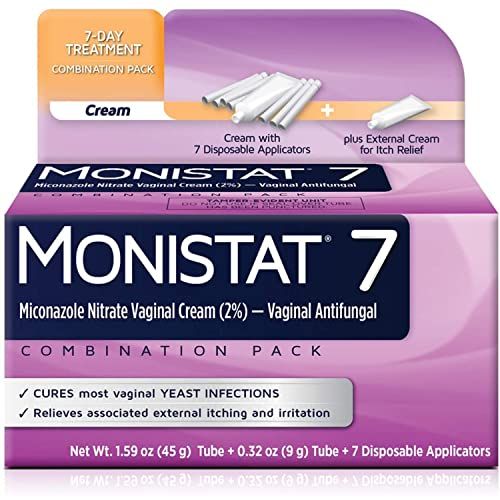
Common symptoms of a yeast infection include a white, cottage cheese-like discharge, vaginal itchiness or irritation, and even pain during urination or sex, per Dr. Bukowski. And while you can start with an OTC antifungal cream for fast relief, you should see a doctor if symptoms persist for more than a few days so you can get prescription meds to clear it up.
“Because symptoms of a yeast infection overlap with those of some STIs and other infections like bacterial vaginosis, an accurate diagnosis is critical,” he says. “If symptoms do not improve, it’s important to visit a healthcare provider since misidentifying infections and treating them incorrectly can lead to persistent or recurrent infections.”
Definitely see your doc if you’re unsure whether the symptoms you’re experiencing may be related to a yeast infection.
6. Take a sitz bath with lukewarm water.
A hot bath can provide more than a little relaxation when you’re dealing with itchiness down there. In case you’re not familiar, a sitz bath is a warm, shallow bath that you sit in to relieve itching and irritation around your anus or vagina, per the Cleveland Clinic. Feel free to add plain Epsom salt or oatmeal bath such as Aveeno Soothing Bath Treatment, Dr. Dweck says.

Warm water can relax your muscles and improve circulation to ease pain and promote healing, while the added ingredients can calm skin irritation. A 2014 study published in Current Microbiology found that baking soda killed Candida cells (which are responsible for yeast infections, FYI), so consider adding some to your bath if you have a fungal infection.
Make sure to clean your bathtub first to remove any soap or cleaner residue, then fill up to two to three inches of warm water between 99 and 102 degrees Fahrenheit. Add ½ cup of baking soda and swirl the water until everything is dissolved before sitting in the water for 10 to 15 minutes. Afterward, you can dry the vagina area with a hair dryer on a cool low setting. Repeat a maximum of three times a day for best results, according to the University of Michigan Medicine.
7. Consider an over-the-counter hydrocortisone cream.
Hydrocortisone creams are often used for minor skin irritations, so they can be helpful for external vaginal itching as well. Just don’t insert these creams inside the vagina, as it can worsen inflammation since some products are specifically formulated for the vagina, notes Dr. Harper.
After all, hydrocortisone creams are meant to alleviate itchiness brought on by eczema and other skin conditions like insect bites and allergies, but you can use them around the pubic area if you’re feeling itchy due to razor burn after shaving, according to the Cleveland Clinic. That said, Dr. Harper suggests talking with your doctor before using hydrocortisone creams on the vulva and vagina.
8. Apply an ice pack or other cooling therapy.
Applying a cold treatment like an ice pack or over-the-counter cooling pad can provide relief down there, says Dr. Dweck. Just be sure to use them with a cloth barrier such as your underwear or a towel rather than applying directly to the skin, as you could further irritate it.

9. Opt for cotton underwear.
Certain fabrics can lead to extra irritation and itching, so sticking with cotton panties may be your best bet, says Dr. Dweck. Better yet, opt for organic,she adds.
10. Try an alternative hair-removal method.
If you shave your bikini area and notice that it’s always followed by itchiness, Dr. Dweck recommends considering other methods, such as laser hair removal, electrolysis, or waxing.
11. Pop a non-drowsy OTC antihistamine.
Medications like Benadryl are known to help relieve allergic reactions to the skin, so trying them for itch issues may prove to be helpful as well, says Dr. Dweck.
12. Moisturize the external area.
“From time to time, vaginal itching may be due to dry skin, so consider a hypoallergenic moisturizer without petrolatum, which may worsen the issue,” says Dr. Dweck.
13. Consider hormone therapy.
If all else fails, vaginal estrogen might do the trick if low estrogen is the issue, which can be the result of experiencing menopause, taking hormonal birth control, breastfeeding, or taking certain medications, explains Dr. Dweck. “You’ll need a prescription, so talk to your gyno if you want to consider this option.”
The bottom line: While these home remedies for vaginal itch can be a temporary solution, if you’re struggling with an itch that won’t quit, it’s time to see your doctor to get it checked out.
Korin Miller is a freelance writer specializing in general wellness, sexual health and relationships, and lifestyle trends, with work appearing in Men’s Health, Women’s Health, Self, Glamour, and more. She has a master’s degree from American University, lives by the beach, and hopes to own a teacup pig and taco truck one day.
Andi Breitowich is a Chicago-based writer and graduate student at Northwestern Medill. She’s a mass consumer of social media and cares about women’s rights, holistic wellness, and non-stigmatizing reproductive care. As a former collegiate pole vaulter, she has a love for all things fitness and is currently obsessed with Peloton Tread workouts and hot yoga.
