

Recipe notes and tips
What is beef rendang?
Beef rendang is a traditional Indonesian dish originating from the Minangkabau culture of West Sumatra. It features beef slowly cooked in coconut milk and a fragrant blend of spices until the liquid reduces into a thick, intensely flavored coating.
Unlike a typical curry, rendang is not meant to be soupy. The long cooking process concentrates the flavors and gives the beef its characteristic dark color and tender texture.
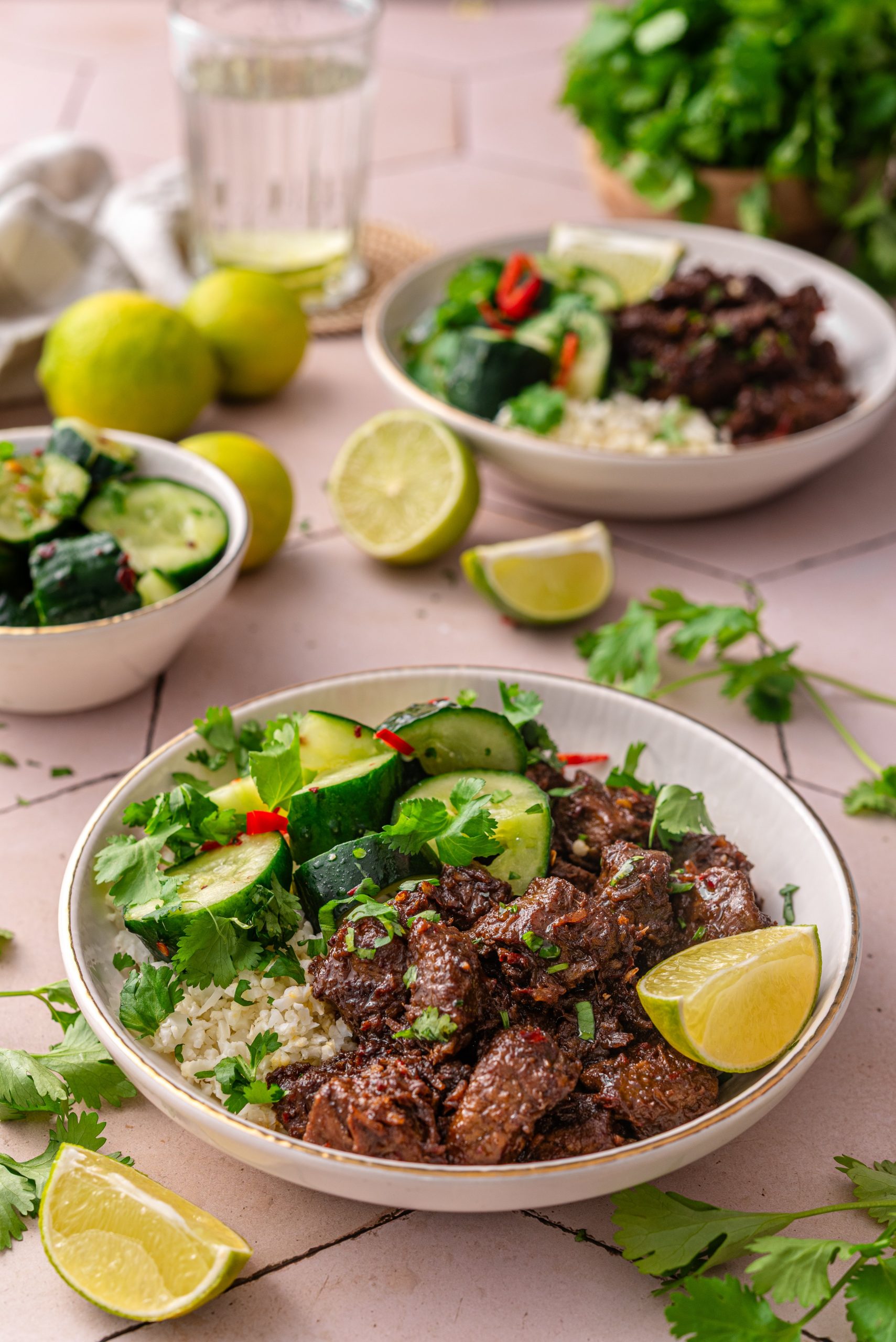
This low carb version is served with cauliflower rice and a refreshing smashed cucumber salad.
What cut of beef is best for rendang?
Beef chuck roast is an excellent choice because its connective tissue gradually breaks down during slow cooking, resulting in tender, flavorful meat.
Beef brisket or boneless beef short ribs are also good alternatives. Choose a cut suitable for slow cooking rather than a lean steak, which can become dry.
Can I make beef rendang in a slow cooker?
Absolutely! Brown the beef and cook the spice paste in a skillet as directed, then transfer everything to a slow cooker along with the coconut milk and salt. Cook on low for 6–8 hours or on high for 3–4 hours, until the beef is very tender.
Transfer the beef and cooking liquid to a wide skillet or saucepan. Simmer uncovered until the sauce becomes thick, dark, and concentrated. Stir in the toasted coconut and lime zest toward the end. Since slow cookers retain moisture, this final reduction is especially important for achieving the characteristic rendang texture.
Can I make beef rendang in a pressure cooker or Instant Pot?
Yes! Use the sauté function to brown the beef and cook the spice paste as directed. Return the beef to the pot, add the coconut milk and salt, and stir well, scraping the bottom to prevent sticking. Make sure there is enough thin liquid to meet your pressure cooker’s minimum requirements.
Pressure cook on high for approximately 35–40 minutes, followed by a 10–15 minute natural pressure release before releasing any remaining pressure. Check that the beef is fork-tender.
Use the sauté function to simmer the sauce uncovered until thick and concentrated, stirring frequently to prevent scorching. Finish with the toasted coconut and lime zest. Always follow your pressure cooker’s instructions for cooking thick coconut-based sauces.
What is galangal, and can I substitute it?
Galangal is an aromatic root commonly used in Southeast Asian cooking. Although it resembles ginger, it has a distinct citrusy, peppery flavor.
Prepared galangal paste is convenient and works well in this recipe. If you have fresh galangal, you can use it instead.
Ginger can be used in a pinch, but the flavor will be slightly different.
What kind of coconut milk should I use?
Choose unsweetened coconut milk with a high coconut content, preferably without unnecessary additives.
Full-fat coconut milk works particularly well because it gives the rendang its rich flavor and helps create the characteristic concentrated sauce as it reduces.
Avoid coconut milk beverages intended for drinking, as they are usually much thinner.
How spicy is beef rendang?
The heat depends on the type and size of chili peppers and the curry paste used.
For a milder version, remove the seeds and membranes from the chili peppers. For extra heat, leave some seeds in or add another chili pepper.
Can I use kaffir lime leaves instead of lime zest?
Absolutely! Makrut lime leaves, also known as kaffir lime leaves, are traditionally used in many Southeast Asian dishes and add a wonderful citrus aroma.
If available, use 3–4 fresh leaves instead of the lime zest. Lightly bruise them to release their aroma and add them to the pot along with the coconut milk.
If using dried leaves, use 2–3. Remove the leaves before serving.
Why does rendang take so long to cook?
The long cooking process is essential for developing the dish’s characteristic flavor and texture.
First, the beef slowly becomes tender as it simmers in coconut milk and spices. Then, the liquid is reduced until the sauce becomes thick, dark, and concentrated.
Rushing this process can leave the beef tough or the sauce too watery.
How do I know when the rendang is ready?
The beef should be very tender, and the sauce should cling to the meat rather than resemble a typical liquid curry.
As the sauce reduces, it will darken and become more concentrated. It’s normal for some coconut fat to separate during the final stage.
Stir more frequently toward the end of cooking to prevent the spices and coconut from sticking to the bottom of the pot.
Why add toasted coconut?
Toasted coconut adds a delicious nutty flavor and helps thicken the sauce.
It’s an important element in many traditional rendang recipes, where toasted and ground coconut is often called kerisik.
For this version, the toasted shredded coconut adds both flavor and a little texture.
How do I make smashed cucumber salad?
Smashing the cucumbers creates irregular surfaces that absorb the dressing more effectively than neatly sliced cucumbers.
Salting and draining them before adding the dressing helps remove excess moisture, keeping the salad crisp and preventing the dressing from becoming watery.
Can I prepare beef rendang ahead?
Absolutely! Rendang is an excellent make-ahead dish because its flavors often become even more developed after resting overnight.
Prepare the beef a day ahead, refrigerate it, and reheat gently before serving. Add a small splash of water if necessary to loosen the sauce.
For the freshest texture, prepare the cauliflower rice and cucumber salad shortly before serving.
Storage and leftovers
Store leftover beef rendang in an airtight container in the refrigerator for up to 3–4 days.
It also freezes well for up to 3 months. Thaw overnight in the refrigerator and reheat gently on the stovetop until thoroughly heated.
Store the cauliflower rice and cucumber salad separately. The cucumber salad is best enjoyed fresh.
Can I use rendang paste instead of red curry paste?
Yes, you can use a ready-made rendang paste instead of red curry paste, but check the label, since many contain added sugar.
