

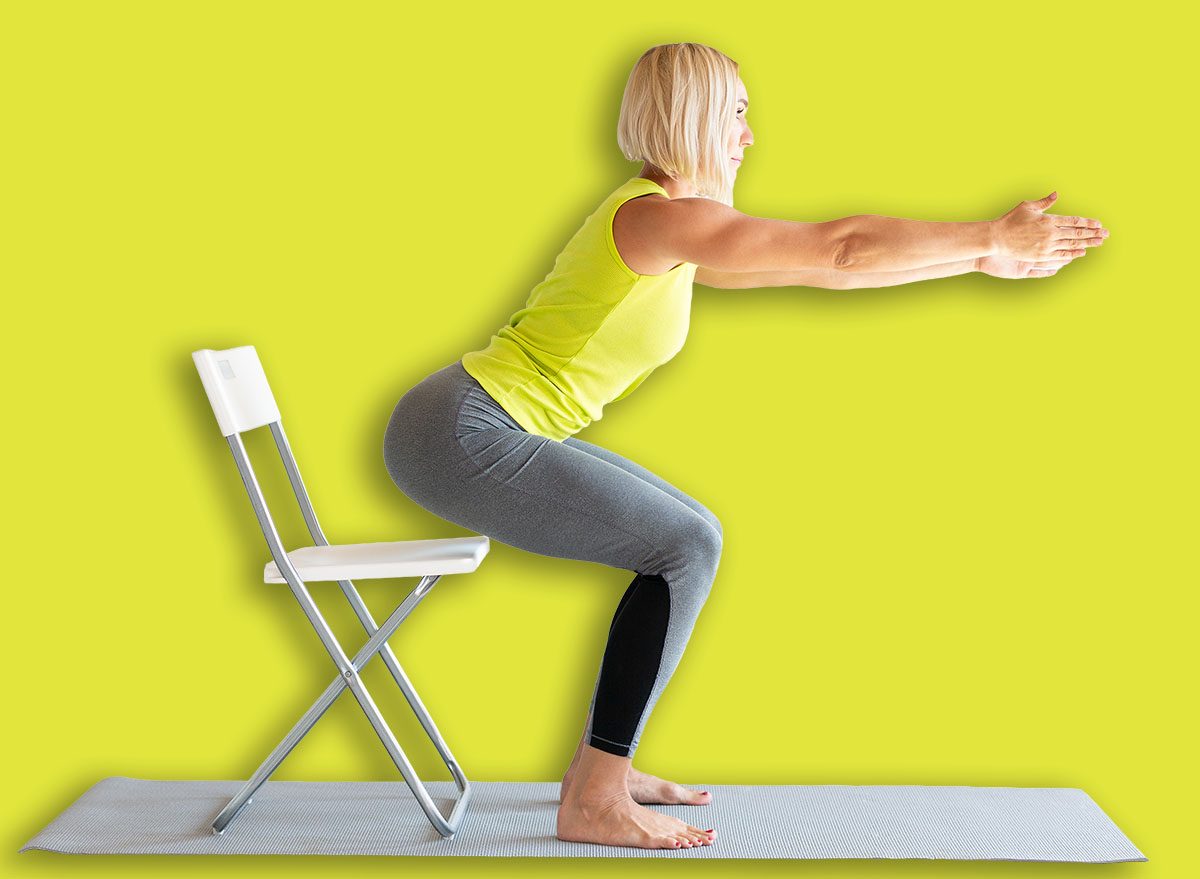
How many sit-to-stands can you do in 30 seconds? Test your leg strength after 60.
One of my top exercises for building leg strength and clients after 60 is the sit-to-stand. Nothing is more functional than sitting down in a chair and standing up. You might assume you’d need heavy squats to build leg strength, but a simple chair squat does the job. The sit-to-stand builds your quadriceps and glutes along with your core muscles and tests your balance at the same time.
This test takes only 30 seconds, and it will tell you where you’re at from a strength perspective. If you can do 12 sit-to-stand ups within the 30 seconds, that means you can repeatedly lift your body from a seated position to full standing, lower with control to sitting at a pace of one rep every two and a half seconds.
If you can perform 12 clean reps within that time window after 60 without using your hands, you’ve reached an ideal level of leg strength and endurance. Just doing 12 sit-to-stands isn’t what makes you elite, it’s being able to do 12 within the 30 seconds time cap.
How to Perform the 30-Second Sit-to-Stand Test
Find a sturdy chair that will support your weight. Sit on the front edge of the seat with both feet flat. Set a timer and cross your arms over your chest. When the timer starts, press through your feet and stand up. Lower with control and continue performing reps for the entire 30 seconds.
How to Do It
- Place a sturdy chair securely against a wall
- Sit with both feet flat on the floor
- Cross your arms over your chest
- Start a 30-second timer
- Stand completely upright
- Sit fully back down with control
- Repeat as many clean repetitions as possible.
Why 30 Seconds is Important
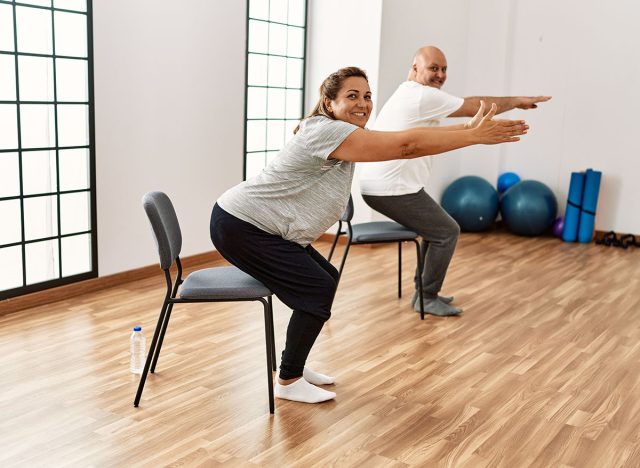
There’s a big difference between being able to do 12 sit-to-stands within an hour and being able to do them in 30 seconds. Pace is everything.
The time limit introduces a level of strength and muscular endurance needed to complete the test. Your quads straighten your legs. The glutes help extend the hips. Your core stabilizes your torso. Your ankles and feet keep you balanced. All of these muscles are important when moving your body up and down onto the chair.
Good form is also necessary for scoring well on this test. We’re trying to do as many reps as possible within 30 seconds, but shouldn’t let your body collapse onto the chair with each rep. You still need to control the descent as well as powering through the ascent the entire time.
What You Learn From this Test
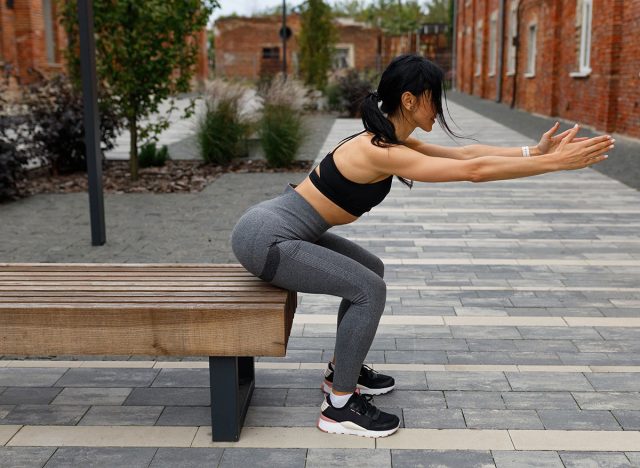
This test teaches you not only your level of strength but also your weak points. When you push yourself for 30 seconds without pause, you start to notice deviations in your form. Maybe the first few reps come easy, but after that you start to fatigue. This means you need to work on your endurance. Maybe even the first few reps are hard. This means you need more strength. Perhaps you notice your weight is shifting more onto one side. This might tell you that you have a muscular imbalance or a postural deviation that you need to fix.
Why Sit-to-Stand Strength Matters After 60
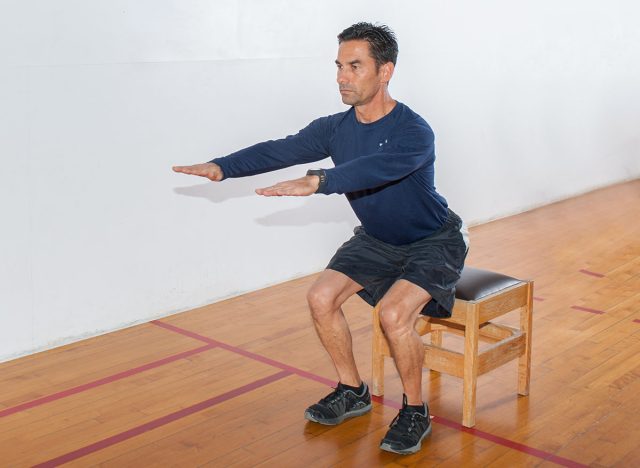
The sit-to-stand has been shown as a valuable metric for reducing fall risk and maintaining independence for older adults. Leg strength is vital as you get older because after age 40, we start to lose body muscle. This is called sarcopenia or age-related muscle loss. Stronger legs are able to adapt when you stumble or slip. Sitting down and standing up is a vital skill you need to maintain at all costs.
That’s why it’s important to do this test. You’re gonna need to sit and stand every day, so improving your sit-to-stand strength will improve your quality of life.
How to Improve your Score
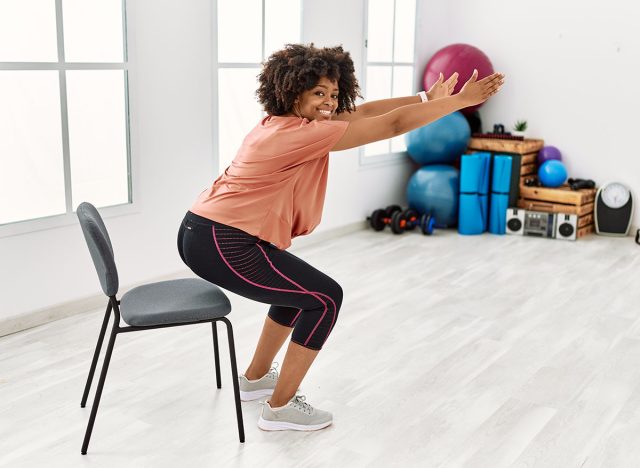
If you can’t do 12 reps yet, that’s totally fine. Start by regularly practicing the sit-to-stand every day. Just do a couple reps at a time. You’ll be surprised how quickly your strength returns. Make sure to lower for 2-3 seconds onto the chair. You don’t want to collapse. That places extra stress on your joints, and your muscles don’t get any of the benefits of the movement.
Once you can do 10 to 12 reps comfortably, you can always increase the resistance by holding a light dumbbell at your chest. Make sure you stay upright when you do this movement. You don’t want the dumbbell to pull your chest forward out of alignment.
Eventually, try doing the squat without the use of a chair. You should hold on to a wall or a steady object before you try to do a free-standing squat. You can also use hip bridges or hip hinges to train the glutes independently.
You can also make this movement easier by using a taller chair or stool to sit on. Just make sure whatever object you pick is stable and doesn’t move or tilt when you place your weight on it. Train this movement consistently throughout the week and you’ll be amazed at how strong and robust your legs will become.
Tyler Read, BSc, CPT
