

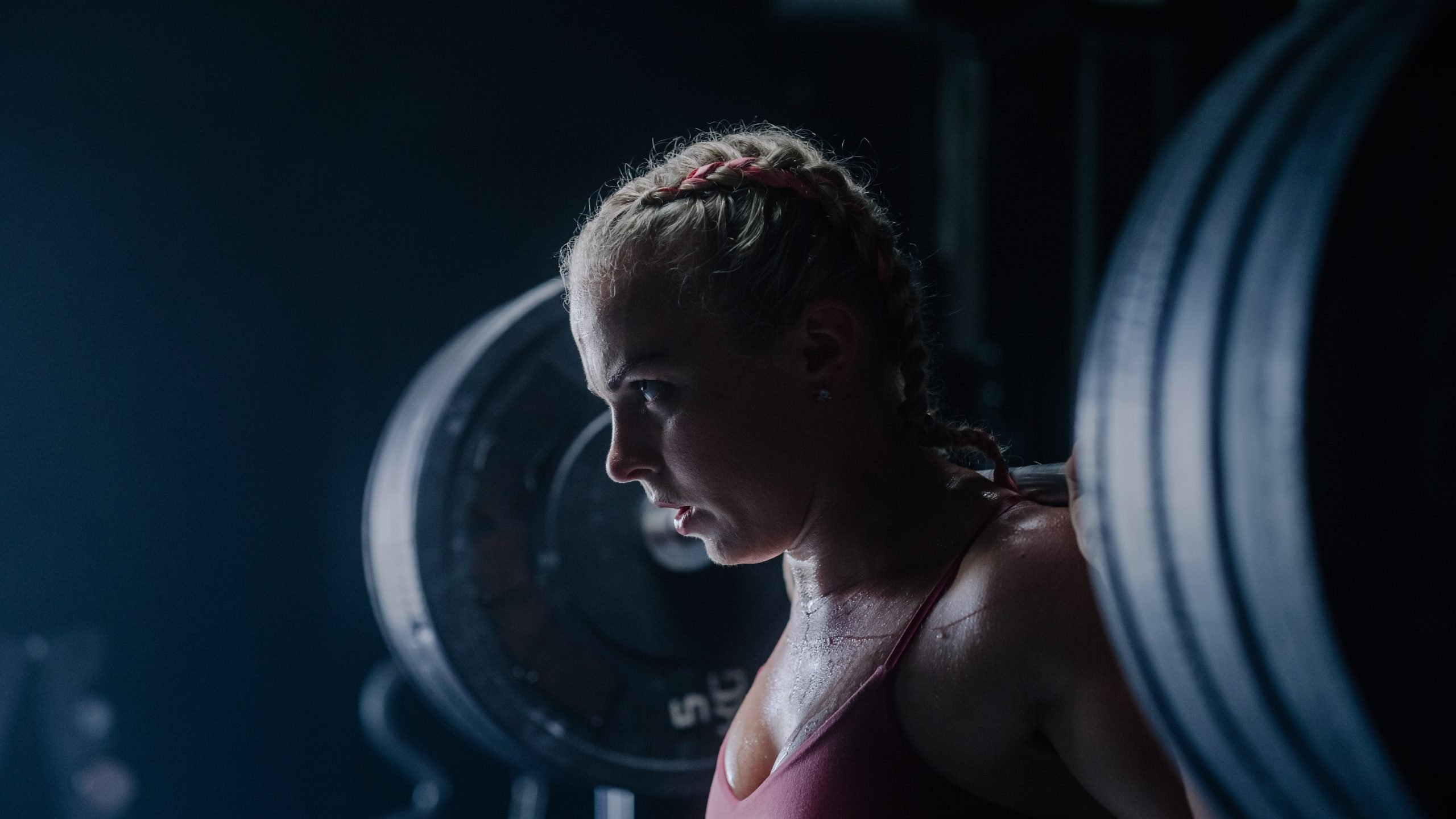

“Lift heavy shit.”
It’s more than a slogan—it’s a call to arms. A challenge. A permission slip. And for many women, it’s the missing piece in their training.
For generations, we’ve been fed a watered-down version of strength: tiny pink dumbbells, endless reps, and workouts that are only “worth it” if they leave us sweaty, sore, and exhausted.
It’s time to change that. It’s time for workouts that make us stronger and more empowered.
To do that, we need to lift heavy a few times per week. So let’s break down what that actually means—and why it matters so much.
What is Strength Training?
First, let’s talk terms.
Resistance training is a general term used to describe exercise that makes your muscles work against a weight or force to build muscular strength, endurance, and size. This resistance can come from your body weight, free weights (like barbells, kettlebells, and dumbbells), weight machines, cable machines, or resistance bands.
Strength training is a type of resistance training where the goal is to increase the strength of your muscles. It usually involves lifting heavy weights for fewer repetitions (around 1-5 reps per set), with longer rest periods in between sets, so you can keep lifting heavy. Training to increase strength is largely about intensity – lifting as heavy as possible for a few reps while maintaining proper form.
Hypertrophy training is a type of resistance training where the goal is to increase the size of your muscles and your muscle mass. It typically involves more moderate weights and higher repetitions (around 6-12 reps per set), with shorter rest periods in between sets. The key to hypertrophy training is more about volume – doing more work (sets/reps/total weight) in each workout.
While both strength and hypertrophy training will result in muscle growth and strength gains, the emphasis is different. Hypertrophy training leads to greater increases in muscle size, while strength training results in larger strength gains.
Your individual goals determine which approach or combination of these approaches is better for you.
Generally speaking, if you’re looking to build muscle mass and “look like you lift”, hypertrophy training may be more suitable for you.
If you’re aiming to improve functional strength and power, then strength training might be the way for you to go.
Training Strength vs. Hypertrophy: What’s the Difference?
Let’s break it down:
- Strength training = lifting heavy weights for fewer reps (1–6), with longer rest between sets. Goal: get stronger.
- Hypertrophy training = moderately heavy weights for moderate reps (6–12), shorter rest. Goal: increase muscle size.
Both approaches build muscle and strength so a combination of both is ideal. And yes, women should do both.
The Science of Adaptation
Strength is your body’s response to a specific challenge or stimulus—one that requires more muscle fiber recruitment for less repetitions. Your muscles adapt to that specific stimulus by recruiting more muscle fibers so that the next time, the same challenge feels easier.
In the first 6–8 weeks of training, most of your gains come from neural adaptations—your nervous system learning how to recruit your muscles more efficiently. Muscle gain (hypertrophy) tends to lag behind, but it comes with consistent effort.
Progressive Overload: The Key to Growth
Progressive overload means you gradually increase the weight, volume (sets/reps), or intensity of your training over time. That’s what tells your body, “Hey, if you want me to level up again, you need to up the challenge and give me a reason to get stronger.”
This is the reason why you might get awesome newbie gains from a workout or workout plan but it stops working after 4–8 weeks. Your body adapts quickly. Without progression, you plateau. But that’s just a sign that you need to change something up – volume, intensity, frequency – to keep seeing progress. But the magic never stops if you stay consistent and intentional.
What Does “Lifting Heavy” Even Mean?
The most important thing to know is that the term “heavy weights” is relative. It means whatever weight is heavy for you. There is no magic number you need to hit to be deemed as lifting heavy.
For example, you don’t need to be squatting 2x your bodyweight to reap the strength gains from your lifting. It simply a matter of applying enough stimulus to your body that your body is forced to adapt. That’s how strength is built—your body gradually builds the “circuitry” needed to make it feel easier to do the next time you lift that same weight.
But a 2017 study found that most people choose weights for their strength training exercises that are too light to maximize strength. That means that many of us are leaving a lot of strength gains on the table when we do our strength training workouts.
So how do you make sure you’re lifting enough?
Many weight lifting coaches and personal trainers will prescribe the weight to be used as a percentage of the lifters 1-rep max (or the maximum amount the lifter can lift for that resistance training exercise for only 1 rep). Most beginners to weight training will not have established their 1-rep max and that’s completely fine—establishing a 1-rep max is not something you need to do as a newbie to weight lifting or even as an intermediate or advanced lifter who isn’t competing.
So instead, I recommend using your own experience of the effort as shown in the graphic below.

In the RPE scale graphic, you’ll see two numbers which are both based on your subjective experience when weight training—they are Rate of Perceived Exertion (RPE) and Reps In Reserve (RIR).
RPE refers to how hard (on a scale from 1 -10, 1 being a piece of cake and 10 being totally maxed TF out) the weight training exercise – with the weight you’ve chosen for the prescribed number of reps – feels to you.
RIR refers to the number of reps you could do AFTER you’ve finished the prescribed number of reps for the weight you’ve chosen for that particular weight training exercise. In other words, it’s the number of reps you left “in the tank” when you finished your set.
Lifting heavy is typically an RPE of 8+ with no more than 2 RIR.
Therefore, to get maximum strength gains, I’d recommend doing 3-5 sets of 3-6 reps for your lifts with use a weight that is challenging enough to make each set an 8-10 out of 10 RPE with 0-2 RIR for each set.
Additionally, you should take 90seconds to 3 minutes rest between sets. This ensures that you’re able to hit those reps across all of your sets so you’re getting the right stimulus to keep making strength gains.
NOTE: If your goal is strength (or hypertrophy) DO NOT spend your rest breaks between sets doing burpees. This is strength training, not a bootcamp. You’re not here to burn calories—you’re here to build strength.
Why Lifting Heavy Shit Matters
- In women, muscle mass naturally begins to decline after age 30—by about 8% per decade. Lifting heavy (and eating enough protein) can slow and even reverse this.
- Muscle strength is what enables us to perform daily activities with greater ease and move about our lives independently.
- Subjecting our bones to more compressive forces – like holding weights while moving – increases bone density and reduces the risk of fractures from falls.
- It improves balance, coordination, and joint stability—all essential for aging well and avoiding injury.
- More muscle = better blood sugar control, improved metabolism, and less visceral (deep abdominal) fat.
- Strength training supports heart health and vascular function.
- It’s great for mental health by reducing stress, improving mood, and increasing self-esteem.
- And finally? Being strong is fun as hell.
TLDR: Signs You’re Not Lifting Heavy Enough
- All of your sets for all exercises are for 8-12 reps. (Start your workout with compound moves like squats, deadlifts, presses, and rows in sets of 3-6 reps to build more strength!)
- You finish your set and could easily do another 3, 5, 8, or 12 more reps. (Time to add some weight, baby!)
- You’re not making the “this is hard” face on your last 1–2 reps of each set. (You gotta work for them gains, girl!)
- You don’t need 90 seconds to 3 minutes of rest between sets to fully recover and do it again. (Earn that rest and get stronger faster!)
The Bottom Line
- Lifting heavy = challenging yourself in the 1–6 rep range (with some hypertrophy work too)
- If it feels easy, it’s too light.
- Two days a week is the sweet spot.
- Rest is required—not optional.
- Strength is the goal. Heavy is how you get there.
Still Not Sure Where to Start?
That’s where we come in.
LIMITLESS is my group coaching program for women who want to train smart, get strong, and build a body that lasts. 👉 Join the LIMITLESS waitlist
Want a more personalized plan? Apply for 1:1 coaching at Miles To Go Athletics. We’ll help you lift heavy, recover well, and feel powerful. 👉 Apply for 1:1 coaching
So go lift some heavy shit. You deserve to feel strong. —Alison
