

Can you hold a wall sit for a full minute after 65? Grab a stopwatch.
Strong legs give you more freedom to keep doing the things you enjoy after 65. They help you get out of a low chair with confidence, handle a flight of stairs, and stay active on days when you’re on your feet all day. Lower-body strength also gives you more options in the gym because you have a solid base to build on.
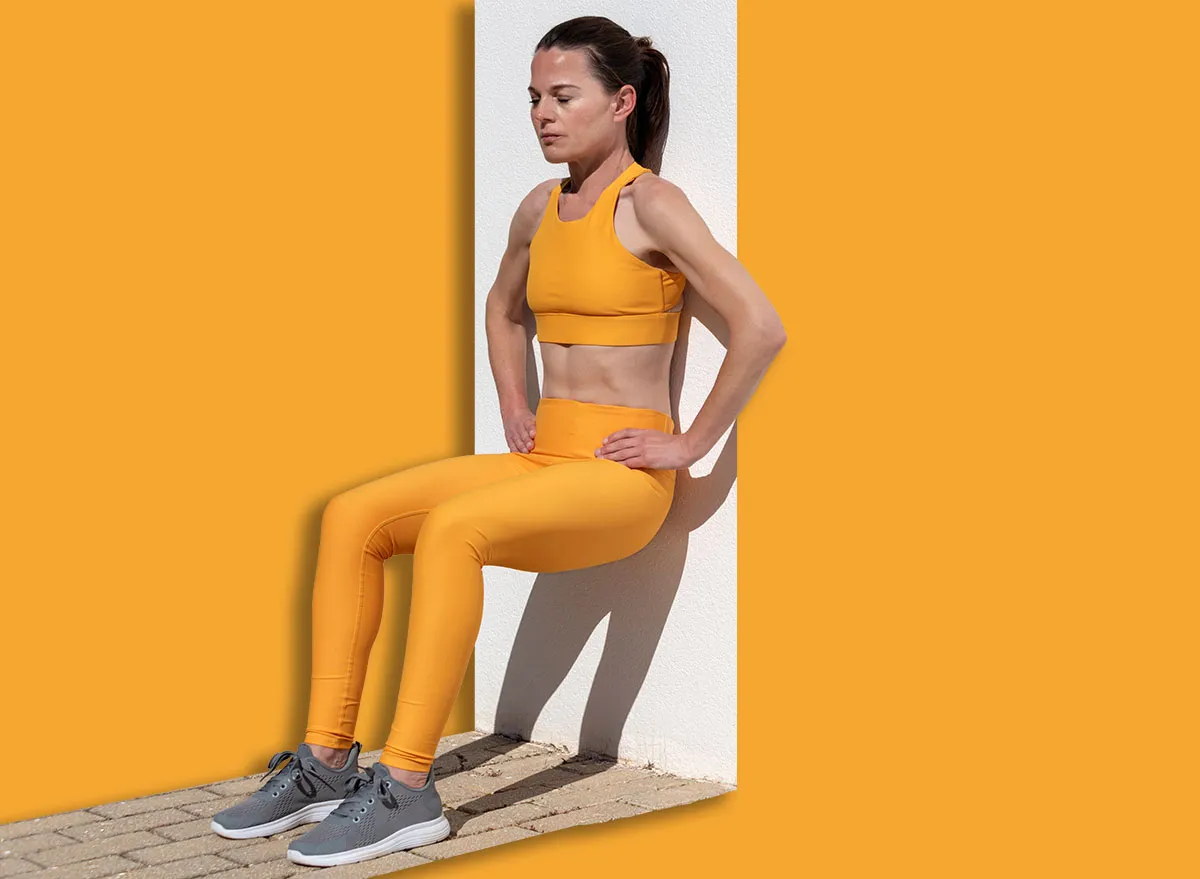
A wall sit is a simple way to check that strength. Slide down the wall, settle into position, and keep pushing against it while you stay still. The exercise puts plenty of work on your quads, with help from the muscles around your hips. As the seconds add up, muscular endurance starts playing a bigger role.
I like reassessing movements like this with clients because a stopwatch makes progress easy to see. Maybe the first attempt lasts 25 seconds. A few weeks of consistent training can turn that into 40 or 50 seconds with a steadier position. Those small jumps give you something concrete to chase and can make training a lot more rewarding.
For this test, 60 seconds with clean form is an impressive target after 65. Below, we’ll cover why the wall sit works so well as a lower-body test, how to set up your hold, what different times can tell you, and how to build toward that one-minute mark.
What a Wall Sit Tells You About Your Leg Strength

A wall sit tests isometric strength endurance, meaning your leg muscles must keep producing force while your joints stay in a fixed position. Your quadriceps do much of the work as they hold your knees bent, and the demand builds the longer you stay there. That makes the clock useful. Holding the same depth for an extended period shows your legs can maintain force as fatigue develops, which is an important quality for staying capable after 65.
How to Set Up Your Wall Sit Test
Give yourself a few practice seconds before starting the timer. Find a depth that lets you keep your back against the wall and your feet firmly planted. For the full test, work toward thighs near parallel with the floor.
How to Do It:
- Stand with your back flat against a wall.
- Walk your feet forward about two feet.
- Slide down until your thighs are near parallel with the floor.
- Position your feet so your knees stay roughly over your ankles.
- Keep your back against the wall.
- Start the timer and breathe normally.
- End the hold when you can no longer maintain the position.
Movement Standard: Hold with your back against the wall, feet flat, and thighs near parallel. Stop the timer when you start sliding upward, your hips drop lower, or your feet shift enough to change the position.
Best Variations: High Wall Sit, Standard Wall Sit, Banded Wall Sit, Weighted Wall Sit.
Form Tip: Move your feet forward or backward before starting until the position feels strong through your legs and comfortable at your knees.
Wall Sit Standards After 65: Where Does Your Time Land?

Keep your depth consistent whenever you retest. A higher wall sit changes how much force your legs have to produce, so using the same position gives you a much better comparison from one attempt to the next.
- Under 20 seconds: Building Your Base
You’ve got a clear starting point. A slightly higher wall sit can help you accumulate more quality time while your legs get stronger.
- 20 to 39 seconds: Solid Progress
Your legs are beginning to show good staying power here. Keep practicing the position and work on adding a few seconds without changing your depth.
- 40 to 59 seconds: Strong After 65
Holding close to a minute takes a solid combination of leg strength and muscular endurance. You’re already within reach of an impressive benchmark.
- 60+ seconds: Elite Leg Strength
A full minute at a consistent depth is a challenging wall sit after 65. Your quads can maintain force for an extended hold, and you’ve developed the endurance to stay in position as fatigue builds.
How to Build Toward a 60-Second Wall Sit
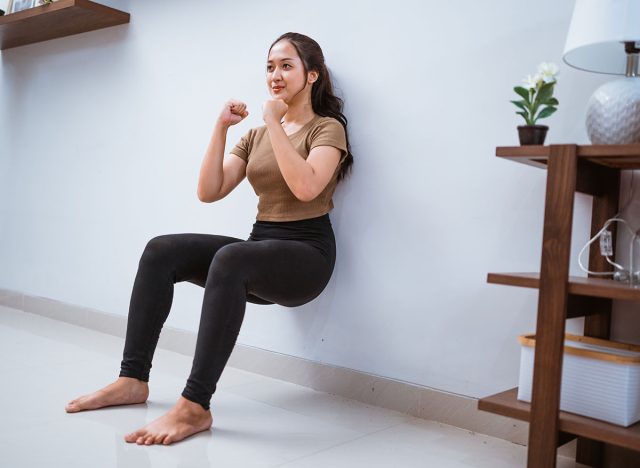
A longer wall sit usually comes from accumulating good holds during training, not testing your maximum every session. Pick a depth you can control and give your legs enough time under tension to adapt. Once that position feels familiar, extend the hold gradually.
- Start higher if needed: Slide a little farther up the wall and build confidence there before working toward parallel.
- Use repeat holds: Try several 20- to 30-second sets with rest between them.
- Add five seconds at a time: Small increases make it easier to keep your depth consistent.
- Train your legs through movement: Squats and step-ups can build the strength that supports your wall sit.
- Give yourself recovery time: Space harder lower-body sessions throughout the week so your legs are ready to work well.
- Reassess every few weeks: Return to the same wall, use the same depth, and see how your time has changed.
There’s something satisfying about watching the clock move farther each time you revisit a test. A 60-second wall sit after 65 gives you a challenging goal to work toward, and every stronger hold along the way is useful progress.
References
- Jones, Matthew D et al. “Acute blood pressure responses to plank and wall sit isometric exercise in adults.” Journal of Hypertension vol. 44,2 (2026): 288-294. doi:10.1097/HJH.0000000000004191
- Ríos Riquelme, Mario et al. “Trends and Scientific Production on Isometric Training: A Bibliometric Analysis.” Sports (Basel, Switzerland) vol. 13,5, 145. 12 May. 2025, doi:10.3390/sports13050145
Jarrod Nobbe, MA, CSCS
