

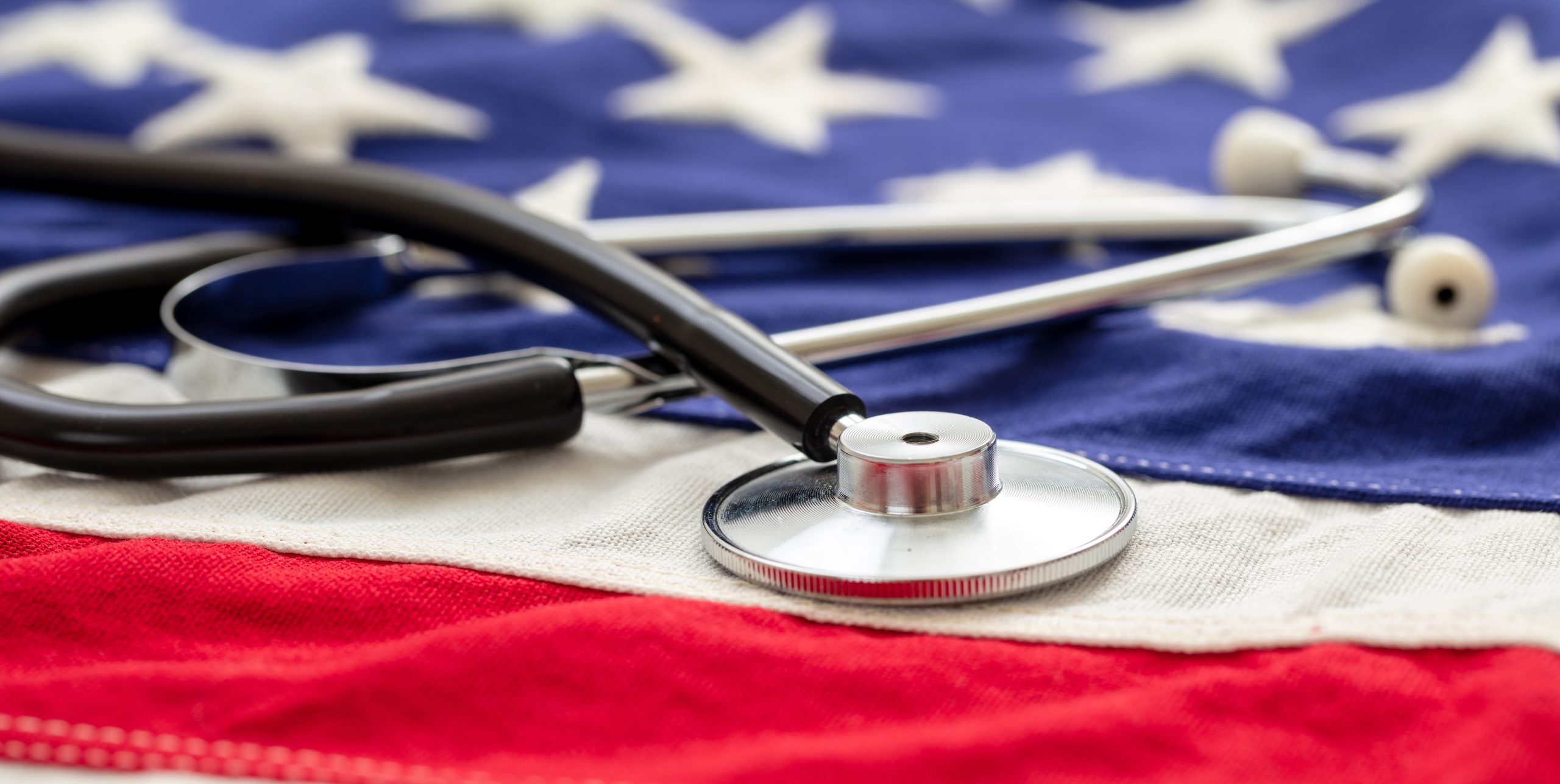

Trust in public health officials and the medical establishment is on shaky ground. During the COVID-19 pandemic, a rise in conspiracy theories, pseudoscience, and medical misinformation—promoted by politicians and grifters alike—widened the rift between the American public and medical professionals. That divide has yet to be repaired.
As a result, public health has become politicized in ways we haven’t seen before. And when something as essential to community well-being as public health is dismissed, the consequences are clear: people get sick. Even worse, when policymakers restrict access to services that support public health, the result can be disastrous.
The people who suffer most are often those already at a disadvantage—those living in poverty or in rural areas without reliable access to medical care. But public health impacts us all, especially when it comes to infectious disease.
These issues are at the heart of Dr. Tyler Evans’ work. A public health expert specializing in infectious disease, Dr. Evans has spent his career on the frontlines of global outbreaks. He is the CEO, chief medical officer, and co-founder of Wellness Equity Alliance, a national network of public health clinicians and operations experts working to transform health care delivery for vulnerable communities.
Dr. Evans is also the author of Pandemics, Poverty, and Politics: Decoding the Social and Political Drivers of Pandemics from Plague to COVID-19. In this Q&A, he explains why public health has become so politicized, how current policies often fail to improve health outcomes, and what we should be doing instead.
Perhaps most importantly, he reminds us that pandemics don’t materialize from thin air. Much of the suffering we experience—collectively and individually—during a pandemic is preventable with better policies.
Pandemics, Poverty, and Politics is out now. Get a glimpse of what to expect from the book in our interview below.
 Naomi: In your book you write, “Millions of people are needlessly dying largely due to policies that systematically exclude them.” What policies contribute to this exclusion and how do these policies contribute to preventable deaths?
Dr. Evans: These policies are often built into the very systems meant to protect people. They include restrictive Medicaid eligibility rules, laws that criminalize homelessness, immigration policies that block care, and underinvestment in public health infrastructure for low-income communities. When we deny someone preventive services because of their insurance status, allow lead to poison a neighborhood’s water, or fail to staff clinics in rural and urban underserved areas, we make a policy choice that shortens lives. These exclusions are not accidental. They are the predictable outcome of prioritizing budget lines or political optics over human life.
Naomi: Why do you think public health has become so politicized?
Dr. Evans: Public health is about science, but it is also about policy, and that is where the friction comes in. When data-driven recommendations challenge entrenched interests, they become political lightning rods. Public health touches on issues like reproductive rights, access to vaccines, environmental regulation, and economic policy. Each of those intersects with deeply held political beliefs. Instead of viewing public health as a shared foundation for a healthy society, too many leaders frame it as an arena for partisan fights.
Naomi: How do you think the Covid19 pandemic shifted how we receive public health directives?
Dr. Evans: COVID-19 put public health in everyone’s living room for the first time in modern history. The problem is that guidance was delivered in a fragmented media environment where clarity was lost to polarization. Many people began interpreting directives through their political identity rather than scientific merit. That shift has lasting consequences. It is not just about whether people masked or vaccinated during COVID, it is about whether they will follow guidance during the next crisis.
Naomi: What role does misinformation play in how we perceive health authorities?
Dr. Evans: Misinformation is not just an irritant. It is a structural threat to public health. It moves faster than peer-reviewed evidence and is often more emotionally compelling. In communities that have experienced historical neglect or harm from institutions, misinformation finds fertile ground. It confirms existing distrust, making it exponentially harder for health authorities to connect and communicate effectively.
Naomi: In your book, you mention social determinants of health and how poverty is a common denominator between many of those social determinants. Can you connect the dots between poverty and the health policies, particularly those of the current administration, that lead to negative health outcomes?
Dr. Evans: Poverty magnifies every health risk. Policies that reduce funding for vaccine development, limit reproductive health access, weaken environmental protections, or shrink the social safety net disproportionately harm low-income communities. These are the same communities already facing higher rates of chronic illness, unsafe housing, and environmental hazards. When government policy cuts into the resources that protect health, it is the poor, particularly communities of color, who pay the price first and hardest.
Naomi: You write, “The Venn diagram of economics and ethics should simply overlap as it just makes sense to invest in a strong public health infrastructure that is accessible for all—from white and Asian suburban communities to BIPOC urban communities.” So why don’t we?
 Dr. Evans: Because we have allowed short-term profit and political gain to outweigh long-term health. Public health does not have a well-funded lobbying arm. Industry does. That imbalance means decisions are made to satisfy quarterly earnings or election cycles, not generational health outcomes. The irony is that investing in equitable public health infrastructure saves money in the long run, but in our current system the long run rarely wins the argument.
Naomi: You mention that despite evidence indicating that thousands of children are dying daily from preventable diseases and deficits, people are still skeptical of public health actions that could save those lives. Why do you think that is?
Dr. Evans: Trust is earned, and in many communities public health has not earned it. Decades of neglect, discrimination, and even harm have left deep scars. If your family’s only interactions with public health were punitive or absent altogether, you are not going to embrace new interventions, no matter how compelling the evidence. Data alone does not move people. Relationships do.
Naomi: What is something you worry about in regard to public health, as a result of the continued dismantling of trust between health officials and the greater public?
Dr. Evans: I worry that we will start losing ground on victories we thought were permanent, like the near-eradication of certain vaccine-preventable diseases. If trust keeps eroding, the barrier to containing outbreaks will rise, not because we lack the tools, but because people will not accept them. In that scenario, every outbreak becomes a bigger, deadlier, and more expensive fight.
Naomi: What is a public health policy that you would like to see happen in your lifetime, that would positively impact public health?
Dr. Evans: Universal access to primary and preventive care without exception. That means care regardless of insurance or immigration status, without financial barriers, and in locations people actually use such as schools, workplaces, community centers, and mobile clinics. It is achievable. It is cost-effective. It would change the health trajectory of the country within a generation.
Naomi: Why did it feel important for you to write this book?
Dr. Evans: I have been in refugee camps, homeless encampments, rural health posts, and city hall during major public health emergencies. Across all of those settings, the patterns are the same: structural exclusion, political inertia, and preventable loss. I wrote this book to connect those dots, to show that pandemics do not appear out of nowhere. They emerge from the policies we make and the inequities we tolerate. And because those conditions are human-made, they can be changed if we choose to act.
Dr. Evans makes it clear: pandemics don’t just appear—they’re born from the inequities and policies we allow to persist. His new book, Pandemics, Poverty, and Politics, is both a wake-up call and a roadmap for change. If we want a healthier, more equitable future, the time to act is now. —Naomi
