

Lost strength after 60? This 12-minute routine can help you rebuild it.
Most people don’t notice muscle loss until an object starts feeling heavy. When you’re trying to lift a grandchild off the floor, or carry your groceries, or walk up stairs you notice you used to be stronger. The strength disappeared over years and years, but as you get into your 40s and 50s, it happens more quickly. The question is, can you reverse muscle loss after age 60?
The answer is yes, as long as you choose deliberate, hard, and safe exercises to target the muscles that disappeared. This routine packs more stimulus in 12 minutes than most people get in a 2-hour gym workout. 12 focused minutes can deliver impressive results. I’ve seen it in my older clients who wanted to rebuild muscle but thought that was impossible at their age.
When you’ve lost strength, it’s easy to feel as if the mountain is too big to climb. That’s why most people never start a dedicated workout plan. But if you use the following movements, you can get dramatic results as long as you utilize the entire 12 minutes and perform this routine several times per week.
Why 12 Minutes Works

Muscles don’t require a large amount of time to get stimulated. They require hard effort. Research shows that exercises taken close to failure create the stimulus for growth.
12 minutes per day adds up faster than you’d expect. If you do this workout 5 times per week , you’re completing an hour of hard exercise every week. Make sure to do this workout frequently. Muscles respond to volume and frequency: multiple intense sessions per week rather than one workout every few weeks. Use a full range of motion for each exercise and only move at the pace where you can control every rep.
This routine also works because you can do these exercises from home. You don’t need heavy barbells or machines to get the job done. Consistency beats fancy equipment every time.
The 12-Minute Routine

Do each movement for the full 3-minute timecap. Complete as many reps in the 3 minutes as possible with excellent form. I recommend using a slower pace for the first few workouts as your body adjusts to the movements. Keep a steady tempo for each movement and avoid holding your breath. Think, “breathe in” as you lower and “breathe out” and you rise up.
Minutes 0–3:00 — Chair Squat
Sitting and standing is one of the most essential movements you can do, and your legs carry most of your muscle, so let’s train them first. Stand up powerfully and control the descent every time.
- Sit tall near the front of a sturdy chair
- Lower slowly and touch the seat lightly
- Stand up with a strong, quick drive
- Repeat until the last few feel difficult.
Minutes 3:00–6:00 — Counter Push-Up
This push-up variation challenges your shoulders, triceps, and chest while allowing you to do clean repetitions for the full 3 minutes. If this movement starts becoming too easy, you can walk your feet back or do the push-ups onto a lower object like a stable chair pushed against a wall.
- Place both hands on a solid counter edge
- Walk your feet back into a straight line
- Lower your chest slowly toward your hands
- Press back up and keep the body rigid.
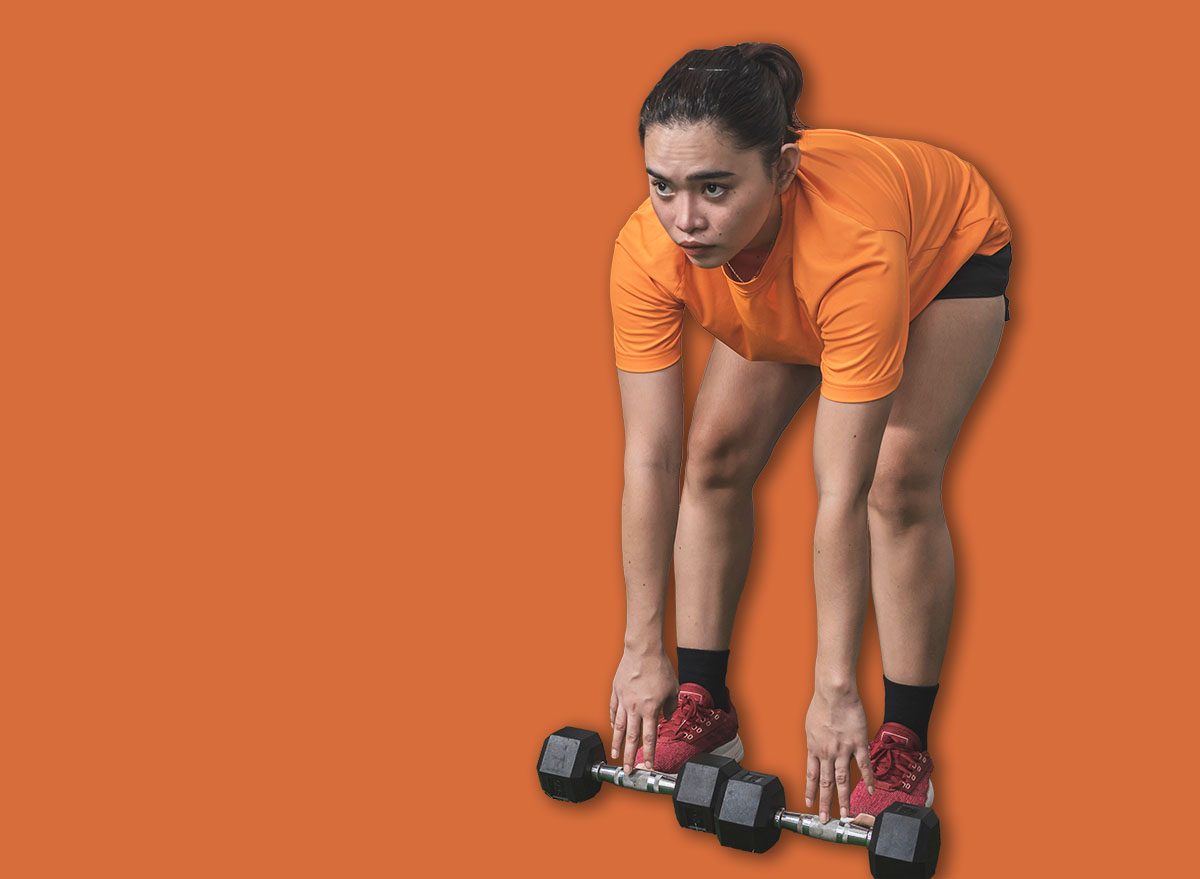
Minutes 6:00–9:00 — Dumbbell Romanian Deadlift
This hinge movement trains your glutes and hamstrings and provides a great posture exercise as well. Make sure to keep the dumbbells as close to your legs as possible.
- Stand tall holding dumbbells at your thighs
- Push your hips back and lower the weights
- Keep your spine long and chest tall
- Drive the hips forward and squeeze the glutes.
Minutes 9:00–12:00 — Suitcase Carry
When you carry an object with one arm, you’re loading your grip and your core at the same time. Make sure to keep your hips level and resist the temptation to hike one hip up as it compensates for the weight on the opposite side.
- Hold one dumbbell at your side
- Stand tall with your shoulders level
- Walk slowly with your core braced
- Switch hands halfway through the block.
How Long Until You Notice a Difference

If you consistently do this workout several times per week, you should notice the following changes in your body:
After 1-2 weeks, movements should feel smoother. You’ll feel more coordinated. In 3-4 weeks, it should be easier to carry groceries and walk up the stairs. After 12 weeks, you’ll notice measurable strength improvements, visible muscle, and steadier balance.
This workout does not require a gym. You can do it right at home. All it requires is your dedication. If you spend at least 3-4 days per week doing this workout, and pushing yourself, you’ll notice dramatic improvements overall in your physique and fitness.
Tyler Read, BSc, CPT
