

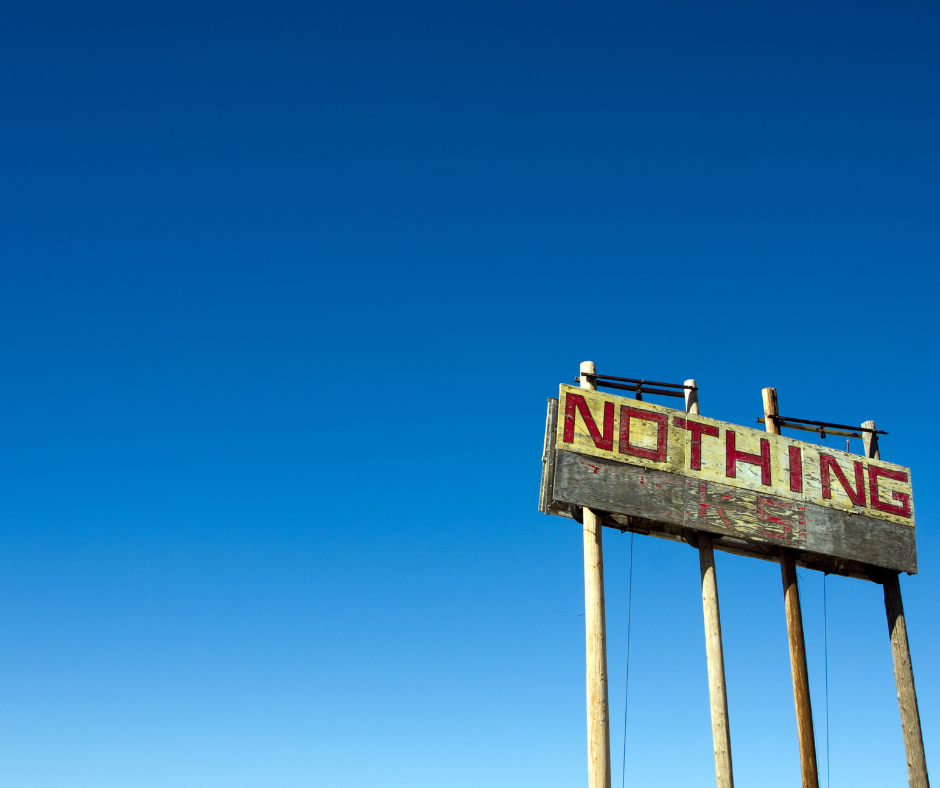
There’s a quiet question that doesn’t get asked often enough: What happens if I do nothing?
Not out of apathy. Not out of avoidance. But out of intention.
We’ve built a culture that equates action with value. Movement with meaning. Output with identity. And so when something appears broken—whether it’s a system, a situation, or a relationship—our reflex is to intervene.
Fix it. Improve it. Optimize it.
But that reflex, while useful, is not always wise. Because not everything needs fixing. Some things need space.
The Illusion of Necessary Action
Humans are toolmakers. Problem solvers. Pattern seekers. It’s part of what makes us remarkable.
But it’s also what gets us into trouble.
We assume that because we can act, we should act. That because we see a problem, we are responsible for solving it. And in doing so, we insert ourselves into systems that might have resolved themselves—more naturally, more sustainably, even more humanely—without us.
Forests regenerate. Relationships recalibrate. Emotions settle.
But only if given time.
The Discipline of Restraint
Doing nothing is not passive. It’s a discipline.
It requires:
- Trust in processes you don’t control
- Awareness of your own ego
- Patience in a world that rewards immediacy
It also requires a shift in identity. From the one who fixes to the one who observes. From the one who acts to the one who chooses when to act.
This is where Productiveness quietly emerges. Not as output, but as alignment.
When Nothing Becomes Something
Ironically, doing nothing often leads to something better.
Clarity instead of confusion. Perspective instead of panic. Better questions instead of rushed answers.
It’s in the pause that we regain our footing. It’s in the restraint that we rediscover rhythm.
And it’s in those moments—when we resist the urge to intervene—that we come closest to something deeply human: Not control… but understanding.
